
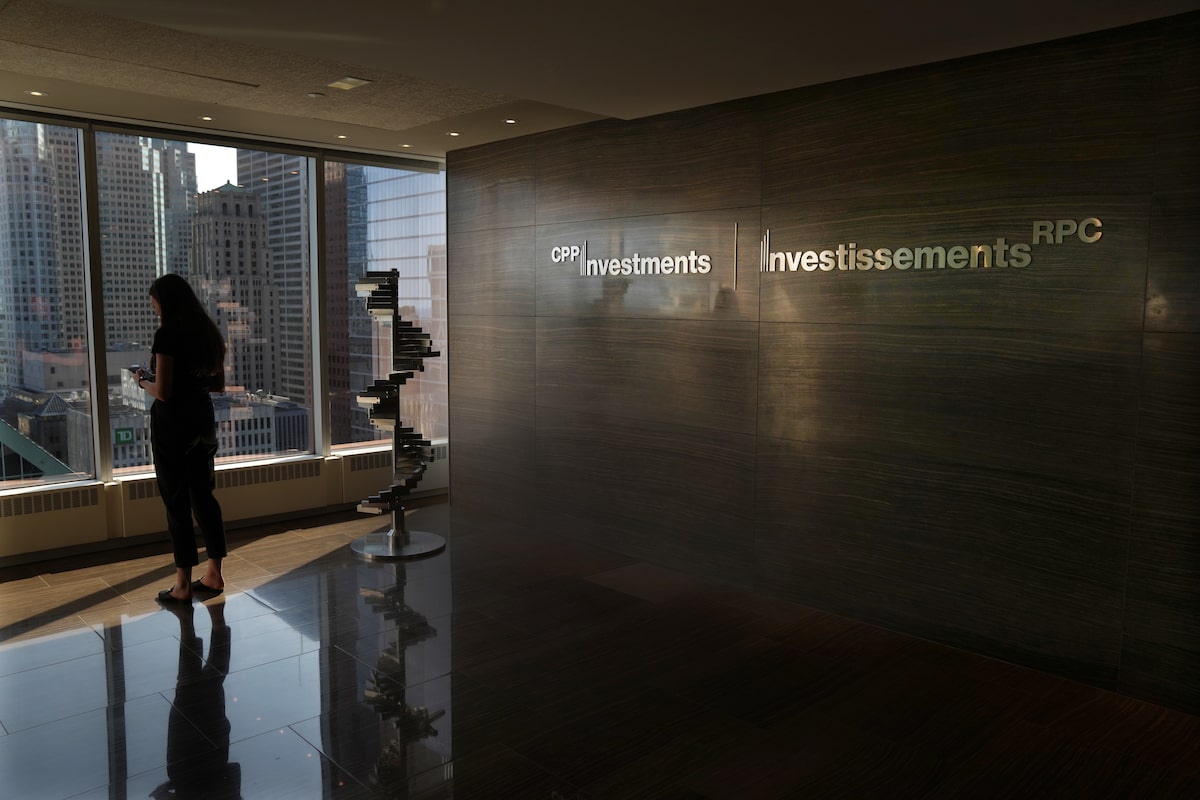
CPPIB has committed more than $3-billion since its agreement with Northleaf Capital started in 2006.Chris Young/The Canadian Press
The Canada Pension Plan Investment Board is committing another $750-million to a long-standing partnership with Northleaf Capital Partners to make private-equity investments in small and medium-sized Canadian companies, tapping a part of the market it couldn’t otherwise easily access.
The arrangement is 20 years old and CPPIB has now committed more than $3-billion since it started in 2006. Over that span, Northleaf – an established Canadian private-equity firm that has managed US$30-billion – has invested in more than 100 funds and backed at least 900 companies on CPPIB’s behalf, following customized investing parameters.
Most of those are mid-market companies with profits ranging from $10-million to $75-million annually, which are still growing. For a fund as large as CPPIB – which manages $778-billion and routinely cuts billion-dollar cheques – the effort to find, evaluate and manage a large portfolio of smaller deals doesn’t pay off.
CPPIB announces $1.1-billion joint venture with Dream to acquire warehouses
CPPIB manages and invests the Canada Pension Plan’s funds on behalf of about 22 million plan members.
But the mid-market has a large range of businesses with potential, and less money chasing each opportunity, which makes it attractive to private-equity investors. And some of the companies backed by Northleaf through its arrangement with CPPIB have become household names, such as e-commerce giant Shopify, sporting equipment maker CCM Hockey and hamburger chain A&W Canada.
With Canada’s largest pension funds under the microscope as a potential source of capital to back major projects prioritized by Ottawa, CPPIB’s partnership with Northleaf emphasizes the potential that Canada’s smaller businesses have to help boost economic growth and productivity.
“The attractive opportunity in Canada is not just in the major projects,” Northleaf managing partner Stuart Waugh said in an interview. “There is an awful lot of value creation in the Canadian market that is at a smaller scale.”
The new $750-million commitment CPPIB announced Thursday is the sixth vintage of the strategy, and gives Northleaf a larger pool of fresh capital to invest in Canada. It mixes new money with returns from previous funds that CPPIB is reinvesting.
“The market had grown and the opportunity set was more attractive. So, in addition to reinvesting proceeds, we’ve also upsized the size of the program,” said Bruce Hogg, head of CPPIB’s integrated strategies group, in an interview. “It gives them more flexibility and size.”
Neither of the partners would disclose the rate of return that Northleaf has earned for CPPIB over the life of the partnership. Mr. Waugh said it has “generated really attractive returns for the CPP fund” that have been “on par or better than comparable returns out of the U.S., Europe, any of the other developed private-equity markets.”
Private-equity funds would typically target internal rates of return above 20 per cent over the life of a fund. Northleaf’s partnership with CPPIB is “evergreen,” meaning there is no target date for Northleaf to return all of the pension fund’s invested capital.
“Northleaf and the program has done very well for us,” Mr. Hogg said.
CPPIB’s decision to increase the size of the fund was not made to satisfy a desire for more domestic investment in Canada, he said, as CPPIB’s mandate is to find the best returns globally without taking too much risk.
“At the end of the day, it’s down to returns,” he said.
But the strategy with Northleaf is “underpinned by the growth of the Canadian economy and the small and mid-sized companies,” he added. “And the fact that we’re able to facilitate further growth is something we feel good about.”
The mandate’s core is still to back mid-market private-equity buyouts, but over time it has added more deals on the secondaries market – where private-equity investors buy and sell stakes in funds – as well as co-investments made outside traditional funds.
Separately from that strategy, CPPIB recently invested about $160-million to buy stakes in some of Northleaf’s global private-equity investments from other investors who were looking to cash out.