
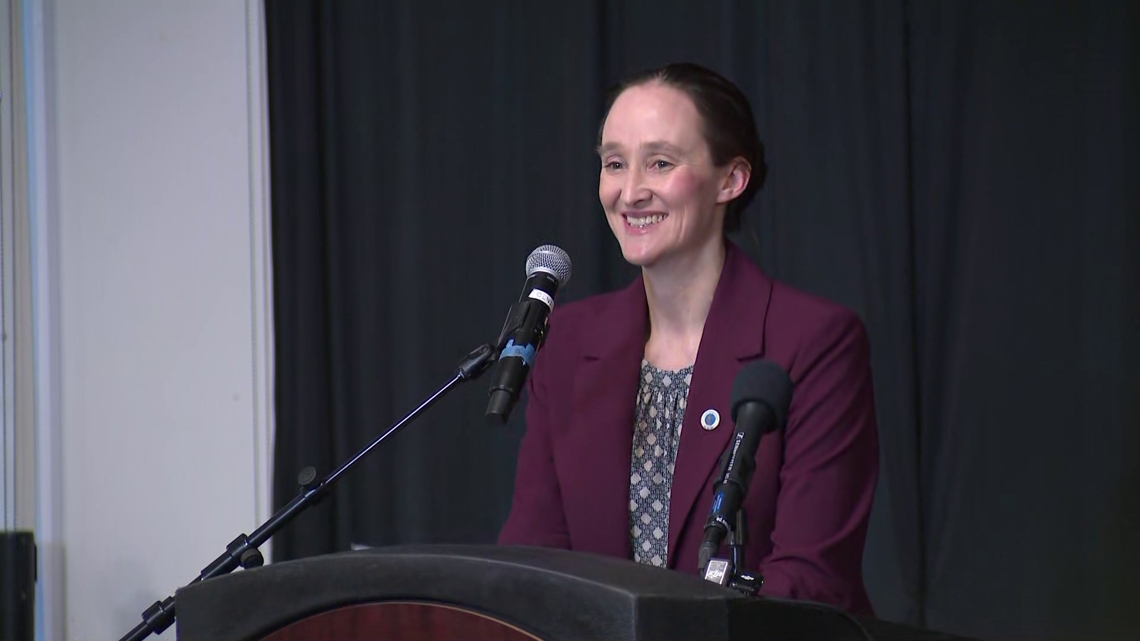
SEATTLE — Seattle Mayor Katie Wilson on Thursday announced her first two executive orders since taking office, targeting homelessness and public transit as she moves to put her campaign priorities into action just weeks into her administration.
Speaking at El Centro de la Raza, Wilson said the orders are meant to accelerate shelter and housing options for people living unsheltered while also improving bus reliability on one of Seattle’s busiest and most delay-prone corridors.
The first executive order directs city departments to speed up the expansion of emergency shelter and housing by identifying regulatory and logistical barriers that slow projects down. Wilson said an interdepartmental team will immediately begin reviewing incentives, permitting changes and other policy adjustments aimed at opening new shelter and housing more quickly.
“We do not have enough shelter, enough housing, enough services,” Wilson said.
Under the order, the city will prioritize the use of city-owned land and work with other government agencies to identify additional public property that could be used for temporary or permanent shelter and housing. The city will also coordinate with regional partners to expand capacity at existing shelter programs and work with behavioral health providers to support substance-use treatment and mental health counseling within shelter and housing programs.
Wilson said the effort follows a visit earlier this week to a Ballard encampment scheduled for removal. The city delayed that removal, she said, to determine whether a better outcome could be found for people living there.
The mayor framed the order as a starting point, noting that additional actions on housing and homelessness will follow in the coming months. She cited the upcoming FIFA World Cup as a reason to move quickly to bring more people indoors.
The second executive order focuses on public transit, specifically directing the Seattle Department of Transportation (SDOT) to add bus lanes or other transit-priority infrastructure along Denny Way, a key east-west corridor served by the frequently delayed Route 8.
“Seattle deserves world-class public transit,” Wilson said, arguing that allowing heavily used bus routes to sit in traffic wastes both rider time and transit tax dollars.
The order instructs the Seattle Department of Transportation to return to the mayor’s office by April 17 with a timeline, budget and implementation plan for at least one transit-priority improvement on Denny Way. SDOT is also directed to recommend additional corridors where similar investments could deliver high-impact benefits for riders.
Wilson said she wants as much transit priority as possible on Denny Way, while ensuring changes improve service for multiple bus routes in the area. She described the order as the beginning of a broader push to make transit in Seattle “fast, frequent, reliable, safe and welcoming,” in line with the city’s climate and transportation goals.
Both executive orders, Wilson said, are intended to direct city departments to prepare for rapid action, with more policy decisions expected as her administration works with community groups and regional partners in the months ahead.