

Listen to this article
Estimated 4 minutes
The audio version of this article is generated by AI-based technology. Mispronunciations can occur. We are working with our partners to continually review and improve the results.
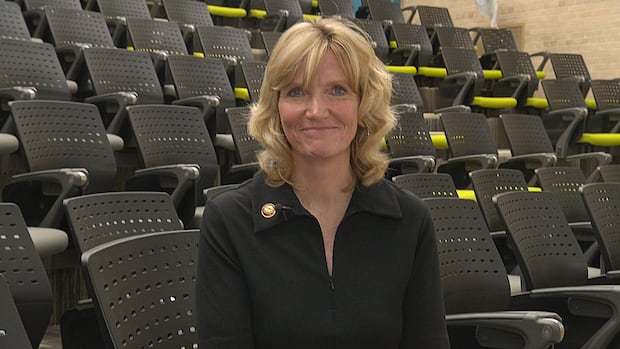
Memorial University’s president has some early concerns over the Newfoundland and Labrador government’s move to reinstate a tuition freeze for students.
Janet Morrison says the freeze will make it harder to fix ongoing problems, such as deteriorating infrastructure.
“We’ve been very frank, the university has two sources of revenue. We have grant revenue from the government and we have tuition revenue from students,” Morrison told CBC Radio’s The St. John’s Morning Show on Thursday.
When asked if she would push the province to increase the university’s funding, Morrison said those discussions are ongoing.
“There are currently no planned cuts to academic programs. But I will just reiterate, our fiscal circumstances are very challenging,” she said, adding universities across the country are facing similar struggles.
Morrison also said MUN doesn’t anticipate a “significant impact on jobs or employees at this point” and the ongoing hiring freeze will need to remain in place.
With the promises the PCs made during the fall provincial election, Morrison said it was only the timing of Tuesday’s announcement that was surprising.
The same day the tuition freeze was announced by the province, MUN made cuts to its executive, slashing four vice-president positions effective March 1.
Morrison said the two announcements were not connected.
“I’ve been at Memorial now for about five months, and right from the beginning [I] have been really clear with folks about the challenges in front of us,” she said.
“We are under enormous pressure, much of it financial. But frankly in the context of decreasing enrollment, decreasing revenue, increasing costs at a time in the world’s history where disruption is unparalleled. We need to meet those challenges.”
Cutting vice-president posts is the first step in aiding the university in its “multi-year transformation and evolution,” Morrison said.
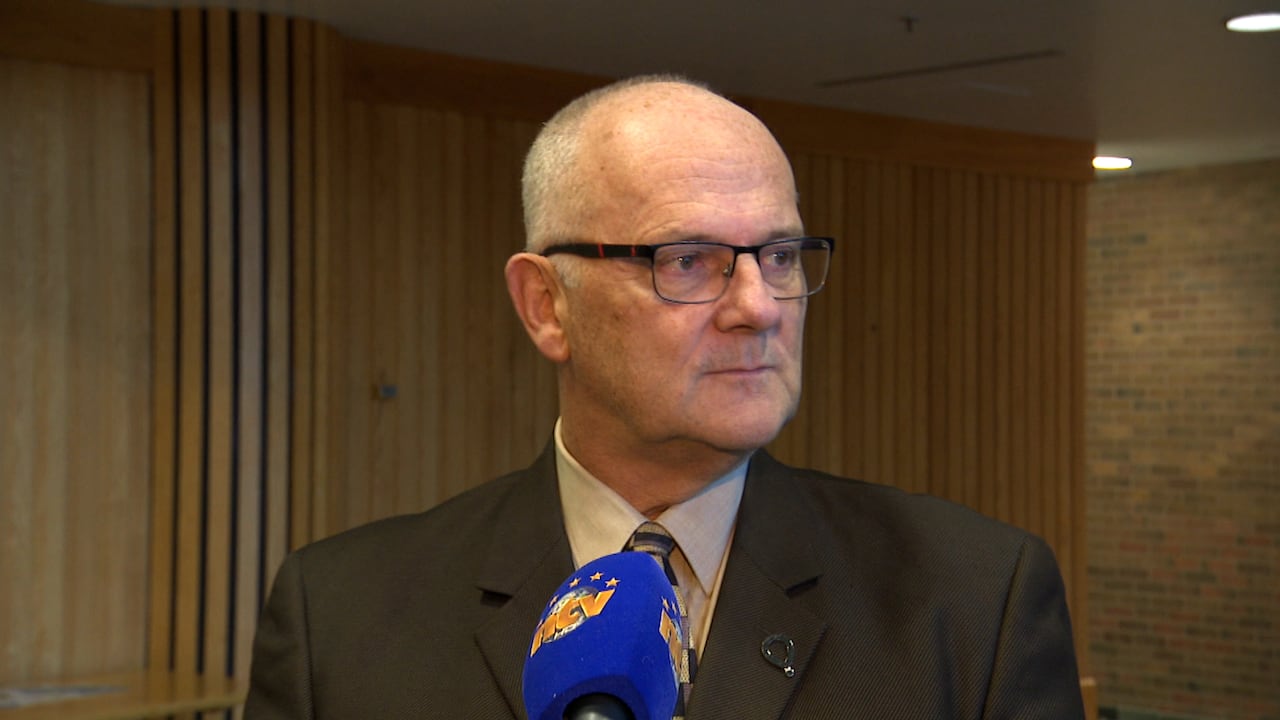 On Tuesday, Education Minister Paul Dinn said a tuition freeze will be in place until Memorial can get a better grasp on its finances. (Darryl Murphy/CBC)
Education Minister Paul Dinn said the tuition freeze would be in place for the 2026 fall semester, and it would remain in effect until MUN can get its finances in order.
“We’re not going to let the university balance the books on the backs of the students,” Dinn said.
Morrison said she couldn’t comment on the minister’s intent, but in her conversations with Dinn she said he’s been focused on students and decision making, which, she said, they are in agreement on.
‘Not much choice’
Meanwhile, a consultant and president of Higher Education Strategy Associates in Toronto, said provinces across the country have been curtailing how much money they’re giving to universities for several years, and tuition makes up a big chunk of a university’s revenue.
“If you say to institutions you can’t get money from government and you can’t get money from students, the only other place you’re going to get it is from international students,” Alex Usher told CBC Radio’s On the Go.
The federal government recently announced it was capping the number of international student permits. The target for 2025 and 2026 will be 437,000 permits. In 2024, the target was 485,000 permits.
With adjustments for inflation, Usher said MUN’s income is down 20 to 30 per cent from where it was in 2010.
He said there are some things, like collective agreements, that are fixed costs, but that MUN can’t cut its infrastructure spending any further. Usher said MUN might offer fewer courses, fewer student services and charge the community more for rentals.
“There’s not much choice other than that,” he said.
Download our free CBC News app to sign up for push alerts for CBC Newfoundland and Labrador. Sign up for our daily headlines newsletter here. Click here to visit our landing page.