
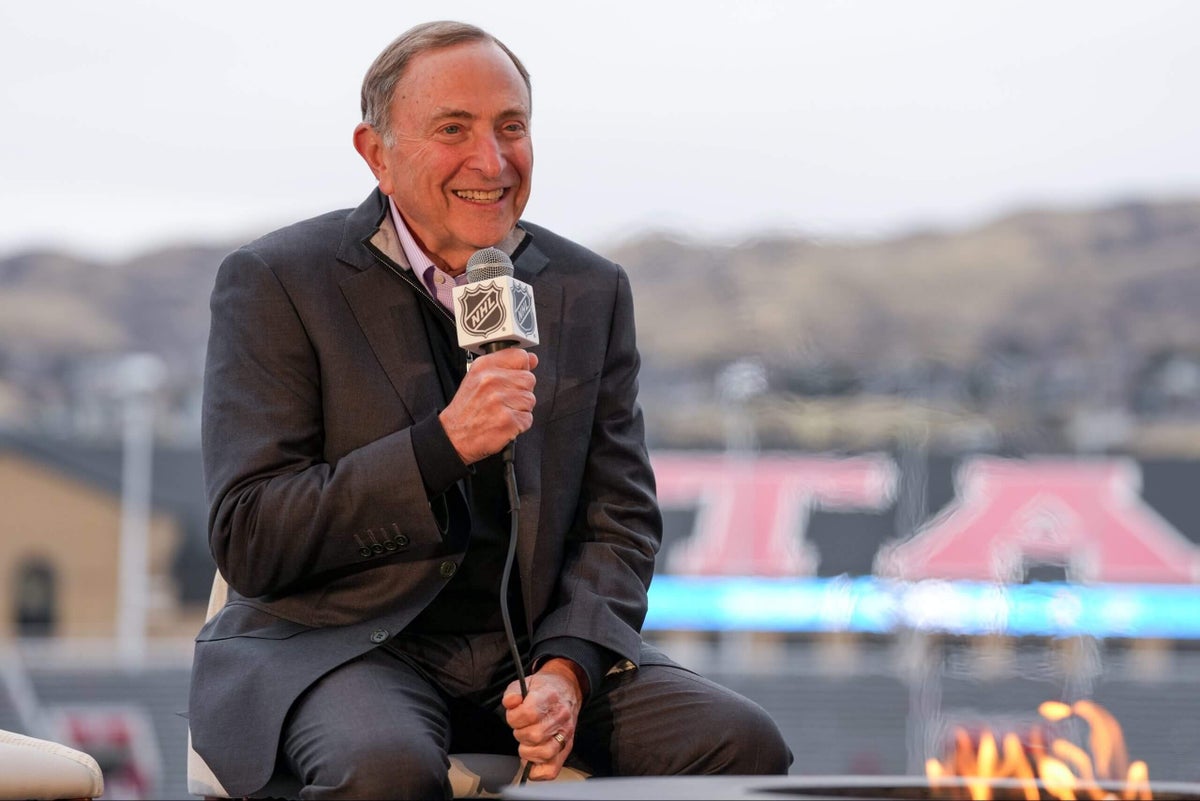
WASHINGTON — We know the hit TV show “Heated Rivalry” has created new hockey fans. The show has also captured a particularly high-profile one.
“I’ve watched all six episodes. I binged it in one night,” NHL commissioner Gary Bettman told reporters at Capital One Arena on Thursday.
“I thought the storyline was very compelling and a lot of fun, because I could (see) where they were picking at things that we had in the past, whether it was (Olympics) in Sochi or the All-Star Game in Tampa. It was very well done.”
The show, which revolves around the romance between two closeted professional hockey stars, is available on HBO Max in the United States and Crave in Canada. Released in November, it’s become a runaway hit for both streaming services and a legitimate cultural sensation.
Part of the dialogue surrounding that, naturally, is whether the NHL will capitalize on the popularity and embrace newly minted fans of the sport — specifically women and the LGBTQ+ community, two groups of people who haven’t historically been served well by hockey culture.
Bettman on Thursday said the league had already “meaningfully embraced” the LGBTQ+ community, pointing to team-held Pride Nights and the league’s work with You Can Play, a group that promotes LGBTQ+ inclusion in sports. As for the show?
“I think it’s a wonderful story,” Bettman said. “The content, particularly for young people, might be a little spicy. And so you have to balance that out in terms of how you embrace (the show).”
“There are a lot of things about the game that we think are driving more and more people to the game,” he said, “and I do believe ‘Heated Rivalry’ is one of those things.”
The development comes more than two years after the league banned Pride-themed jerseys and tape from warm-ups and games — a ban that continues, though all 32 teams, Bettman said, have scheduled Pride nights.
On Thursday, in the context of the “Heated Rivalry” discussion, Bettman was asked about the ban, which extends to all specialty jerseys worn during warmups.
“It wasn’t about Pride jerseys or Pride tape,” he said. “It was about the fact of bringing things into the game that might not be embraced by the players wearing the jerseys.
“If some players don’t embrace the cause, whatever it is, then you create a distraction that doesn’t fulfill the purpose.”