
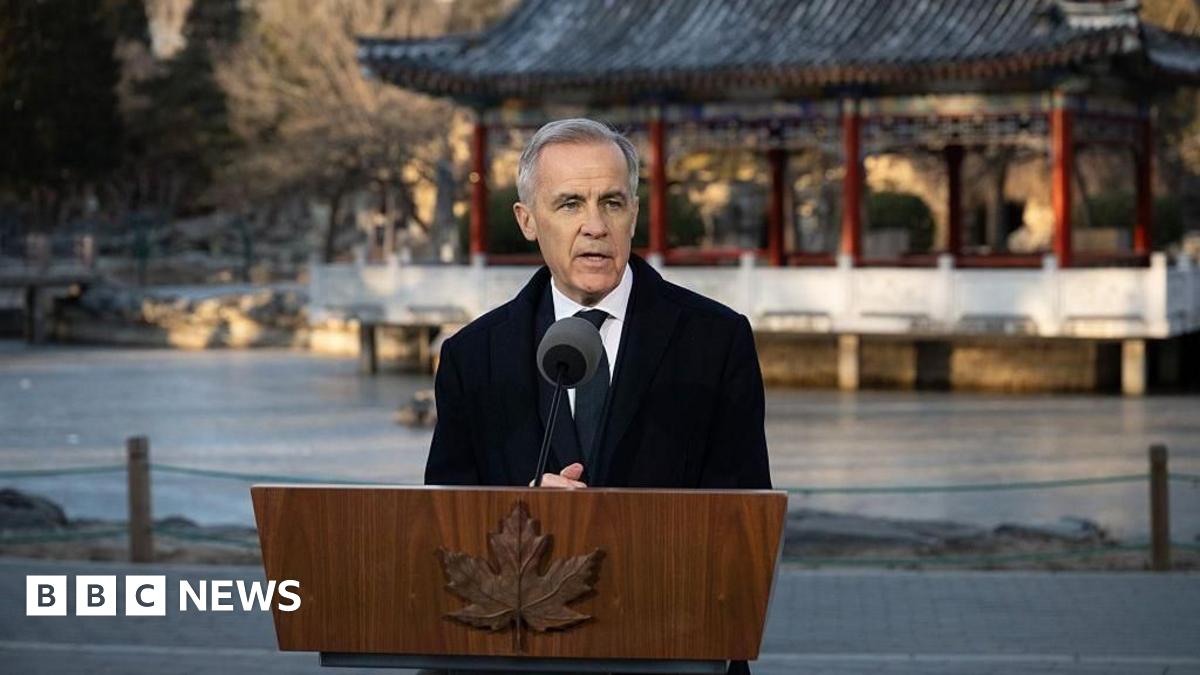
In Canada, as daylight broke on Friday, reaction to the deal was swift.
Some, like Saskatchewan Premier Scott Moe, hailed it as “very good news”. Farmers in Moe’s province have been hard hit by China’s retaliatory tariffs on Canadian canola oil, and the deal, he said, would bring much needed relief.
But Ontario Premier Doug Ford, whose province is home to Canada’s auto sector, was sharply critical of the deal. He said removing EV tariffs on China “would hurt our economy and lead to job losses”.
In a post on X, Ford said Carney’s government was “inviting a flood of cheap made-in-China electric vehicles without any real guarantees of equal or immediate investment in Canada’s economy”.
Some experts said the electric vehicle provisions in the trade deal would help China make inroads into the Canadian automobile market.
With the lower EV tariffs, approximately 10% of Canada’s electric vehicle sales are now expected to go to Chinese automakers, said Vivek Astvansh, a business professor at McGill University in Montreal.
The expected increase in Chinese EV sales could put pressure on US-based EV makers like Tesla which are seeking to expand their market share in Canada, he said.
“Carney has signalled to the Trump administration that it is warming up to China,” Astvansh added.
Reaction from the White House, meanwhile, has been mixed.
In an interview with CNBC on Friday morning, US trade representative Jamieson Greer called the deal “problematic” and said Canada may come to regret it.
President Donald Trump, however, hailed it as “a good thing”.
“If you can get a deal with China, you should do that,” he told reporters outside the White House.
Since taking office for a second time last year, Trump has imposed tariffs on Canadian sectors like metals and automotives, which has led to swirling economic uncertainty. He has also threatened to rip up a longstanding North American free trade agreement between Canada, the US and Mexico, calling it “irrelevant”.
That trade agreement, the USMCA, is now under a mandatory review. Canada and Mexico have both made clear they want it to remain in place.
But the decision to carve out a major new deal with China is a recognition by Carney that the future of North American free trade remains unclear, Miller of the Rideau Potomac Strategy Group told the BBC.
“There’s a reasonable chance that we could end up in 2026 without a meaningful, workable trade deal with the United States,” he said. “And Canada needs to be prepared.”