
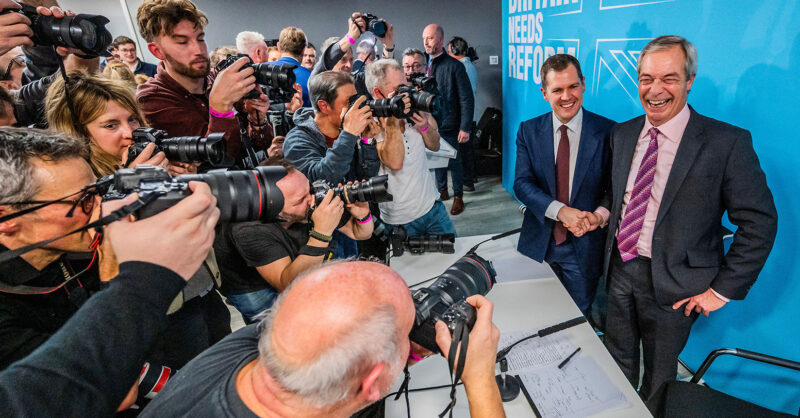
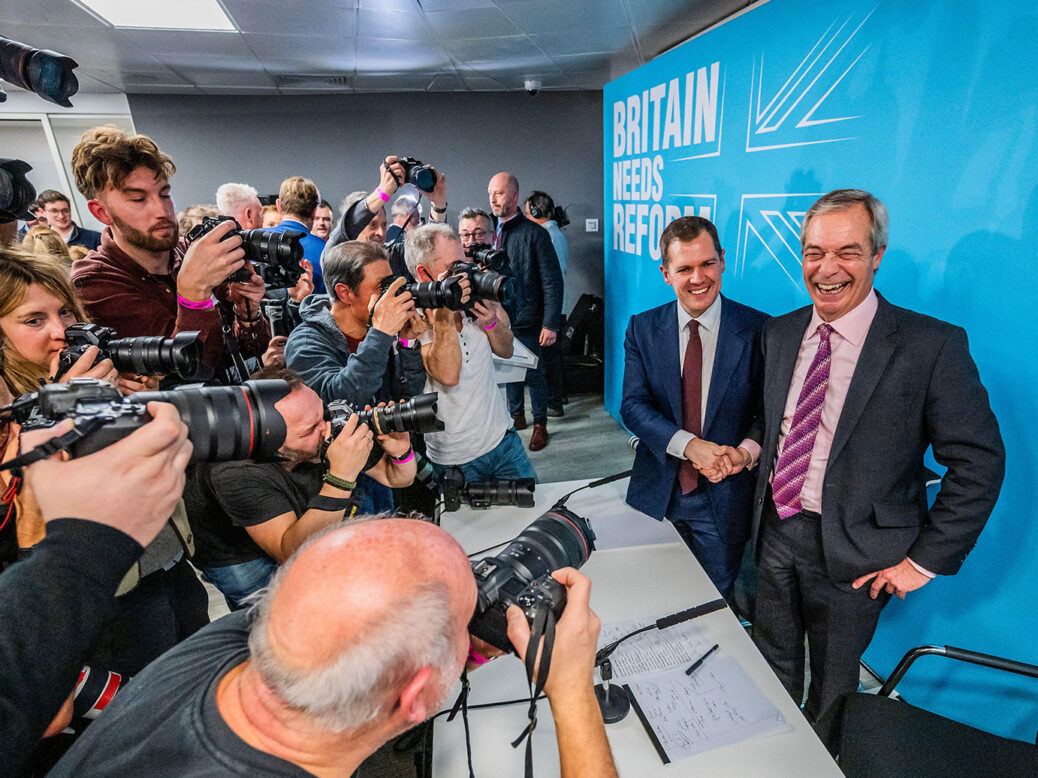
Photo by GUy Bell/Alamy
For a fleeting moment yesterday, the advantage appeared to lie with Kemi Badenoch. A fluent video announcing that Robert Jenrick had been sacked over “clear, irrefutable evidence” he was plotting to defect to Reform showed a decisiveness all too rarely associated with her leadership. Nigel Farage’s initially ambiguous response raised the prospect that Badenoch’s relentless foe could be left out in the cold.
In the event, the illusion of victory lasted only five hours. A triumphant Westminster press conference by Farage and Jenrick confirmed that, for all Badenoch’s recent improvement, it is still Reform which enjoys that most precious political commodity: momentum.
The Conservative Party, which has defied rumours of its death so many times before, has never faced an existential threat of this kind. Reform has now led the polls for longer than the Social Democratic Party ever did, breaking through the electoral barriers traditionally presented by first-past-the-post. A world in which Farage would win 381 seats to the Conservatives’ 70 creates irresistible incentives for Tories to defect.

New year, new read. Save 40% off an annual subscription this January.
Close
Badenoch’s strategy of pitching right in the hope of stemming the tide has failed. Is there an alternative one available? Tory centrists urge their leader to turn a crisis into an opportunity by drawing sharper distinctions with the populist right, targeting the share of the electorate that is weary of Labour but fearful of Reform (and often hoovered up by the Liberal Democrats). But this would require a metamorphosis that Badenoch may prove incapable of.
What of Reform? Having absorbed 18 former or current Tory parliamentarians, Farage’s claim that his party is a truly insurgent, ideologically heterodox force is becoming much harder to sustain. Even before the latest wave of defections, Reform, which has flirted with statist economics, was already drifting right, reverting to traditional Thatcherite tunes.
In his defection speech, Jenrick offered banalities about “cutting waste and taxes and red tape” while vowing to reduce net migration dramatically. He did not say what tax cuts and “sound money” would mean in a world in which immigration will shortly become the UK’s only source of population growth – austerity on steroids. There was no vision of how scarcity will become abundance, no gesture towards alternative models of ownership, no hint of partnership with the trade unions (who Jenrick chided for “running our public services”) or, at a time of geopolitical tumult, an alternative account of Britain’s place in the world.
If Reform was truly offering a post-Thatcherite economic model it would not be this easy for so many Tories to cross the floor – the ideological bars to entry would be higher, the political and personal dilemmas more fraught. One is instead reminded that Farage praised Liz Truss’s mini-Budget as “the best Conservative Budget since 1986”. As such, the biggest realignment of British politics since Labour supplanted the Liberal Party in the early 1920s does not feel transformative but curiously hollow.
This piece first appeared in the Morning Call newsletter; receive it every morning by subscribing on Substack here
[Further reading: Protect Keir Starmer, cabinet urged at “emotional” meeting]
Content from our partners