
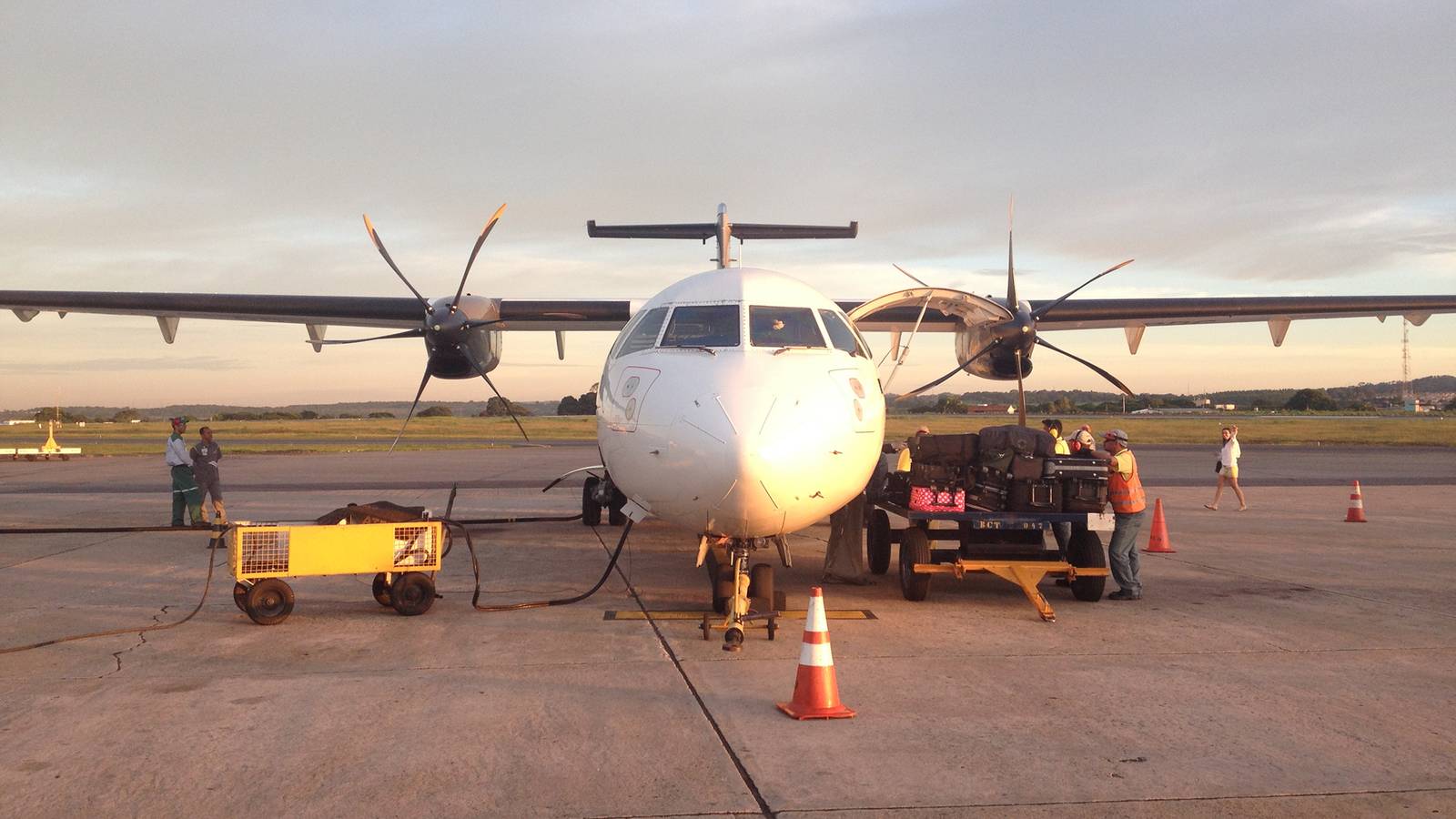
An ATR 42 used by the Indonesian Ministry of Marine Affairs and Fisheries has crashed while on approach to Makassar Airport (UPG). The aircraft disappeared from radar while flying over the ocean at a low altitude, and had a total of 11 souls onboard, consisting of eight crew members and three passengers.
Early images posted to social media show a fiery wreckage in dense mountainous terrain, with reports suggesting the accident happened after the plane was given route instructions by air traffic control (ATC) for its approach. The aircraft involved was a 25-year-old ATR 42-500 with the registration PK-THT, and was operated by Indonesia Air on behalf of the Ministry of Marine Affairs and Fisheries.
Indonesian Ministry ATR 42 Wreckage In Mountain
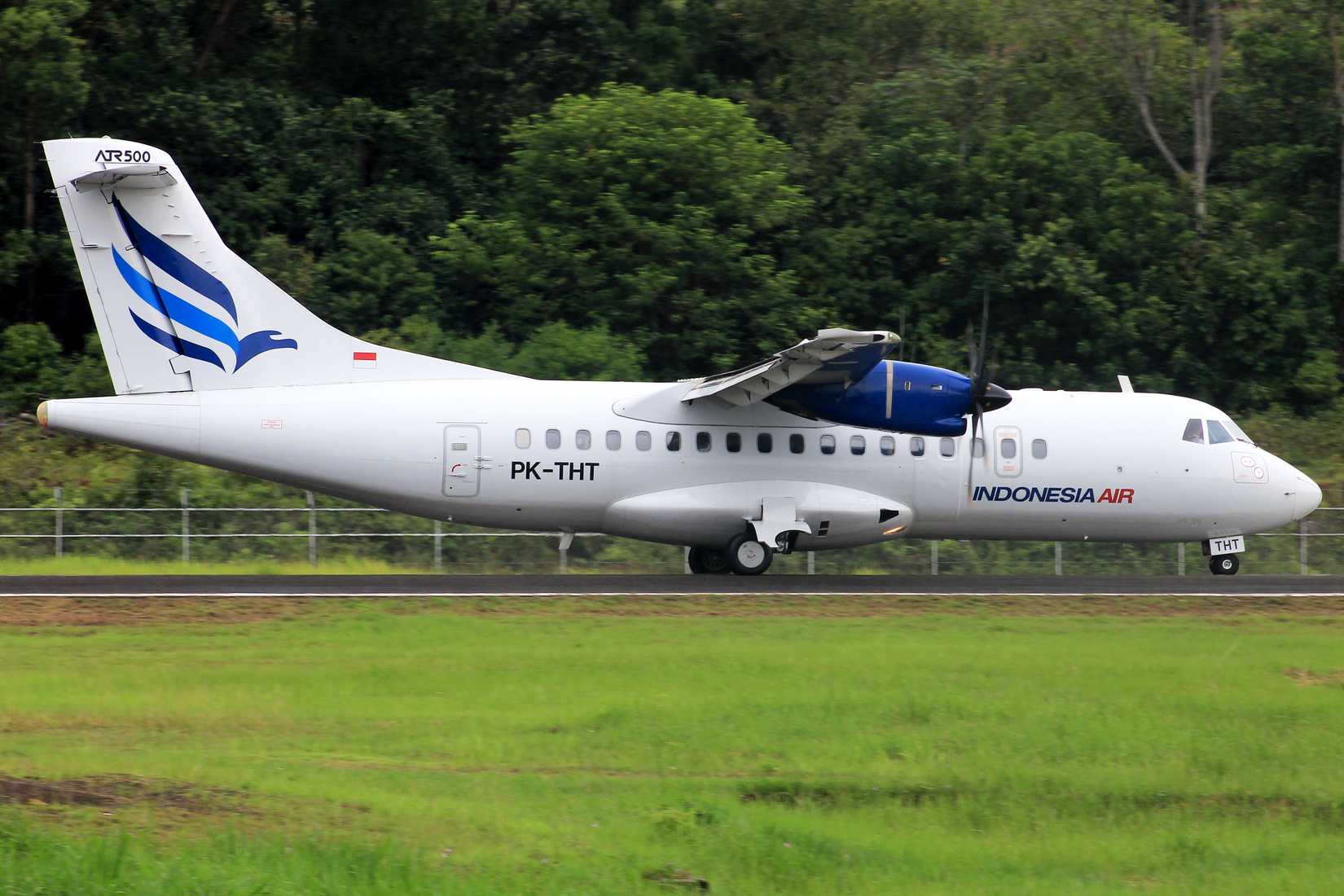
Credit: Shutterstock
The government-owned turboprop crashed into a mountain in Bantimurung–Bulusaraung National Park, which is located north of Makassar. Images reportedly taken by local villagers show the fiery aftermath of the accident amid thick fog, suggesting poor visibility may have played a factor. At this early stage, there have been no updates on the 11 people onboard, but authorities have confirmed a search and rescue operation is active. The plane had been flying from Yogyakarta to Makassar’s Sultan Hasanuddin International Airport, taking off from its origin airport at 08:08 AM local time, and had been airborne for over three hours before crashing.
As reported by Flightradar24, the aircraft dropped off radar screens after its final signal was received at 04:20 UTC, around 20 km northeast of Makassar Airport. Data from Flightradar24 shows its last recorded ground speed was 221 knots, while flying at an altitude of 5,150 feet, at 04:20 UTC. Its previous signal came 15 minutes before at 04:05 UTC, when the aircraft was flying at 6,150 feet over the Pabbiring Islands off the coast of Makassar. The captain of the flight has been confirmed as Andy Dahananto, who is the Director of Operations at Indonesia Air.
Aircraft Not On Correct Approach Path
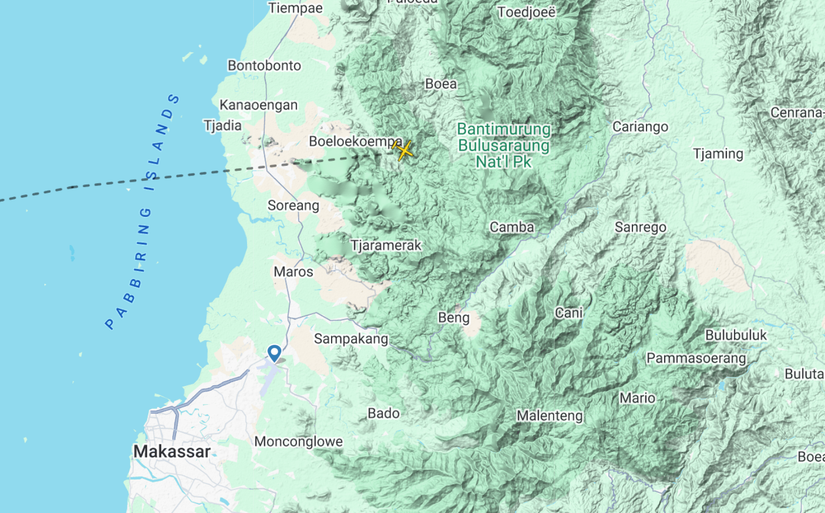
Credit: Flightradar24
According to local outlet Antara News, air traffic controllers observed that the ATR 42 was not on the correct approach path to Makassar’s airport, subsequently issuing several instructions to the plane. Director General of Civil Aviation of the Transportation Ministry, Lukman F. Laisa, said the aircraft was given initial instructions by Makassar ATC at 04:23 UTC to approach Runway 21, but did not adopt the correct approach path.
ATC gave additional instructions on repositioning the aircraft, but communication was lost soon after the final instruction was issued. ATC then declared an emergency, mobilizing authorities to prepare for a search and rescue operation. Indonesia’s air navigation service provider is also scheduled to issue a Notice to Airmen (NOTAM).
Authorities have estimated the aircraft’s location to be near Leang-Leang between the Maros and Pangkep Regencies. Search and rescue teams were immediately dispatched to the area, but the poor visibility is reportedly hampering search efforts.
Related
Fog And Planes: How Low Visibility Can Impact Operations
How do airlines and airports adapt to foggy conditions?
Video Aftermath Shows Dense Fog
Credit: Shutterstock
Local media in Indonesia have aired video footage recorded by residents near the crash site, showing various personal belongings and aircraft debris strewn across rocky terrain. More importantly, it reveals there was a very thick fog in the air at the time, with the plane’s reported incorrect approach path pointing to an early theory of an inadvertent Controlled Flight Into Terrain (CFIT).
Airports surrounded by mountainous terrain will typically require special approach instructions to ensure aircraft avoid areas of elevated terrain. Although aircraft are equipped to safely perform low-visibility landings, a failure to adhere to ATC instructions on approach becomes particularly hazardous when high terrain is present.
Indonesia has one of Asia’s busiest aviation markets, but also a poor safety record that has seen numerous crashes occur in the country over the years. Data from Aviation Safety Network shows there have been over 100 commercial airline accidents in Indonesia since 1945, with recent crashes including a Sriwijaya Air Boeing 737-500 in 2021, the Lion Air 737 MAX crash in 2018, and an AirAsia Airbus A320 accident in 2014 during stormy weather.