

Listen to this article
Estimated 4 minutes
The audio version of this article is generated by AI-based technology. Mispronunciations can occur. We are working with our partners to continually review and improve the results.
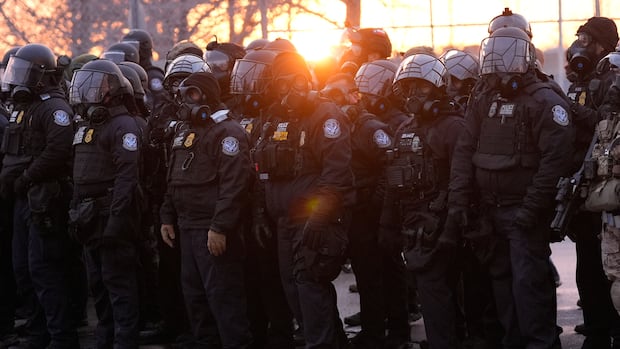
The Pentagon has ordered about 1,500 active-duty soldiers to prepare for a possible deployment to Minnesota, the site of large protests against the government’s deportation drive, U.S. media reported on Sunday.
The army placed the units on prepare-to-deploy orders in case violence in the northern state escalates, the Washington Post reported, citing unnamed defence officials, adding that it is not clear whether any of them will be sent.
The White House told the Post in a statement that it is typical for the Pentagon “to be prepared for any decision the President may or may not make.” The Pentagon and the White House did not immediately respond to requests from Reuters for comment.
U.S. President Donald Trump threatened on Thursday to use the Insurrection Act to deploy military forces if officials in the state do not stop protesters from targeting immigration officials after a surge in Immigration and Customs Enforcement (ICE) agents.
“If the corrupt politicians of Minnesota don’t obey the law and stop the professional agitators and insurrectionists from attacking the Patriots of I.C.E., who are only trying to do their job, I will institute the INSURRECTION ACT,” Trump posted on his Truth Social platform.
Tensions rising between residents, officers
The soldiers subject to deployment specialize in cold-weather operations and are assigned to two U.S. army infantry battalions under the 11th Airborne Division, which is based in Alaska, the Post and ABC News reported.
Confrontations between residents and federal officers have become increasingly tense in Minneapolis, Minnesota’s most-populous city, after an ICE agent fatally shot Renee Good, a U.S. citizen and mother of three, on Jan. 7 as she was driving away after being ordered to exit her car.
WATCH | What we know about Renee Nicole Good: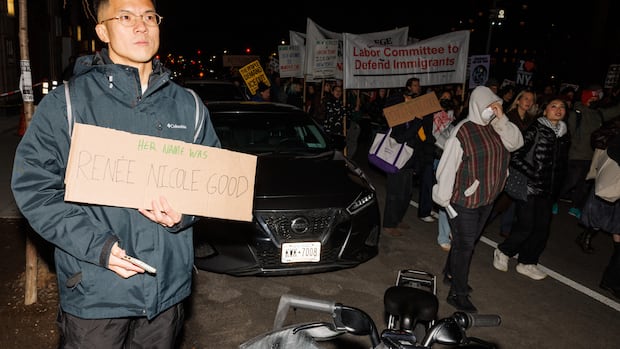
What we know about the woman who was shot by ICE
Protests have erupted over the killing of 37-year-old Renee Good, who was shot by an ICE agent in Minneapolis on Wednesday.
Trump, a Republican, has sent nearly 3,000 federal agents from ICE and U.S. Border Patrol to Minneapolis and neighbouring St. Paul since early last week as part of a wave of interventions, mostly to cities run by Democratic politicians.
He has said troop deployments in Los Angeles, Chicago, Washington, D.C., Memphis and Portland, Ore., are necessary to fight crime and protect federal property and personnel from protesters. But this month he said he was removing the National Guard from Chicago, Los Angeles and Portland, where the administration has faced legal setbacks and challenges.
Federal overreach
Local leaders have accused the president of federal overreach and of exaggerating isolated episodes of violence to justify sending in troops.
Minnesota Gov. Tim Walz, against whom the Justice Department has opened a criminal investigation, has mobilized the state’s National Guard to support local law enforcement and emergency management agencies, the state’s Department of Public Safety posted on social media platform X on Saturday.
Trump has repeatedly invoked a scandal around the theft of federal funds intended for social-welfare programs in Minnesota as a rationale for sending in immigration agents.
The president and administration officials have repeatedly singled out the state’s community of Somali immigrants.
The Insurrection Act is a federal law that gives the president the power to deploy the military or federalize National Guard troops inside the U.S. to quell domestic uprisings.
The law can be invoked when there are “unlawful obstructions, combinations or assemblages or rebellion” against federal authority. If the president deems those conditions have been met, he may use the armed forces to take actions “to enforce those laws or suppress the rebellion.”