
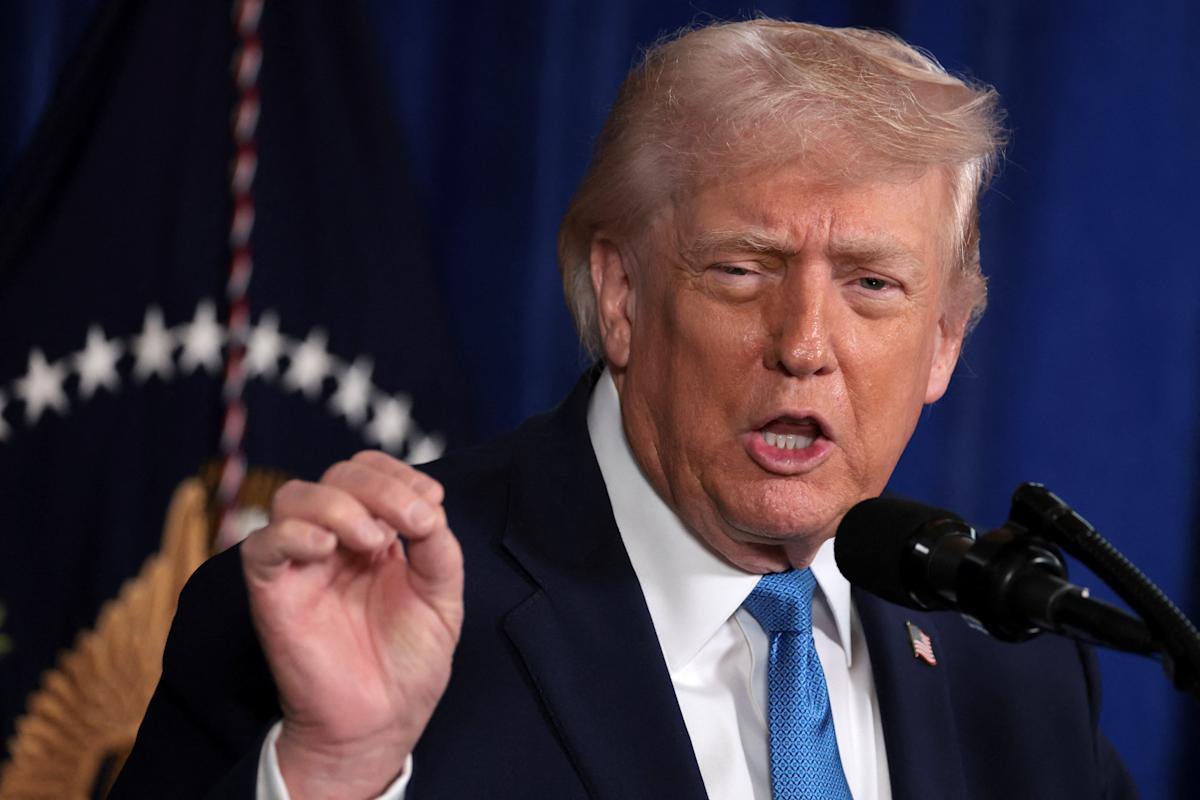
After President Trump posted his plan to levy new tariffs on Europe on Saturday, reaction was swift and fierce. Trump said the US would implement 10% tariffs on eight European countries he says are getting in the way of a US purchase of Greenland.
The tariffs would begin Feb. 1 and apply to “any and all goods sent to” the US. The levies on Denmark, Norway, Sweden, France, Germany, the UK, the Netherlands, and Finland would be raised to 25% on June 1 if no agreement is in place.
“China and Russia want Greenland, and there is not a thing that Denmark can do about it. They currently have two dogsleds as protection, one added recently,” Trump wrote. “Only the United States of America, under PRESIDENT DONALD J. TRUMP, can play in this game, and very successfully, at that!”
The countries — Denmark, Sweden, France, Germany, the Netherlands and Finland, Britain and Norway — are already subject to US tariffs between 10% and 15%.
“Tariff threats undermine transatlantic relations and risk a dangerous downward spiral,” the eight nations said in a joint statement Sunday, as EU members planned to meet to discuss possible countermeasures.
Danish Prime Minister Mette Frederiksen praised the consistent message from the rest of the continent, saying “Europe will not be blackmailed,” a view echoed by Germany’s finance minister and Sweden’s prime minister.
US Treasury Secretary Scott Bessent was asked Sunday on NBC’s Meet the Press whether Trump’s stance toward Europe is a negotiating tactic. But Bessent seemed to indicate the president wouldn’t change his mind.
“Europeans project weakness, US projects strength,” he said. “The president believes enhanced security is not possible without Greenland being part of the US.”
On Saturday, protesters rallied in Denmark and Greenland, with thousands in Greenland’s capital city of Nuuk chanting “Kalaallit Nunaat” — the island’s name in Greenlandic — as they marched to the U.S. embassy.
Those protests came after former NATO head and former Danish prime minister Anders Fogh Rasmussen said Trump was speaking like a “gangster” and using Greenland as a “weapon of mass distraction” from the war in Ukraine.
Meanwhile, the US Supreme Court’s first two opportunities to issue a verdict this year on the implications and legality of Trump’s global duties on trade partners have come and gone without a decision.
The court heard arguments in early November. Both conservative- and liberal-leaning justices asked skeptical questions of the method by which the president imposed his most sweeping duties. Trump imposed his tariffs by invoking a 1977 law meant for national emergencies.