

Manitoba RCMP are investigating after a seven-year-old girl was coerced into sending nude photos to a man over Snapchat — an example of what experts and police warn is a growing trend of children under 13 being sexually exploited through social media.
The images and videos being sent through the online messaging app were discovered after the girl’s mother went into the child’s room. The girl quickly put down a cellphone when her mother came in, according to a production order document obtained by CBC.
When the mother became suspicious and took the phone, she learned the girl had been chatting with an older man.
The mother found pictures of a penis within those chats and contacted RCMP. She gave them the phone for analysis, according to the document.
Police say they found explicit conversations over Snapchat between a man from the United Kingdom and the seven-year-old, as well as images and video shared between the two.
In the document, police detail messages that include the man asking for and receiving nude photos and videos from the girl.
“I’m not really shocked,” said Jacques Marcoux, the director of research and analytics at the Canadian Centre for Child Protection, as online exploitation of younger children has grown in recent years.
Numbers from the child protection centre — which runs Cybertip, Canada’s national tipline for reporting online sexual abuse and exploitation of children — show that in 2015, it received 22 reports of children under 13 being lured online.
There were more than 200 such reports a decade later.
“There are just more kids online, and more kids have access to these platforms. And these platforms are designed to encourage connections at all costs,” because “more engagement means more revenue,” said Marcoux.
“So all those things create a perfect storm where you have just more kids at a younger age spending more time on these platforms.”
‘Phone book’ for predators
The production order document filed by RCMP in September 2025 asked Snapchat to give police access to the email address associated with the man the girl was chatting with, the date his account was created and his IP, or internet protocol, address.
Through that order, police were able to confirm he was located in the United Kingdom, according to an RCMP spokesperson. The file is now in the hands of the RCMP’s national child exploitation centre, which will be in charge of sending it to police in the U.K.
Marcoux says too little is being done to protect children on social media platforms, calling apps like Snapchat “a phone book” for predators to find kids.
He pointed to things like the “quick add” function on Snapchat, where an algorithm suggests friends and users can add multiple strangers all at once. Snapchat’s geolocation map allows users to share their location with friends.
He also pointed to the “Snapstreak” function, which rewards friends for exchanging messages or photos on consecutive days.
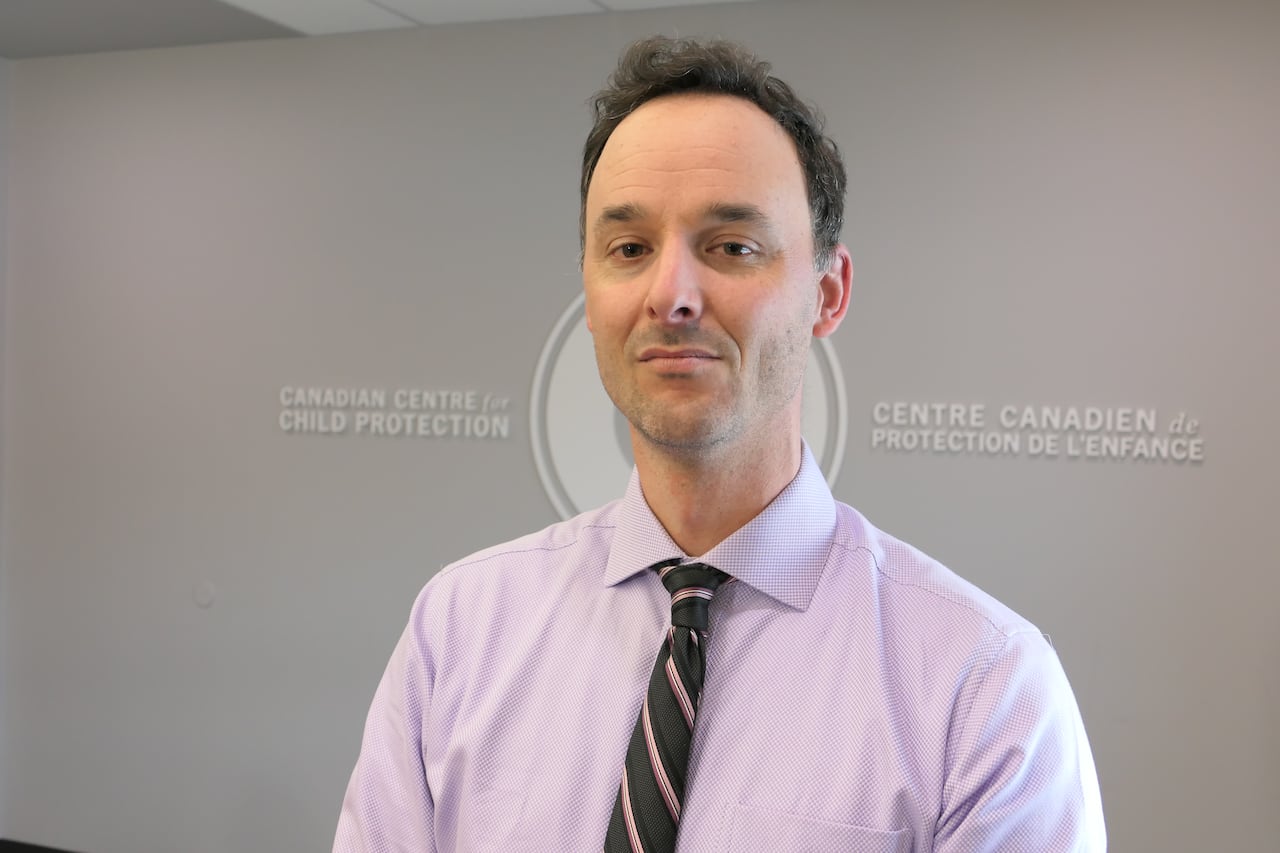 Jacques Marcoux, the director of research and analytics at the Canadian Centre for Child Protection, says tech companies need to do more to protect children online. (Jeff Stapleton/CBC)
A spokesperson for Snapchat said the company cannot comment on a specific case, but it is committed to working with law enforcement to keep “heinous activity” off its platform.
“Child sexual exploitation is an abhorrent crime,” the spokesperson wrote in an emailed statement.
Snapchat provides additional protection for users under 18, according to the company. That includes not allowing public profiles for those under 16, limiting how teens come up as a suggested friend and not allowing kids under 13 to sign up for an account.
All age restrictions rely on the person signing up to self-declare their age.
An in-app warning appears if a teen receives a chat from someone who has been blocked or reported by others to warn of potential risk.
Snapchat says it also works with law enforcement to report any child sex abuse imagery detected in the app.
Signs for parents to watch for
Mike Olson, a detective sergeant with the Winnipeg Police Service’s internet child exploitation unit, says those age restrictions are a “temporary fence.”
“There’s a lot of easy ways around it for kids,” he said of the age restrictions. “I don’t think they do enough.”
He used to be surprised when a victim of online exploitation was under 10 years old, he said, but that’s now common.
“Seven, eight, nine [years old] — that’s unfortunately not a shock anymore,” he said.
 Mike Olson, a detective sergeant with the Winnipeg police internet child exploitation unit, says parents need to be vigilant when it comes to their kids using devices. (Randall McKenzie/CBC)
Olson pointed to warning signs of online targeting, including kids or teens not wanting parents to see their online activity or using a phone in a private place like a bedroom.
A child who is more withdrawn or moody, or having an otherwise inexplicable “tough time” with things, may also be a victim, Olson said.
“The majority of the parents [of children targeted] have been shocked and surprised, and said they’ve given their child that talk about safety online, they’ve had that talk at school,” he said.
“These devices are hard for children to not use. They’re addictive — at least that’s my opinion.
“I would say if you are going to be giving your child a device, the supervision level has to be very high.”
Tougher laws needed: expert
Education and vigilance aren’t enough to keep kids safe, says Marcoux, when giant tech companies “hold all the cards.”
“They are not subject to any regulation in terms of how they design their platforms, and we let them just put these things into the hands of our kids,” he said.
Snapchat is the platform the child protection centre receives the most child sexual exploitation complaints about, he said.
But there are no laws in Canada right now that mandate standards on social media platforms.
Countries like the U.K. and Australia already have online safety legislation in place, said Marcoux.
The U.K’s Online Safety Act put age gates on pornography and other content deemed harmful to minors. It also requires age verification for some websites through identifiers like selfies, driver’s licences, passports or credit cards.
Australia has legislated a social media ban for users under 16.
“The reality is that if companies had legal obligations to design things in ways that maybe protect children … it would go a long way,” Marcoux said.
“Do we want apps where complete strangers can connect with their children, or should there be more friction between that connection? And should parents have a say into how that connection happens?”
WATCH | More children targeted by online exploitation, police, experts warn:
Experts issue warning after 7-year-old sexually exploited on Snapchat
Manitoba RCMP investigated a case in which a seven-year-old girl was coerced into sending nude photos to a man over Snapchat. Experts and police warn there’s a growing trend of children under 13 being sexually exploited through social media.