
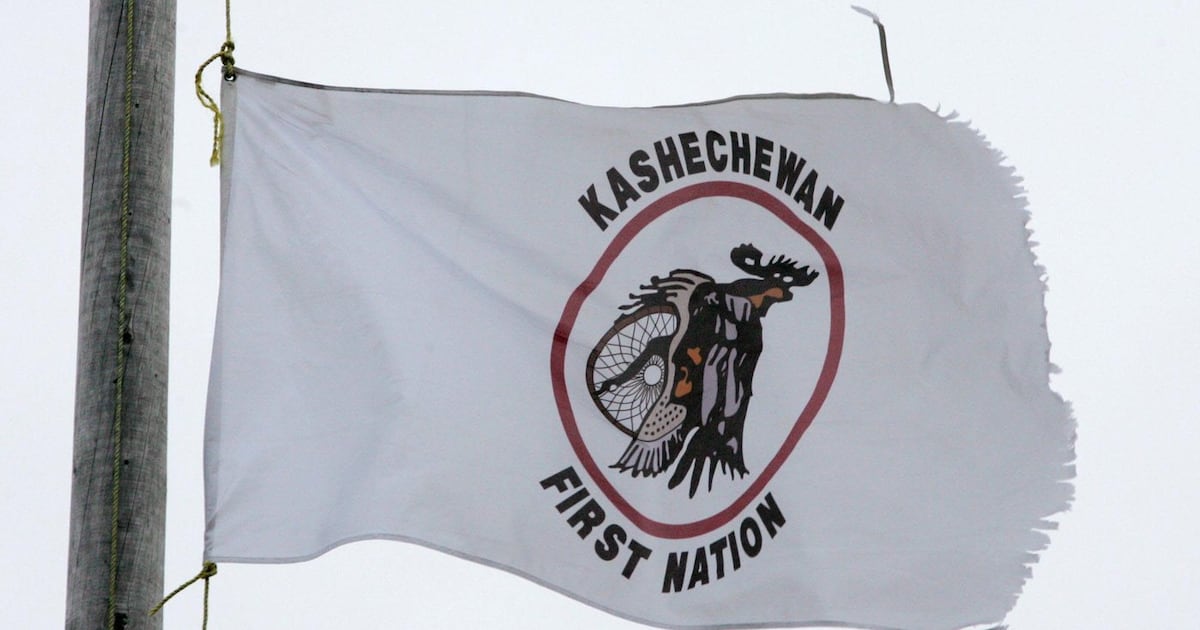
Kamil Karamali reports on how the residents in a northern Ontario First Nation are still displaced after water contamination forced many from their homes.
Niagara Falls, Ont., is now hosting hundreds of Kashechewan First Nation evacuees after a water crisis in the northern Ontario community forced many to leave their homes, the city’s fire chief said on Monday.
Jo Zambito said 858 people from Kashechewan are currently living in two Niagara Falls hotels and the city is ready to welcome more evacuees who could arrive in the coming days.
“They’re doing well. They’re well under the circumstances,” he said in an interview.
“They’ve had to evacuate their homes and they are in a different community than they’re used to back home. They’re in a community that has highrises and they’re in a tourist area, lots of vehicular traffic, something that they’re not used to.”
Kashechewan First Nation’s executive director, Tyson Wesley, said over the weekend that only about 400 people were expected to be left in the 2,200-member community by Sunday.
Officials at the fly-in community on the western shore of James Bay declared a state of emergency on Jan. 4 after infrastructure damage created an urgent public health and safety issue, with sewage creeping into people’s homes and contaminating fresh water systems.
Wesley said there was a sewage flood in the only clinic in the community, which forced it to shut down.
“We had issues with the sewage infrastructure and the sewage packed into the water treatment, which kind of entered the water filtration process and we had to shut off the water supply in the community,” he said.
Zambito said his teams are trying to provide everything the evacuees may need, including food and medical supplies.
“We’re trying to make their stay comfortable,” he said. “We’re no stranger in Niagara Falls to hosting evacuees and we’ve done it, many, many times.”
He said the fire department has been working with Indigenous groups, including the Fort Erie Native Friendship Centre and the Niagara Regional Native Centre, to provide support to the evacuees.
“We rely heavily on them because they understand their culture and they help us to identify needs that perhaps we’re not aware of,” he said.
Indigenous Services Canada said earlier this month that it was prioritizing the evacuation of 500 vulnerable people and it has enlisted a company that specializes in water and wastewater management to resolve the issues that led to the shutdown of the First Nation’s water treatment plant.
This report by The Canadian Press was first published Jan. 19, 2026.