

Cows are not usually credited with thinking on the hoof. They eat, they chew, they stand in fields performing an activity that may look like contemplation but is generally written off as digestion.
They are not typically thought to plan, let alone solve problems. A new study suggests we may have underestimated them.
The research describes what experts claim is the first documented case of flexible, multi-purpose tool use in cattle, observed in a 13-year-old cow named Veronika.
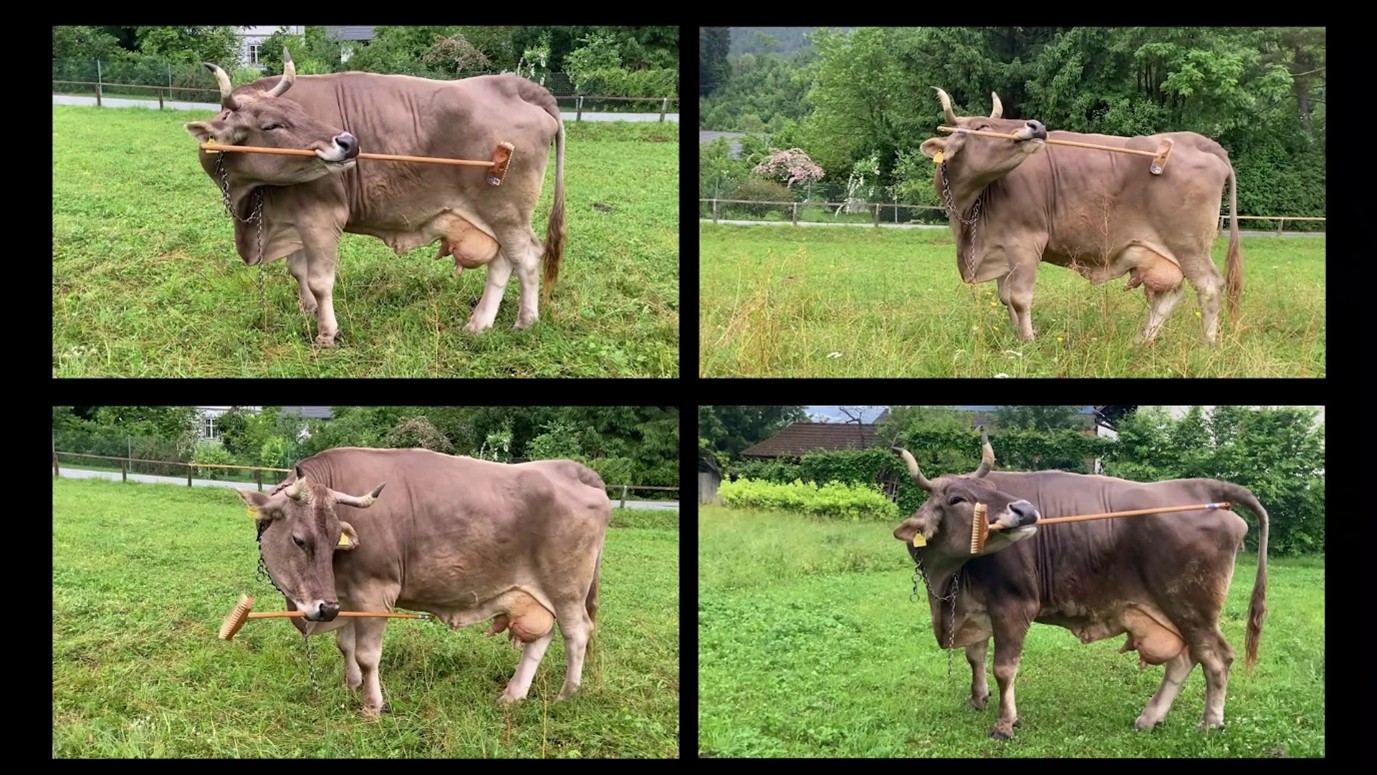
Veronika discovered the brush could help her scratch various itches that are hard to traditionally reach
ANTONIO OSUNA-MASCARÓ
Veronika is a Swiss brown cow kept not for milk or meat but as a pet by Witgar Wiegele, an organic farmer and baker in Austria. More than a decade ago he noticed her using a long-handled brush, holding it in her mouth to scratch awkward parts of her body.
When video footage of this behaviour reached Alice Auersperg, a cognitive biologist at the University of Veterinary Medicine, Vienna, it struck her as unusual, largely because Veronika used the brush in different ways to scratch different parts of her body.
“It was immediately clear that this was not accidental,” Auersperg said. “This was a meaningful example of tool use in a species that is rarely considered from a cognitive perspective.”
Auersperg and her colleague Antonio Osuna-Mascaró conducted a series of trials. They placed a long-handled brush on the ground and recorded how Veronika used it.
Veronika the cow is forcing scientists to rethink the species’s cognitive abilities
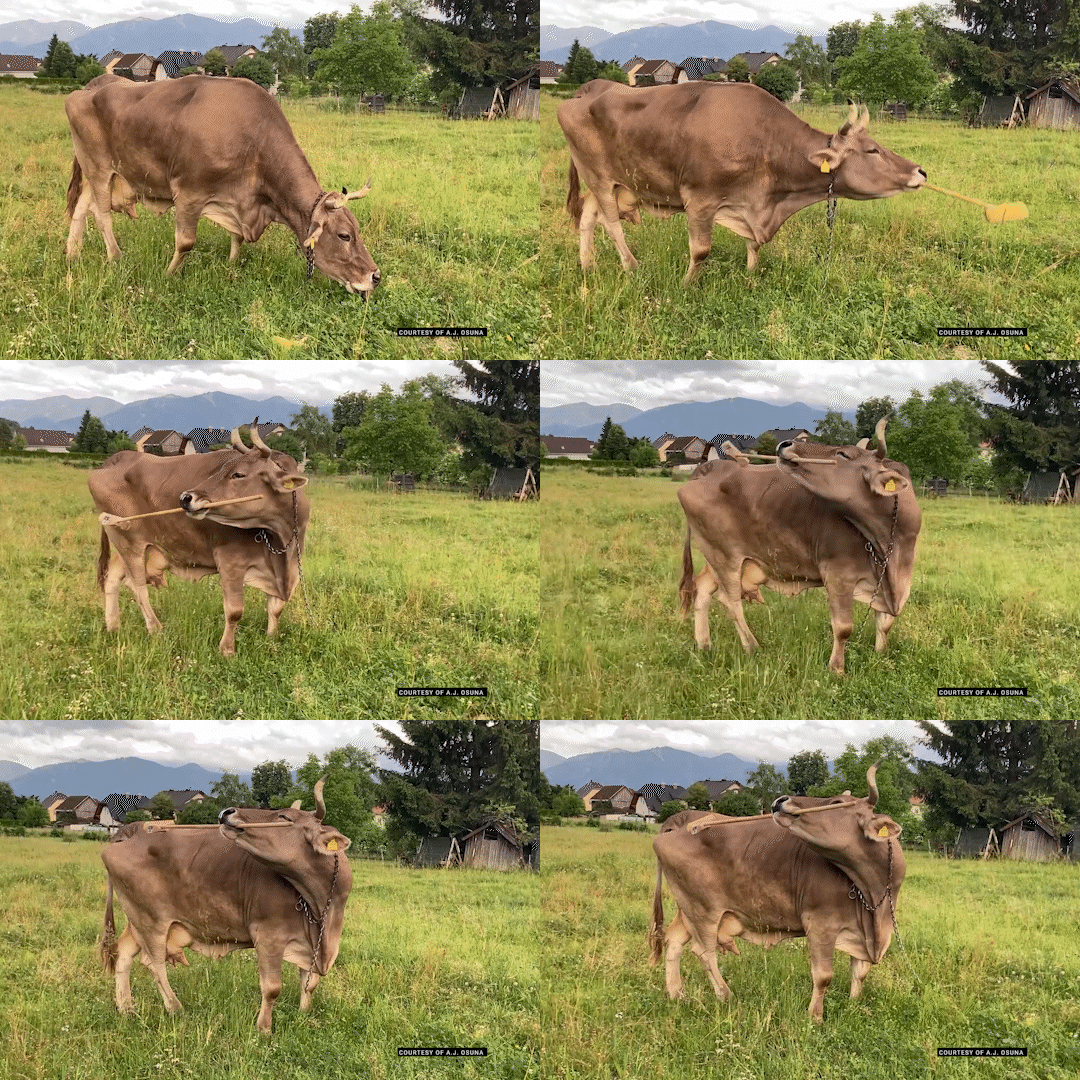
When scratching broad, thick-skinned regions such as her back or rump, Veronika tended to use the bristled end, applying it with sweeping, forceful movements. When targeting softer, more sensitive areas of her lower body, she switched to using the handle to scratch herself, moving more slowly.
Because Veronika directs tools at her own body, researchers describe this as egocentric tool use, which is usually regarded as less complex than tool use aimed at external objects. Even so, flexible, multi-purpose use of a single tool is rare. Outside humans, it has previously been demonstrated convincingly only in chimpanzees, the researchers say in their paper.
They wrote in a study published in the journal Current Biology that the findings “invite a reassessment of livestock cognition”.
Tool use is seen as a test of animal cognition. It requires the deliberate manipulation of an object to achieve a goal through mechanical means, ideally in a way that adapts to changing circumstances.
• Crafty cockatoos learn to use drinking fountains in Australia
Many animals rub against trees or rocks. Far fewer pick up objects and wield them intentionally. Fewer still exploit different features of the same object for different purposes. Veronika appears to stand apart from the herd in demonstrating all of this.
“We show that a cow can engage in genuinely flexible tool use,” said Osuna-Mascaró. “Veronika is not just using an object to scratch herself. She uses different parts of the same tool for different purposes, and she applies different techniques depending on the function of the tool and the body region.”
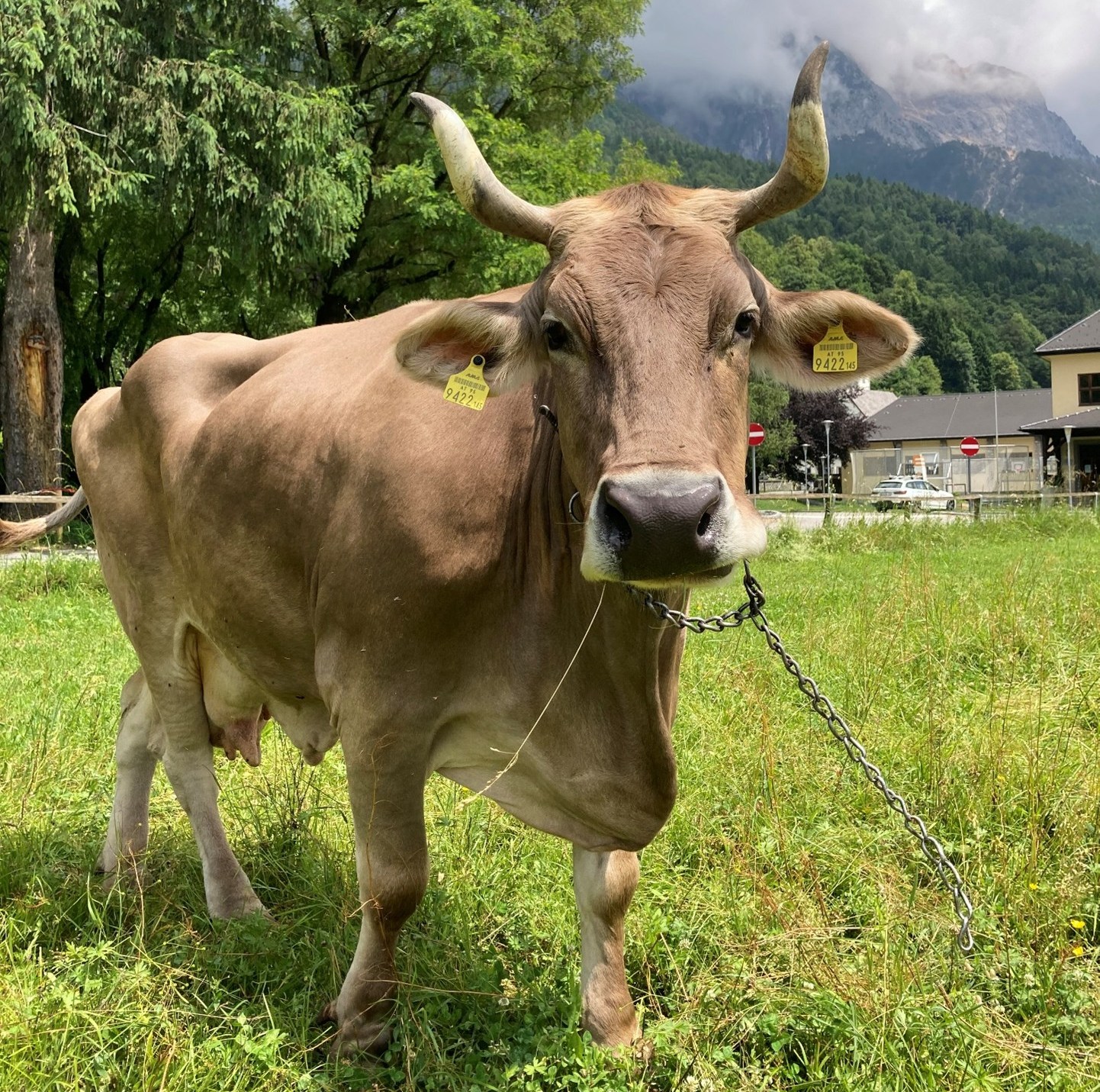
The researchers suspect that Veronika’s life circumstances have played a role in the emergence of this behaviour. Most cows do not reach her age and they are rarely given the opportunity to interact with a variety of potentially useful objects.
• Chimpanzees fall for futile ‘fashions’, just like humans
Her long lifespan, daily contact with humans, and access to a rich physical landscape probably created favorable conditions, they said. If that is true, there may be nothing very exceptional about Veronika, other than the opportunities she has been given to exercise her brain.

Antonio Osuna-Mascaró, the researcher, left, with Witgar Wiegele, the cow’s owner
“Because we suspect this ability may be more widespread than currently documented,” Osuna-Mascaró said, “we invite readers who have observed cows or bulls using sticks or other handheld objects for purposeful actions to contact us.”
Not just a clever cow: other animals with a tool kit
Chimpanzees
Wild chimpanzees crack open nuts using stone hammers, drum on trees to send messages through the jungle and eat medicinal plants when they’re ill.
Octopuses
One species collects coconut shells, using them as portable protective shelters
Gorillas
In 2018 one silverback male in a zoo in Devon was spotted fashioning a blanket into a makeshift pair of slippers. His keepers said he wanted to keep his feet warm.
Crows
New Caledonian crows bend wires into hooks to retrieve food. Other species have been spotted adding anti-bird spikes torn from buildings to their nests, apparently to fend off would-be invaders
Sea otters
Frequently spotted floating on their backs, using stones to crack open shellfish. They will keep a favoured rock tucked under an armpit for later use.