
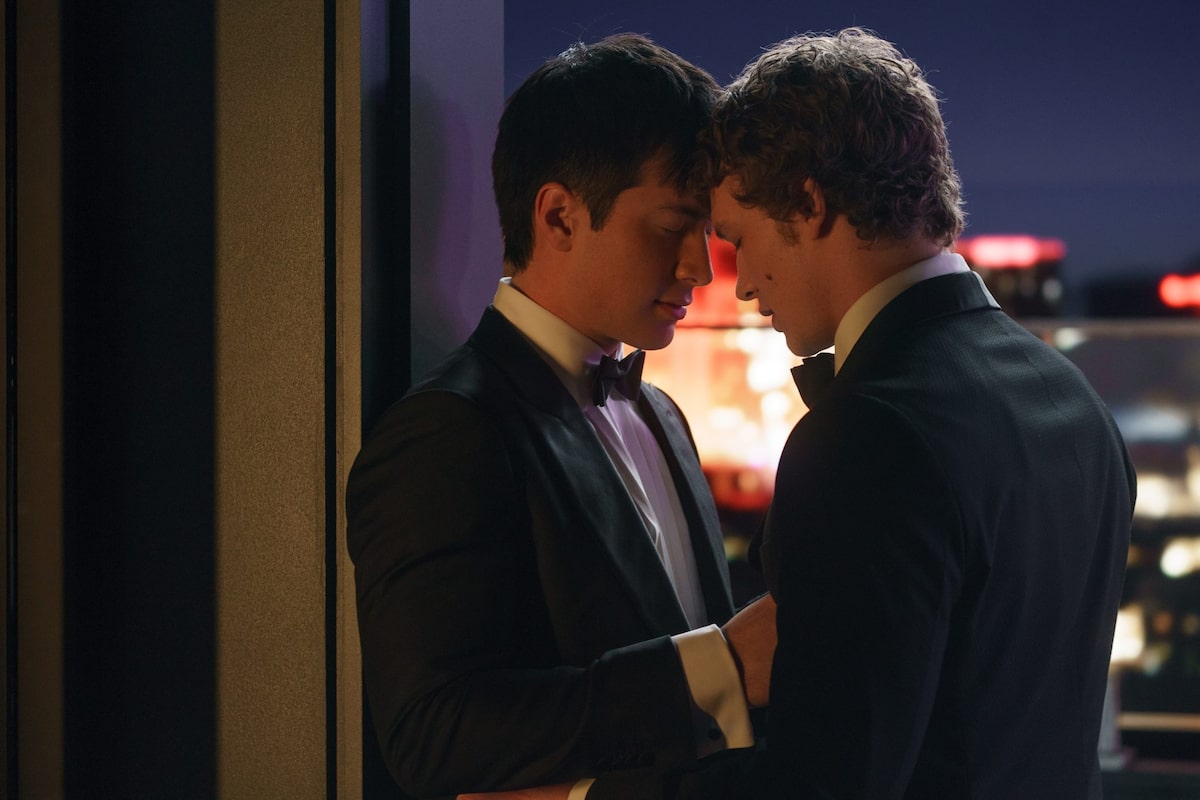
Actors Hudson Williams, left, and Connor Storrie are in a scene from Heated Rivalry.HO/The Canadian Press
When Jacob Tierney, the creator of the Canadian blockbuster series Heated Rivalry, scripted the first explicit sex scenes of his career, he wanted them to be joyful.
Too often, he felt the sex in movies and television was tainted with threat, the risk of violence or a power imbalance. He wanted to create a horny, capital-R romance where the sex was not only great – it was fun and enthusiastic.
The result is a worldwide smash hit, a television show everyone seems to be watching (and obsessively rewatching) about two superstar hockey players – Ilya, the brash-yet-sensitive Russian, and Shane, the contained-yet-passionate Canadian, who have steamy, secret hookups whenever their rival teams meet, and eventually fall in love.
As Canadian exports go, Heated Rivalry is shamelessly explicit. But, best of all, it’s explicitly consensual.
“Nobody is trying to win the sex,” Mr. Tierney says. “They want to be equals.”
For two guys who struggle to converse over tuna melts, Shane and Ilya are chatterboxes in bed. They talk about what they want to do before anything happens, check in during and often debrief after.
Ilya’s romantic declaration – “All I want is you” – may happen in Russian, a language Shane doesn’t understand, but his sexiest lines: “Is this okay?” and “You still want to?” are clear and forthright.
It’s the kind of consent – verbal, ongoing and enthusiastic – that experts have been trying to teach young people for decades. And judging from all the swooning fans, there’s nothing boring about it.
What Heated Rivalry’s success reveals about fan fiction’s cultural staying power
The straight hosts of the Empty Netters hockey podcast, while gushing scene by scene over all six episodes, have fittingly dubbed Ilya “a consent king.”
In Britain, where it officially began streaming this month, a Guardian story cited the healthy sex as one reason why “women were feral” for the show. The formerly unknown stars, Hudson Williams and Connor Storrie, who have been making the rounds at the Golden Globes and late-night talk shows, often highlight the show’s portrayal of consent in interviews.
Leah Dajches, an assistant professor at New Mexico University who studies sex in the media, says the show is a master class in how consent that’s specific and compassionate can be the opposite of a mood-killer. “I watch a lot of young adult and teen television,” she says, “and I’ve not seen overt verbal consent like that.”
Heated Rivalry exploded as an international success over Christmas, proving that a raunchy love story featuring a gay couple could captivate a mainstream audience. Even more surprising: It centres around hockey, a sport with a terrible track record for its toxic masculinity and homophobia.
The show was adapted from the book written by Nova Scotia author Rachel Reid, a hockey fan who intentionally penned a fictional rebuttal to the sport’s problematic culture. Most of the consent scenes come from her chapters. And the storyline is heartwarmingly aspirational: After winning the Stanley Cup, for instance, a side character comes out in front of fans and television cameras by kissing his boyfriend on the ice – and not a single boo can be heard over the cheers from the stands.
The show depicts the kind of consent – verbal, ongoing and enthusiastic – that is rarely depicted on screen.Crave/Bell Media/Supplied
This week, the prominent American relationship therapist Esther Perel, who authored the bestselling Mating in Captivity, called the show a “beautiful lullaby” after bingeing it in one night with a friend who had already watched it several times.
When you know the characters will receive kindness and support in challenging moments, a repeat viewing “is like stroking a teddy bear,” Ms. Perel suggested in an Instagram post on Monday. “It is such an antidote to the harshness of the realities that so many of us are currently confronting.”
Rom-coms often get dismissed as tropey fluff, despite their popularity. But the relationship stories they tell are important, says Dr. Dajches, because teens and young adults look to media to fill in knowledge gaps around sex. Her own work found that watching verbal consent portrayed on a television show makes young people more likely to say they will practise it in real life. Whether they actually do so is less clear, but, in Heated Rivalry’s favour, the finding is stronger when they like the characters.
And yet, this kind of dynamic is rarely depicted on screen. A 2020 paper published in the journal Sexuality and Culture analyzed types of sexual consent in 49 PG-13 and R-rated films popular with young people. The study found that only about 20 per cent of the consent cues were verbal, and even then only about 6 per cent were the explicit kind portrayed in Heated Rivalry.
Depicting agreeing to sex as non-verbal suggests that good sex happens without clear communication, says Dr. Dajches. But body language can be ambiguous and easily misunderstood; two people can interpret the same gesture differently, and non-verbal cues often don’t establish clear boundaries.
Heated Rivalry is a (pirated) hit in China, despite a crackdown on LGBTQ content
For this reason, she gives shows such as Stranger Things and Outer Banks a low score for their depictions of consent. (On the other hand, she gives high marks to Heartstoppers, another show about a young gay couple.)
Heated Rivalry, she says, showcases top-tier and often tender communication between its leading men, again and again, “providing a unique and layered depiction of masculinity.”
Dr. Dajches points out how Ilya, the more dominant character, constantly checks in with Shane, who has less experience. When they end up in bed for the first time, he starts with, “So, what do you want to do?” And, later, during sex, Ilya asks repeatedly if Shane is okay with what is happening.
“It’s not complicated,” Dr. Dajches says. “It’s not like he’s giving this big romantic like soliloquy. It’s just basic checking in: How are you?” And that communication is depicting the experience as safe and enjoyable, rather than asking permission.
Some of this dialogue reflects the nature of queer sex, said Mr. Tierney, who is gay. “There is a lot of, ‘We could do a lot of different things. What do you want to do?’”
Orlando St. Pierre, lead of operations at Toronto’s Gay Men’s Sexual Health Alliance, says the show demonstrates empathy and consideration.Galit Rodan/The Globe and Mail
For Orlando St. Pierre, a creative consultant and lead of operations at Toronto’s Gay Men’s Sexual Health Alliance, the dialogue in Heated Rivalry mirrored his own standards and expectations.
“Sex is communication, right?” he says. “Like I’d tell a friend, ‘Why are you interested in giving your body to someone who’s not even interested in having a conversation first about the things that will ensure you both have the best time?’”
Ultimately, Mr. St. Pierre says, the show is only demonstrating the empathy and consideration that we should practise with each other both in bed, and out. “Communication should be present in every interaction,” he says. “It’s not only, is this okay, but do you enjoy this?”
As Mr. Tierney puts it, “The characters are learning that the happiness of the other is a big part of their own happiness. And I think that’s part of the big journey of young people with sex and relationships.”
Chala Hunter, the show’s intimacy co-ordinator, says consent was a priority – on set between the actors, and in choreographing the sex scenes. “I grew up watching things that normalized a lack of consent or were foggy around it,” she says.
In Heated Rivalry’s case, consent isn’t only present, it drives the narrative forward. “We’re always really clear about the level of respect and care in this relationship, even if both characters are dealing with their own stuff,” says Ms. Hunter.
Consent education has done a good job teaching young people the right vocabulary, says Stafford Perry, of the Centre for Sexuality in Calgary, but they also require coaching to practise it in their relationships. Mr. Perry is the manager of WiseGuyz, a healthy relationship and life skills program for young men between the ages of 13 and 24, now offered at 31 sites across the country.
Young men, he says, are often particularly anxious about handling rejection, or don’t understand why ongoing consent is important. When so many relationships start through online communication, they need be taught that consent is moment to moment – that however far a conversation goes online, checking for consent starts offline.
Mr. Perry is a big fan of Heated Rivalry, which does a good job on both points. In one scene, Ilya proposes a sexual act, Shane says no, and nobody’s ego is bruised. And their sexting stays online; in person, they still discuss what they both want.
In these increasingly ugly and violent days, Heated Rivalry has become Canada’s happy, horny gift of compassion and empathy to the world. “This is a hopeful story,” says Mr. Tierney. “Where you can be loved, and love in return.” No wonder we can’t stop watching.