
Want more ways to catch up on the latest in Bay Area sports? Sign up for the Section 415 email newsletter here and subscribe to the Section 415 podcast wherever you listen.
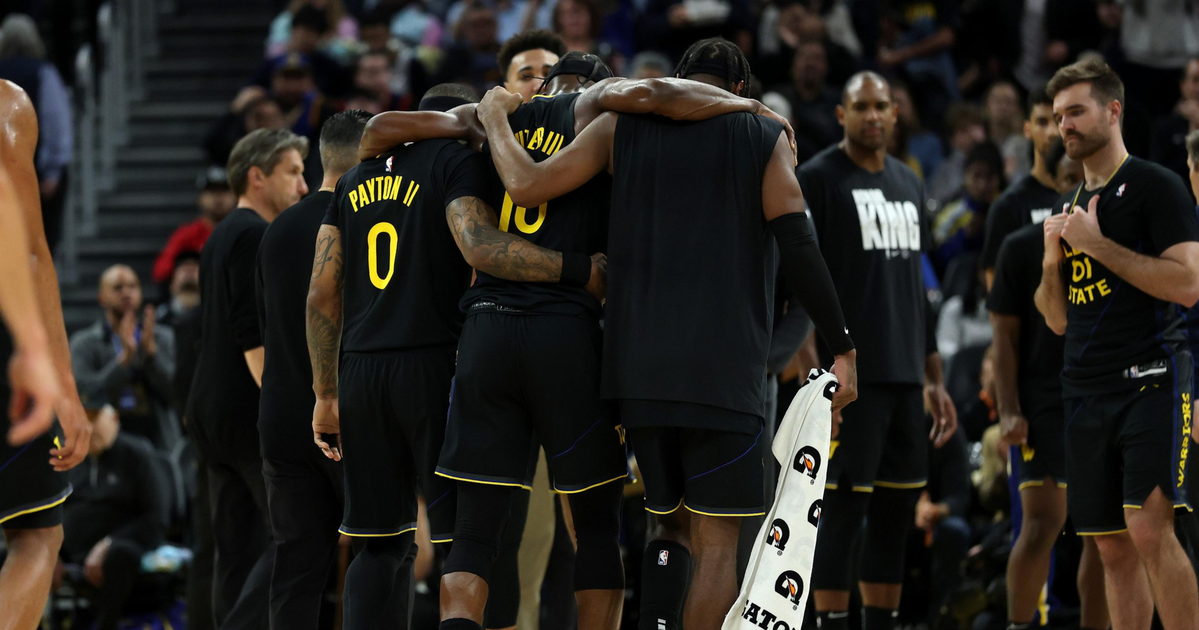
Jimmy Butler’s season-ending torn ACL is devastating for the Warriors. It’s not quite Klay Thompson’s draft-night Achilles tear or Kevin Durant’s Finals ruptured Achilles, but it’s a different kind of nightmare. There’s more finality to it. From fading dynasty to fade to black.
All from one wrong step in late January.
What’s different about Butler’s injury is that it opens a Pandora’s box of roster-building dominoes at the most delicate time in Steph Curry’s career. The 37-year-old just earned his 12th All-Star nod. Now he’s on a team with zero chance of competing for anything of significance this season.
Butler’s injury changes everything for the organization. Before Monday, the objective was clear: make moves to help Curry play meaningful basketball in April and May, while he’s still at an elite level. Now, the path forward is muddled, and the organization has two weeks before the trade deadline to pick a direction.
Bottoming out this season for a high draft pick suddenly isn’t the most outlandish idea (the Warriors still own their 2026 first-rounder). What that would mean for Curry and Steve Kerr — on a lame-duck contract — is tricky to predict.
Jonathan Kuminga, who was in the fast lane to a change-of-scenery trade before the deadline, might suddenly be in the team’s short-term plans again. If he plays well and keeps the Warriors afloat in the next two weeks, would the franchise dare hold onto him?
Today
4 days ago

Tuesday, Jan. 13

Is there a third, creative path back to immediate contention? It would require a bold trade. Butler’s contract was expensive, and now it’s an albatross $56 million that expires after next season. No team would sign up to pay a 37-year-old coming off an ACL surgery that kind of coin. But maybe the Warriors could attach a heap of future draft capital to acquire another team’s distressed asset.
A sidelined Butler is, by default, less reliable than the oft-injured Anthony Davis, for instance. Davis and Butler make the same exact salary this season, making a trade logistically possible.
All options are worth considering, though none are particularly appealing.
What’s certain is that Butler no longer serves a purpose as Curry’s running mate this season, and banking on him recovering to the point where he’s capable of fulfilling that duty next year — at age 37, coming off major surgery — would be foolish. Butler is in line to miss the first half of next season and will never be the same; according to In Street Clothes’ Jeff Stotts (opens in new tab), he’s the second-oldest NBA player since 2006 to tear his ACL.
A normal team would probably take this unfortunate opportunity to test its lottery luck. Without a championship chance this year, it wouldn’t be too late to lean into Golden State’s young players, lose a ton of games in the second half, fall into the lottery, and hope the pingpong balls yield a juicy pick in a loaded draft. They could sell off some spare parts and hope to run it back next year with Curry, a recovered Butler, Draymond Green, and a talented rookie.
But the Warriors aren’t a normal team. How do you look Curry in the face and sell him on an impromptu gap year? It’s probably not palatable. Asking to rebuild during one of Curry’s last All-Star seasons would be like forcing a Michelin-star chef to sling hot dogs outside Chase Center. While Curry has never liked to play GM, his voice should matter the most.
On the Kuminga front, Kerr said the wing “absolutely” could rejoin the rotation if there’s a need at forward. The 23-year-old wants out, but the roller-coaster saga of his tenure with the club just got a little more interesting. He has slid into a featured role well in his career, like during Andrew Wiggins’ extended absence in the 2022-23 season.
Butler’s worst-case scenario injury instantly makes Kuminga the Warriors’ second-most dynamic offensive weapon. Yet the team already knows he doesn’t fit Kerr’s “0.5 basketball” system. It knows he’s not going to turn himself into a consistent defender and rebounder. One more look at the promising wing would just be spinning wheels.
That’s why a trade makes sense. If Dallas is interested in Kuminga, he might be enough of a sweetener in a Davis trade. The Mavericks would get off their massive dead money a year earlier with Butler on their books instead of Davis, and Kuminga represents some upside. Toss in a pick swap or two, and maybe you have a desperation blockbuster cooking.
But Davis, at 32, is a nightly injury risk and a disastrous contract extension waiting to happen. Other distressed assets at Butler’s salary level include Paul George, Joel Embiid, and Zach LaVine. Trades in those cases would involve the Warriors sacrificing 2027 cap space (and, in most cases, draft capital) for an instant dopamine hit of star power.
Perhaps Butler’s injury makes a player like DeMar DeRozan more appealing to the Warriors. Sacramento loves Kuminga, and DeRozan could at least serve as an offensive facsimile — mid-post scoring hub, foul-drawing aficionado.
If the Warriors still intend to give Curry something to play for and Kerr something to coach, Butler’s injury should motivate them even more to make a move before Feb. 5. If the franchise recognizes this as the slamming of a championship window, play for pingpong balls. If there’s even a shred of belief left in Kuminga’s upside, roll the ball out and see if he can improve his trade value for the summer.
Butler has been a Warrior for less than a year. The team is 48-27 after trading for him last February. In such a short time, he injected life into a Warriors season heading nowhere, lived up to his big-game reputation, and provided Curry with an elite, if unlikely, costar. “He’s an alpha,” Kerr said. Now it’s possible that his last act as a Warrior was telling his favorite punching bag, Buddy Hield, to “shut your bitch ass up.” (opens in new tab)
Because over the next 16 days before the trade deadline, everything — seriously, everything — is suddenly possible.