
Topline
Immigration and Customs Enforcement agents are being authorized to forcefully enter homes without a judge’s warrant, according to an ICE memo obtained by the Associated Press, pushing the boundaries of government searches and civil rights as protests against President Donald Trump’s use of federal immigration agents in cities throughout the U.S. continue.
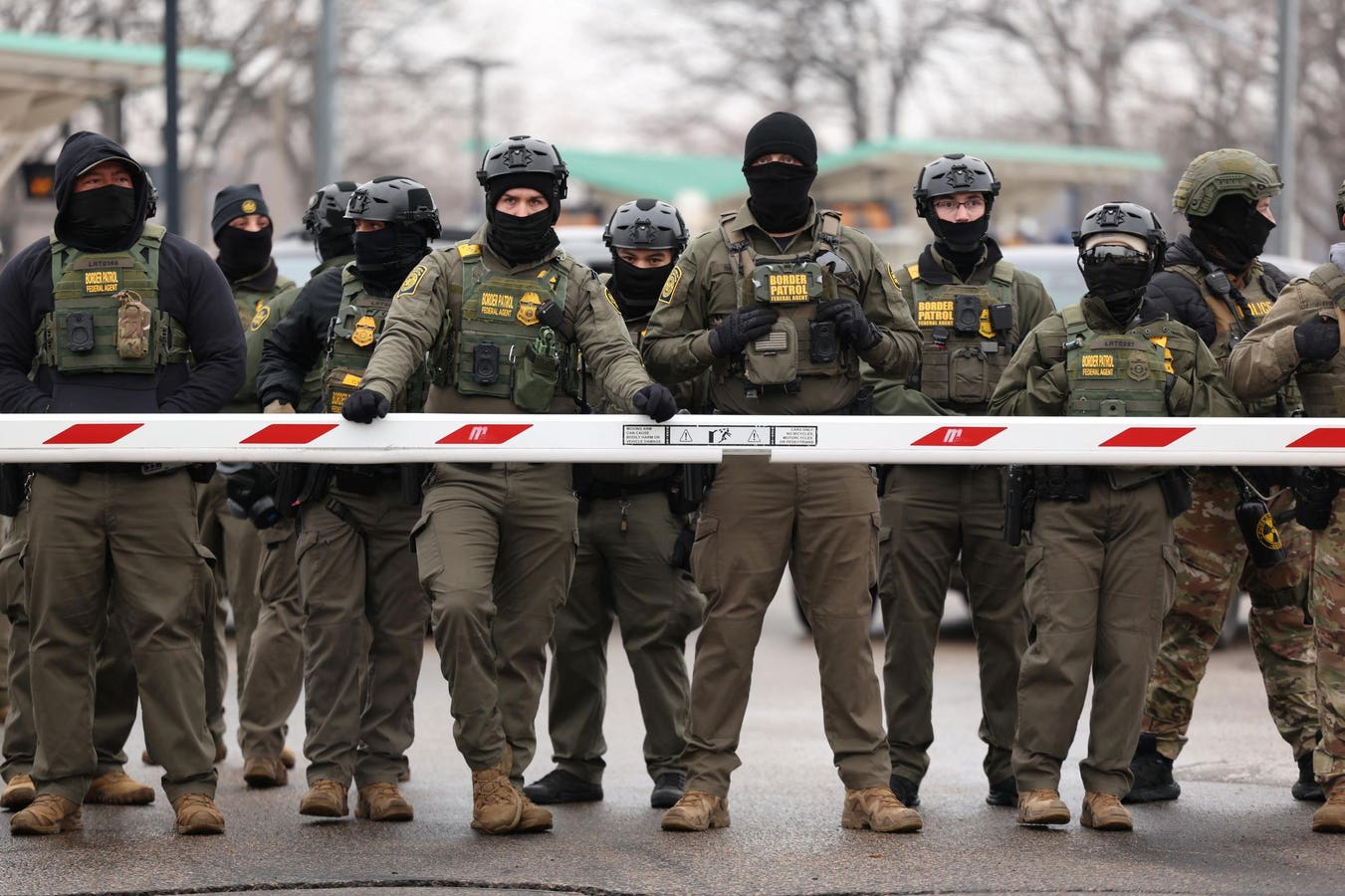
Protests against immigration agents in Minnesota have continued for weeks.
Photo by CHARLY TRIBALLEAU / AFP via Getty ImagesKey Facts
The memo authorizes federal immigration officials to forcefully enter residences based on a “narrow administrative warrant,” the Associated Press reported, noting advocates’ view that the approach “collides with Fourth Amendment protections and upends years of advice given to immigrant communities.”
The memo has not been widely shared within Immigration and Customs Enforcement but has been used to train new ICE agents, with hires and agents in training being told to follow the memo instead of written training materials that contradict it, according to a whistleblower disclosure cited by the Associated Press.
The Associated Press noted it remains unclear how widely the memo has been applied to ICE operations.
Amid increasing ICE operations and protests in Minnesota, multiple reports have detailed federal agents forcefully entering homes of U.S. citizens.
Forbes has reached out to ICE for comment.
Get Forbes Breaking News Text Alerts: We’re launching text message alerts so you’ll always know the biggest stories shaping the day’s headlines. Text “Alerts” to (201) 335-0739 or sign up here.
Chief Critic
Sen. Richard Blumenthal, D-Conn., sent a letter to the Department of Homeland Security on Wednesday blasting the ICE memo, attaching the disclosure to his letter and saying his office obtained it from an anonymous whistleblower. Blumenthal is also demanding an explanation for the ICE policy and documents related to it. The senator called the policy “unlawful & morally repugnant” in a tweet, saying federal agents “have no right to ransack your bedroom or terrorize your kids on a whim or personal desire.”
What Is The Fourth Amendment?
The Fourth Amendment protects people from unreasonable searches and seizures, requiring warrants based on good reason to carry out searches of a home, person, papers or belongings. Exceptions allowing for warrantless searches include emergencies like imminent danger or hot pursuits, consent from an individual and items in plain view.
What To Watch For
Protests in Minnesota have persisted for weeks as demonstrators and ICE agents clash. The Pentagon said this week it is keeping up to 1,500 active-duty troops on standby in case President Donald Trump decides a deployment is necessary. The president has considered using the Insurrection Act in Minnesota to allow himself the power to deploy troops, telling reporters last week there was “no reason right now to use it.”
Key Background
Protests in Minnesota were triggered by an ICE agent’s fatal shooting earlier this month of Renee Good, a mother of three. Local and state officials have strongly opposed the Trump administration’s characterization that Good was attempting to run over the ICE agent, pointing out that video of the incident showed Good turning away from the agent before she was shot at least three times. Minnesota is one of several states thrust into the controversy surrounding Trump’s frequent use of federal agents and the National Guard to carry out immigration operations, act as a crime deterrent and respond to protests. The president has deployed or attempted to deploy the National Guard in cities in blue states including Los Angeles, Portland, Oregon and Chicago, and has also deployed it in New Orleans and Memphis, Tennessee, which are blue cities in Republican-led states.
Tangent
An appeals court blocked a ruling from a federal judge that sought to stop ICE agents in Minneapolis from using pepper spray on peaceful protesters and arresting them, scoring a win for the Trump administration Wednesday as it considers the deployment of active-duty soldiers to respond to anti-ICE protests in Minnesota fueled by the fatal shooting of Good. The 8th Circuit Court of Appeals, siding with the Trump administration’s argument that the ruling against ICE agent tactics hindered their ability to protect themselves, issued an administrative stay against last week’s injunction, meaning agents can carry out their usual tactics without restrictions, at least temporarily while the case plays out. Katherine Menendez, the federal judge who ruled in favor of protesters, said last week ICE agents could not arrest people “engaging in peaceful and unobstructive protest activity” or use crowd dispersal tools like pepper spray and tear gas on them. “We will be filing our opposition to the government’s stay request shortly and will also request that the court rule quickly so that protesters and observers can again be protected by the district court’s injunction immediately,” attorney Kyle Wislocky, who is working with the American Civil Liberties Union, told Forbes in an email. “We anticipate filing our response this week.”
Further Reading
Trump Threatens To Use Insurrection Act In Minnesota (Forbes)
Trump Says He Bets Renee Good Was A ‘Wonderful Person,’ But Her ‘Actions Were Pretty Tough’ (Forbes)
At Least 6 Minnesota DOJ Prosecutors Resign After Request For Probe Into Renee Good’s Widow (Forbes)