
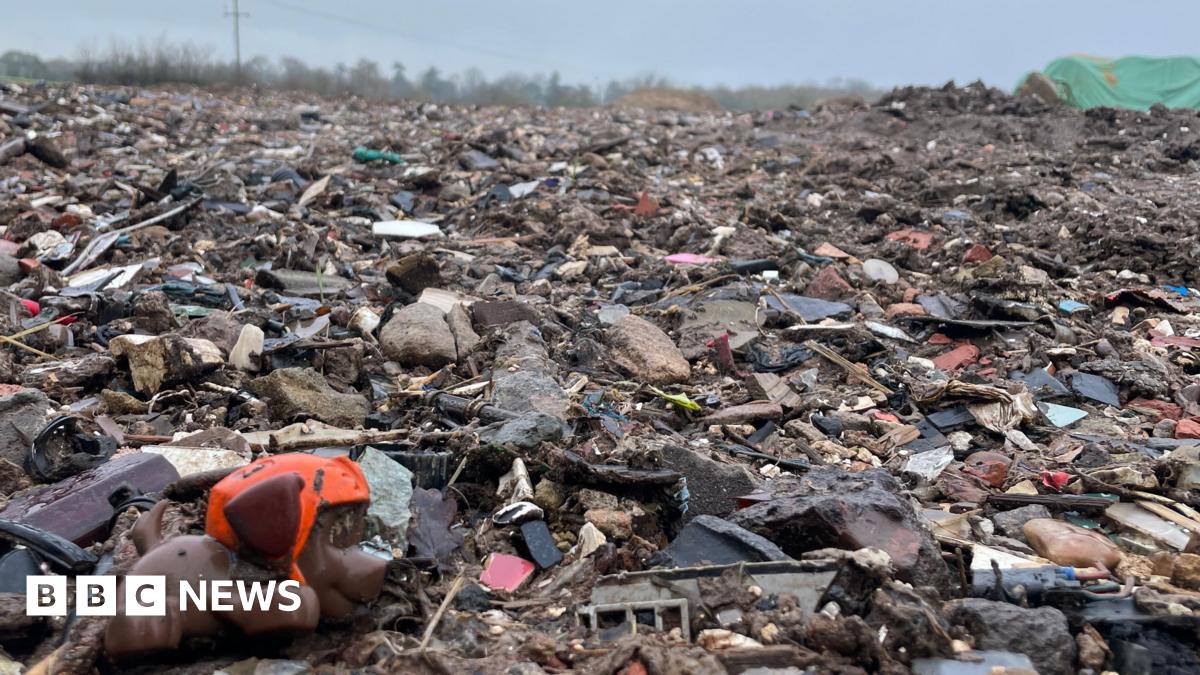
Concerns over the scale of illegal waste activity hit the headlines at the end of last year when approximately 20,000 tonnes of waste was dumped illegally on a field beside the A34 at Kidlington in Oxfordshire over a period of several months.
But using the Environmental Information Regulations (EIR) to make a data request the BBC has discovered there are at least 11 sites bigger than 20,000 tonnes.
The number is likely to be higher, as the Environment Agency acknowledged in its response to the EIR request that “this figure is based on the data we hold; however, we don’t have this information for every site”.
Erica Popplewell, of environmental campaign group River Action, queried why the details of the biggest sites had only been made public in response to the BBC’s EIR request.
“Why is the Environment Agency not saying what’s happening more publicly so that we can see what actions they’re taking and the secrecy around dumping sites can be eroded?” she asked.
The Agency has previously declined to give the exact locations of the biggest sites to avoid prejudicing ongoing investigations.
However, it has now revealed six of the biggest sites are at Northwich, Cheshire (280,000 tonnes); Camborne, Cornwall (50,000 tonnes); Burnley, Lancashire (25,000 and 50,000 tonnes); Sittingbourne, Kent (36,000 tonnes); Fakenham, Norfolk (originally 35,000 tonnes). Dumping has been stopped at four of the sites, but none of them have yet been cleared up.
In total, it said, it had stopped activity at 743 illegal waste sites in 2024/25, of which 143 were high risk, but that 517 active dumps remain.