
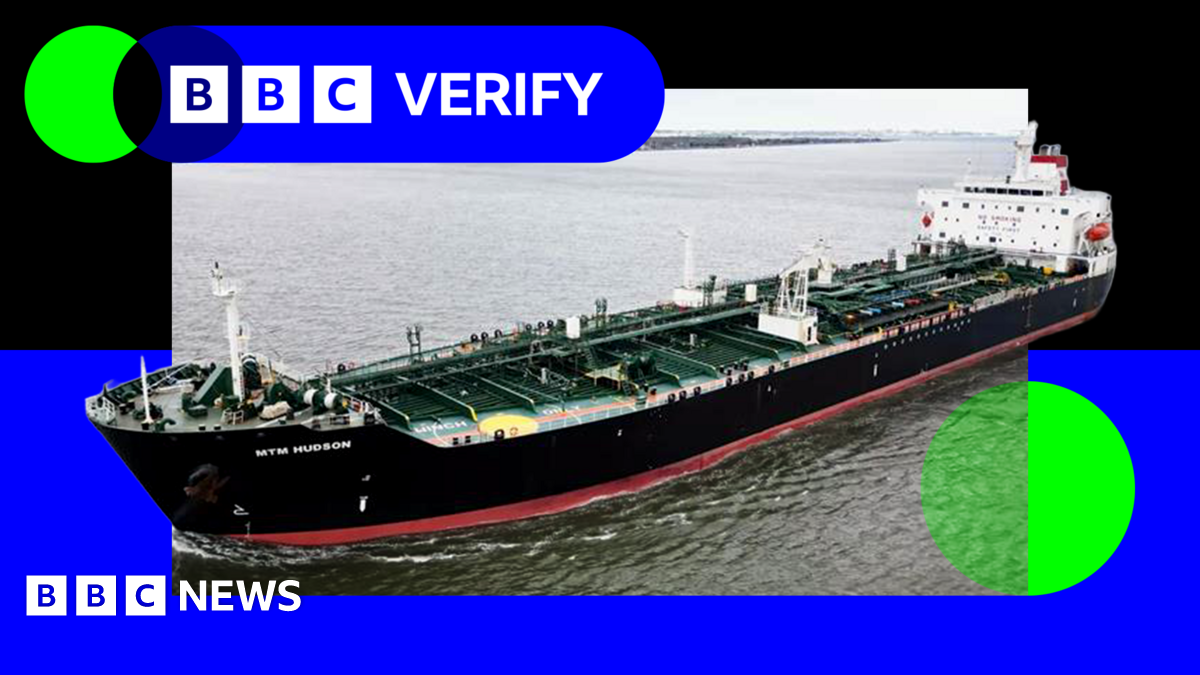
The Nasledie, a tanker which is more than 20 years old, also entered the Channel in January. The ship was sanctioned by the UK in May 2025 and according to Anna Zhminko, an analyst at Maritime Intelligence firm Vortexa, has been part of the shadow fleet since 2023.
In November the ship had a makeover, changing its name from Blint and switching to a Russian registry after falsely flying under the Comoros flag. It left Russia in late December and just days after the BBC reported on the UK’s legal advice it entered the Channel carrying about 100,000 tonnes of Urals crude, Russia’s flagship oil grade.
The shadow fleet has helped Russia to mitigate the impact of an embargo imposed on its oil exports since 2022 and has helped prop up an economy battered by Western sanctions.
In January, Foreign Secretary Yvette Cooper said the British government was ready to “tighten the chokehold” on Russia and take new “assertive actions” against shadow fleet vessels. Her comments came after officials were told troops could board and seize tankers under the Sanctions and Money Act 2018.
While the UK has aided US forces to seize a tanker near Iceland in early January and France in the Mediterranean on Thursday, British troops are yet to independently seize any shadow fleet vessels.
This is despite BBC Verify identifying six tankers operating in the Channel under false flags since the beginning of January. This means the ships are not registered in the states they publicly claim to be registered in. Under the United Nations Convention of the Law of the Sea such tankers can be seized as stateless vessels.
Dame Emily Thornberry, chair of Parliament’s Foreign Affairs Select Committee, said she was “very disappointed” that the vessels had not been intercepted.
“I think in order to give Ukraine proper support, we have to have not only sanctions that look on paper, but we have to make sure we mean it and that we implement those sanctions,” she said.