
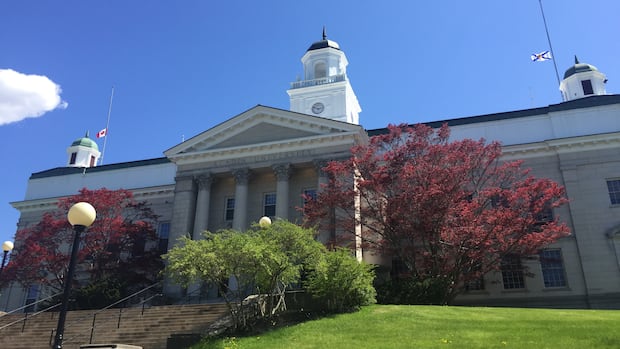
Some Nova Scotia universities are facing a potential loss of hundreds of thousands of dollars in funding after failing to hit a provincially imposed target to fill campus residences to 95 per cent.
Other universities are breathing a sigh of relief after enough students filled their residences to meet the province’s requirements.
“It’s a big deal. That amount of revenue swing is a significant thing for any university, especially in these times,” said Elizabeth Yeo, the vice-president of students at St. Francis Xavier University in Antigonish, N.S.
In April 2025, the provincial government announced it signed two-year funding agreements with all 10 universities.
In an effort to increase student housing, one of the province’s requirements was that universities had to fill their on-campus housing to at least 95 per cent, without reducing the number of beds.
Each university must report its residence numbers to the province on a regular basis.
Schools that didn’t meet the goal last October have until February 2027 to show they’ve moved 25 per cent closer to the target.
WATCH | All Nova Scotian universities signed bilateral funding agreements with province:
N.S.’s 10 universities sign 2-year funding agreements with province
The agreements outline funding, accountability requirements and stipulations the schools must abide by to access some of the money. Nicola Seguin has the story.
If they can’t do that, the province will hold back funding, which in St. FX’s case meant more than $1.1 million was on the line.
“It is definitely something that we were paying attention to,” said Yeo.
She noted that St. FX has some apartment-style housing which students enjoy, and it is working to make other residences more attractive to students by clustering single rooms together.
The school was able to fill 98 per cent of its beds in October, and 96 per cent for the winter term.
Millions on the line
But that’s not the case at Acadia University in Wolfville. In October, the school filled 85 per cent of its 1,556 student beds for the fall term.
The winter term saw another drop to 82 per cent occupancy, says Chad Johnstone, Acadia’s director of residence and student life.
Johnstone explained Acadia’s priority has been to have slightly more housing than needed, in order to house any student who asks for it and to accommodate emergency requests.
“Until the introduction of these requirements in the bilateral agreement, having an occupancy rate in the 80s percentile has not been a concern,” he said, explaining that Acadia has traditionally filled its residences to the 87 to 90 per cent range.
“We have not been at 95 per cent occupancy at any point in the records that I have access to,” he said. “So if it’s happened, it’s certainly before computers were introduced on campus.”
Johnstone believes Acadia can increase its occupancy enough to meet the province’s February 2027 deadline for improvement. That’s key, as Acadia’s holdback is $1,038,475.
He’s concerned the loss of that much funding could mean less ability to upgrade residences, or that more costs would be passed on to students.
WATCH | N.S.’s large universities are planning deficits for the coming year:
N.S. universities grapple with budget shortfalls
All of the province’s large universities are planning deficits for the coming year. The crunch comes amid plummeting international student enrolment and stagnating provincial funding. Frances Willick has the story.Concerns at other universities
CBC obtained data from the province on the October vacancy rates using access to information.
Some schools that did not meet the target included Mount Saint Vincent University, which was filled to 89 per cent, and Université Sainte-Anne, which was filled to 48 per cent capacity.
Those schools have holdbacks of $679,382 and $265,110, respectively.
In an email statement, MSVU said the school will continue “working hard to fill our residences,” but demand for rooms has shrunk due to factors including a “significant decrease” in international student enrolment.
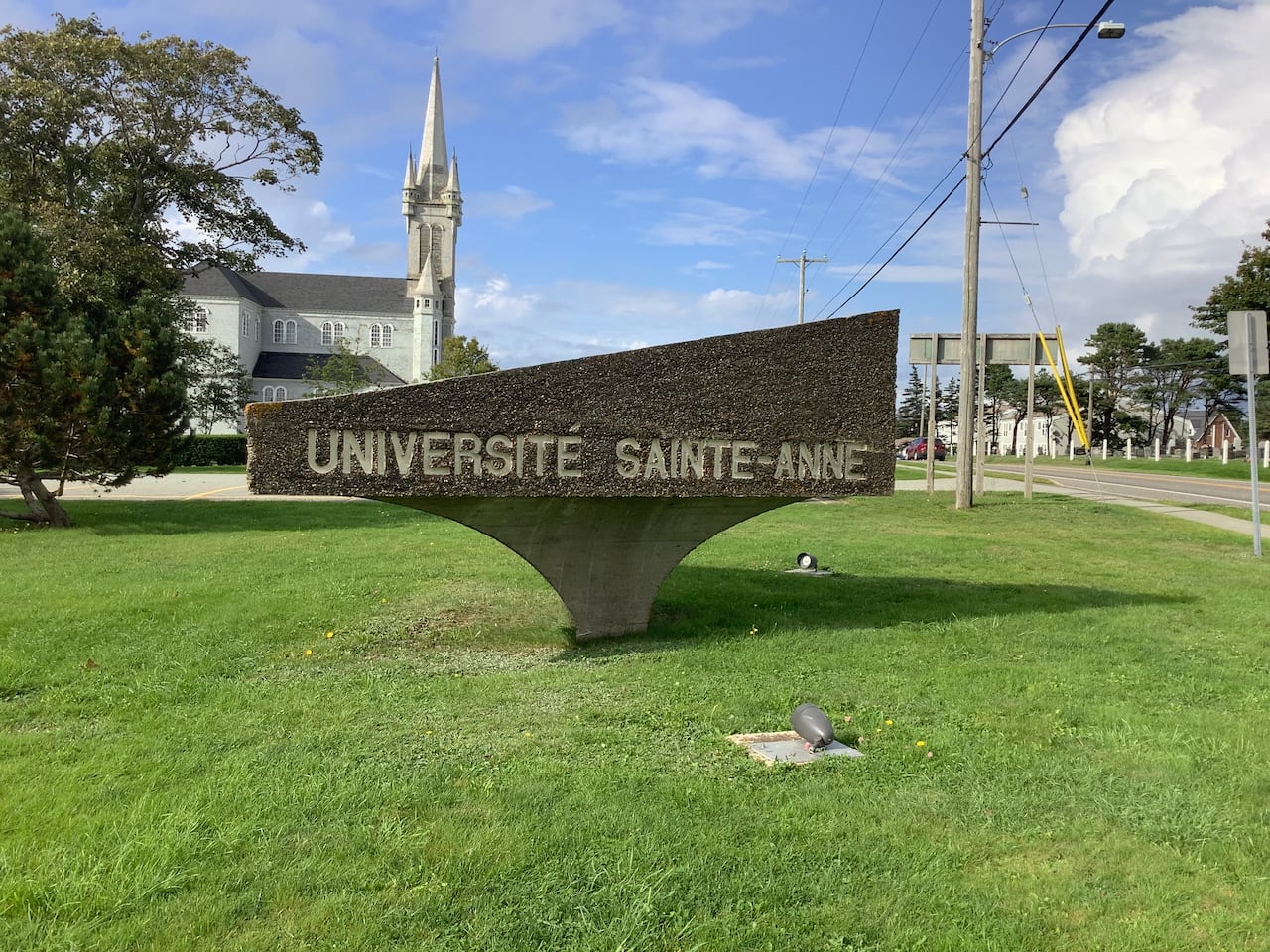 Université Sainte-Anne was filled to 48 per cent capacity. The school says its residences were designed for its French immersion programs and are at 100 per cent capacity when those programs take place. (The Canadian Press/Chantal Melanie White)
Université Sainte-Anne wrote in an email that its residences were designed for its French immersion programs and are at 100 per cent capacity when those programs take place, but the school is “far from attaining the target vacancy rate” during the academic year.
“Overall, this will very likely mean negative consequences for Université Sainte-Anne,” the statement said.
What students want
Brendan Roberts, the executive director of Students Nova Scotia, says he thinks students are increasingly looking for single rooms or apartment-style living. The high cost of dorm residences that include a meal plan is a deterrent, he said.
“Those are all things that make living in residence a barrier or a challenge for some students,” he said. Roberts added he thinks each university is taking a different approach to housing.
“While that’s useful, not having a kind of overarching strategy in terms of how we’re dealing with student housing as a province, I think, means that there’s a significant lack of co-ordination between the universities,” he said.
 Brendan Roberts is the executive director of Students Nova Scotia. (Shaina Luck/CBC)
Johnstone, Acadia’s director of residence, attributes some of their drop in occupancy to the declining numbers of international students. But he believes another factor is that Acadia’s buildings are all double and single rooms, without the apartment-style residences most upper-year students prefer.
This year Acadia piloted a reduced meal plan and renovated some kitchen spaces to try to give students more flexibility in meals. But Johnstone says the bilateral agreement stops the school from making changes such as converting double rooms to the more desired single rooms.
“That creates some additional challenges for us in being able to meet what our students are telling us that they want,” he said.
MORE TOP STORIES