
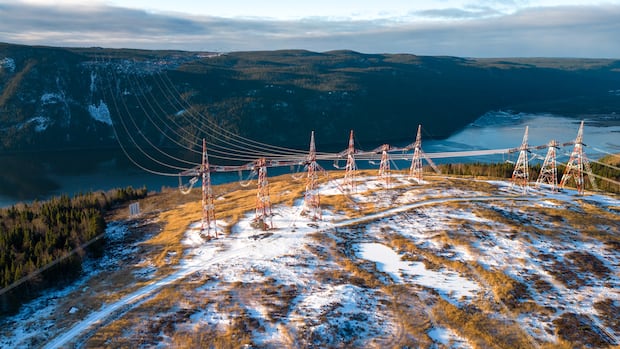
A key member of Newfoundland and Labrador’s Churchill Falls negotiation team says he hasn’t spoken to Tony Wakeham since the new premier was elected last October.
Karl Smith, the former Fortis chief financial officer, told Radio-Canada on Tuesday that he didn’t even know whether he was still a member of the three-person team negotiating the future of the Churchill Falls and Gull Island hydroelectric projects with Quebec.
“I have heard nothing one way or the other,” said Smith in an email.
Smith’s comments contradict previous statements from Wakeham, who said during a press conference on Dec. 15 that Smith and the province’s other lead negotiators were still working on behalf of the government.
Newfoundland and Labrador Hydro, meanwhile, is refusing to say whether the negotiating team has met since the Oct. 14 election.
The Crown utility’s CEO Jennifer Williams is also a negotiating team member. The third person on the team, former clerk of the executive council Dennis Mahoney, retired from the public service Oct. 31 and has not yet been replaced.
Wakeham declined an interview request on Wednesday. A spokesperson for the premier didn’t explain, when asked, why Wakeham hadn’t spoken to Smith since taking office.
“Premier Wakeham has met on several occasions with the President and CEO of Newfoundland and Labrador Hydro, Jennifer Williams, to discuss matters related to the Churchill River memorandum of understanding, including the next steps in the negotiating process,” spokesperson Ashley Politi wrote in a statement. “The transition resulting from Mr. Mahoney’s retirement has also been discussed. An update on this work is forthcoming.”
Smith played key role in negotiations
Smith, who was recruited by the former Liberal government, played a crucial role in negotiating the memorandum of understanding (MOU) announced in December 2024.
According to a lengthy Globe and Mail feature published last June, the first major breakthrough in talks between the two provinces came during a one-on-one meeting between Smith and former Hydro-Québec CEO Michael Sabia.
Smith, who is travelling, declined an interview request from Radio-Canada.
The former Liberal government promised the MOU with Quebec, once finalized, would “change everything” for Newfoundland and Labrador and allow the provincial treasury to rake in $225 billion over the next 50 years. But Wakeham and his Progressive Conservative Party have taken a more skeptical stance on the agreement and on talks with Quebec.
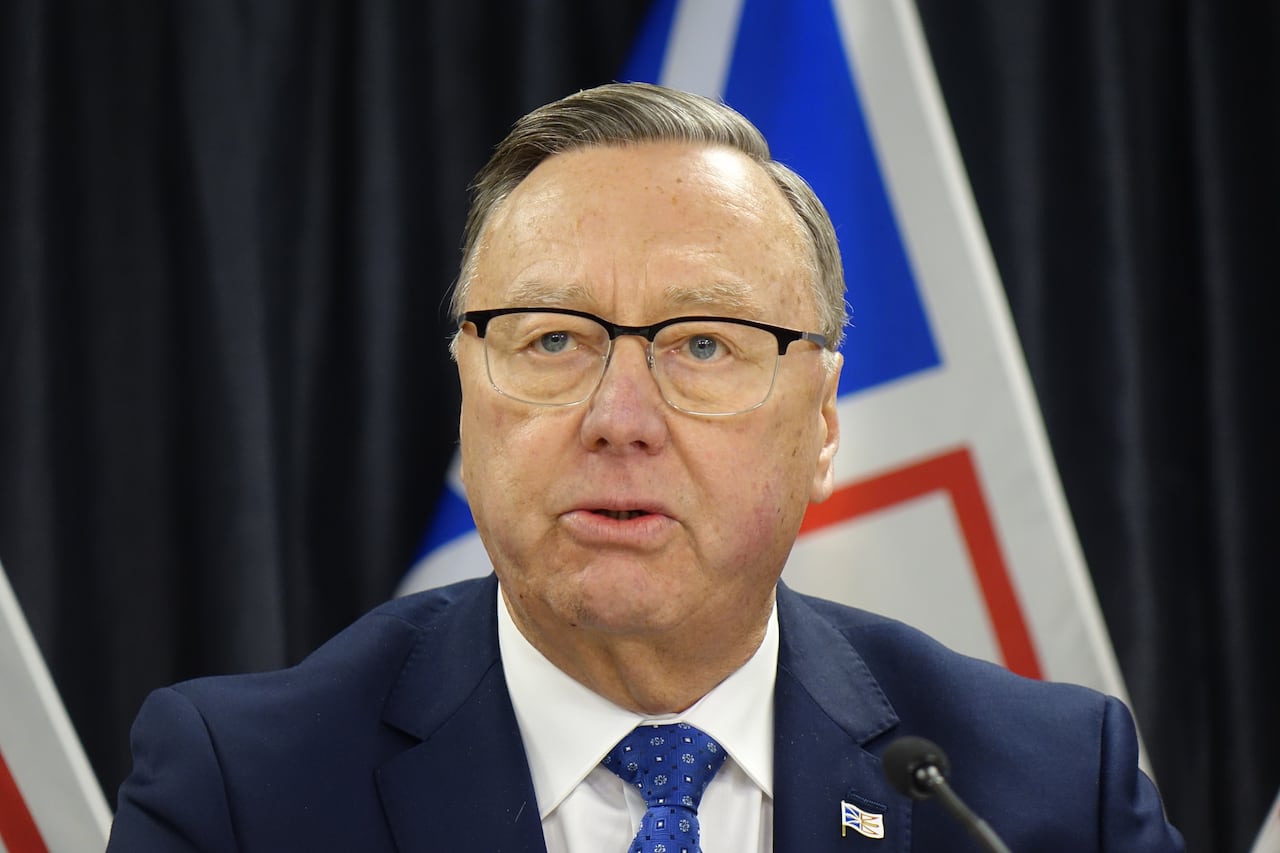 Newfoundland and Labrador Premier Tony Wakeham announced an independent review of the Churchill River memorandum of understanding with Quebec during a press conference in St. John’s on Dec. 15. (Patrick Butler/Radio-Canada)
During the election, the now-premier publicly mused about seeking more favourable conditions from the Quebec government and called the initial April deadline for finalizing the definitive agreements “arbitrary.”
During the sole televised leaders’ debate on the election, Wakeham said Hydro-Quebec and the Quebec media didn’t want people to realize “how good a deal it is for Quebec and how bad it is for Newfoundland and Labrador.”
The premier established an independent review panel in December to evaluate the MOU and report back to the government by April 30. The committee’s work has effectively paused nearly all negotiations between Newfoundland and Labrador Hydro and Hydro-Québec.
The independent panel is composed of three members, including former Ernst & Young executive Michael Wilson, who wrote last October that the agreement in principle was an “outrageous transfer of wealth to HQ [Hydro-Québec] and is an outright betrayal of the people of this province and all future generations.”
In a sit-down interview with CBC News on Monday, Wakeham repeated his promise to hold a referendum on the final agreements and said he was unbothered by Quebec’s looming October provincial election and the imminent departure of Quebec Premier François Legault, who announced his resignation on Jan. 14.
Historic and controversial
The MOU seeks to replace the existing Churchill Falls deal — a contract as infamous as it is ironclad. Signed in 1969, the existing agreement allows Hydro-Québec to buy electricity for just 0.2 cents per kilowatt-hour — a bargain-basement price, set in stone until 2041, that generations of Newfoundland and Labrador premiers have railed against.
Under the terms of the MOU, the price of Churchill Falls power would increase immediately, growing from the current fixed rate of 0.2 cents per kilowatt-hour to 1.6 cents per kilowatt-hour. The new price would continue to rise steadily until 2075, with N.L. Hydro saying that over the lifetime of the deal, the “effective” price of Churchill Falls power would be 5.9 cents per kilowatt-hour, earning the Newfoundland and Labrador government about $225 billion over the next 50 years.
In exchange, Newfoundland and Labrador would allow Hydro-Québec to build a second 1,100-megawatt plant next to the existing one at Churchill Falls, as well as a new 2,250-megawatt dam at Gull Island. Together, the projects would cost about $30 billion, with the vast majority of the power flowing to Quebec.
N.L. Hydro would also upgrade the generating units at the existing Churchill Falls plant, adding 1,100 megawatts of capacity at a cost of $1.9 billion. Both utilities would also need to construct new transmission assets leading south.
While the deal’s backers say it would transform the finances of the country’s most-indebted province, many of the agreement’s detractors worry the price for Labrador power is still too low.
Some also fear the deal lasts too long and that a still-to-be-finalized escalator clause may not work as well as promised.
Download our free CBC News app to sign up for push alerts for CBC Newfoundland and Labrador. Sign up for our daily headlines newsletter here. Click here to visit our landing page.