
Community leaders in Woodstock say the Holt Liberals need to make a better effort to explain why they are studying the idea of a francophone school in the area.
The announcement in December’s capital budget caught the overwhelmingly anglophone town by surprise and provoked some pushback.
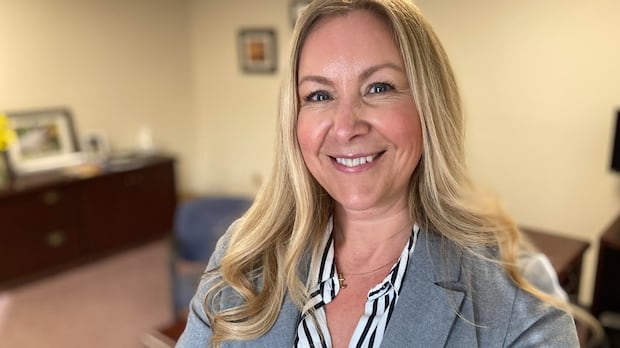
“What we were hearing was a lot of confusion, and people just outright initially thought, ‘that has to be wrong,’” Mayor Trina Jones said in an interview.
At a Dec. 16 council meeting, Coun. Julie Calhoun-Williams said anyone in Woodstock “knows that you can probably count on two hands at the most” how many francophone families live there.
The town is urging the province to consider alternatives, though the ideas are unlikely to satisfy the province’s legal obligations on minority-language education under the Charter of Rights and Freedoms.
WATCH | ‘A lot of confusion’: Town pitches alternatives to French school: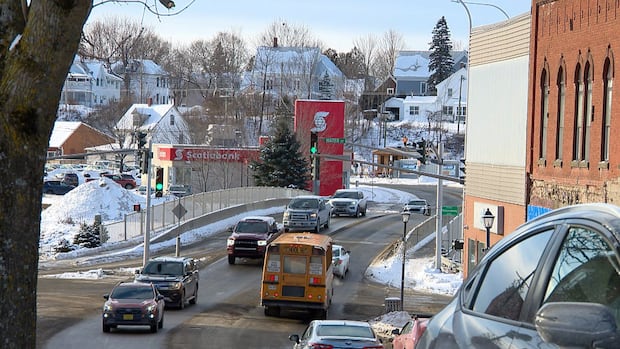
Should there be a francophone school in Woodstock?
Town residents are “confused” as the provincial government studies the idea of a French-language school in a western New Brunswick town..
So far, the Liberal government has been slow to explain those obligations and head off some of the confusion playing out.
“If they were a little bit more forthcoming of where they see the numbers, that would probably relax the community,” said Jones, who sent a letter to Education Minister Claire Johnson on Jan. 14 laying out the town’s concerns.
A spokesperson said the minister was not available for an interview and did not say whether she’ll accept the letter’s invitation to visit and “continue this dialogue.”
Census data triggers study
Statistics Canada’s last census in 2021 triggered the feasibility study after identifying 295 people in the region around Woodstock who have a constitutional right to a French-language education.
“This number is sufficient to justify a study in the Woodstock–Hartland–North Carleton region,” the minister said in a written statement.
Under Section 23 of the Charter of Rights and Freedoms, if at least one New Brunswick parent’s first language is French or if they went to school in French, their children have the right to be educated in French.
The data the province used is drawn from a wide territory around Woodstock, from as far north as Bath and Florenceville-Bristol and as far south as Nackawic, Canterbury and North Lake, a rural parish about 50 kilometres south of Woodstock.
The capital budget set aside $75,000 for the study, but the school is not a foregone conclusion.
The province will measure “the level of interest” in a school “to determine the appropriate level of service for the population,” the spokesperson said.
Woodstock-Hartland Progressive Conservative MLA Bill Hogan questioned whether francophone parents in the communities farthest from the town will want to have their kids on buses for 45 minutes each way.
 Woodstock-Hartland MLA Bill Hogan said he has never heard from anyone in the area asking for a French school. (Michael Heenan/CBC)
He said in his four decades as a teacher, principal and elected official, he’s never heard from anyone in the area asking for a francophone school.
“It’s not to say that I don’t understand the constitutional right of the minority to have a school in their own language,” he said.
“If that need is demonstrated and that desire is demonstrated and that constitutional right wants to be exercised, I have no problem sharing that with my constituents either, because I believe in that right.”
The 2021 census was the first time Statistics Canada measured the number of minority-language education rights-holders in this way.
Université de Moncton sociologist Michelle Landry, an expert in minority-language dynamics, said that may explain the surprise.
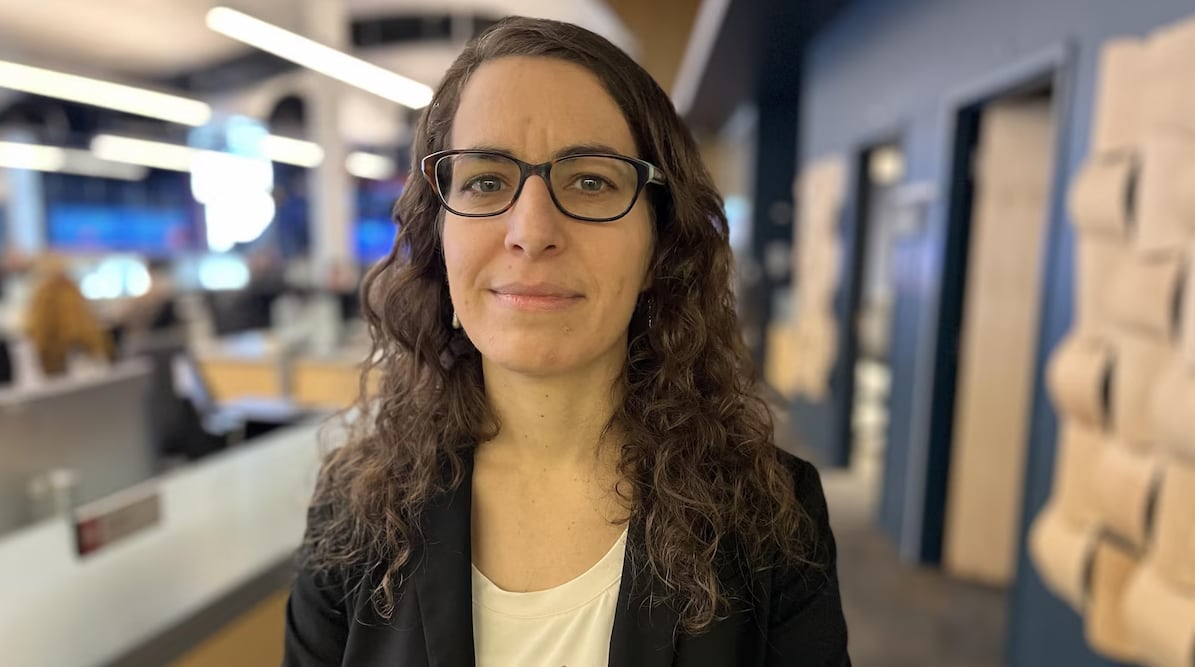 Michelle Landry, an expert in minority-language dynamics, said some francophone minority communities might not be noticed because they speak English with no accent. (Nicolas Steinbach/Radio-Canada)
“We can see these areas in Canada where there’s this francophone population that we don’t notice because they probably speak English with no French accent,” she said.
“Language minorities are not visible minorities if they don’t have an accent.”
Push to prioritize immersion
The town’s letter said French immersion programs in Woodstock’s anglophone schools are already under strain, and “if strengthening the French language in our province is the main goal,” then the immersion program should be the priority.
The Woodstock Youth Council made a similar suggestion in its own letter to the education minister.
“What if we suggested having — instead of a fully francophone school — a French immersion school?” said Gracelyn Grant, the youth council chair and a Grade 11 student at Woodstock High.
Landry said that shows a misunderstanding of the province’s two school systems.
Immersion is designed to teach anglophone children how to learn French, while the francophone school system exists to protect francophones from losing their language through assimilation.
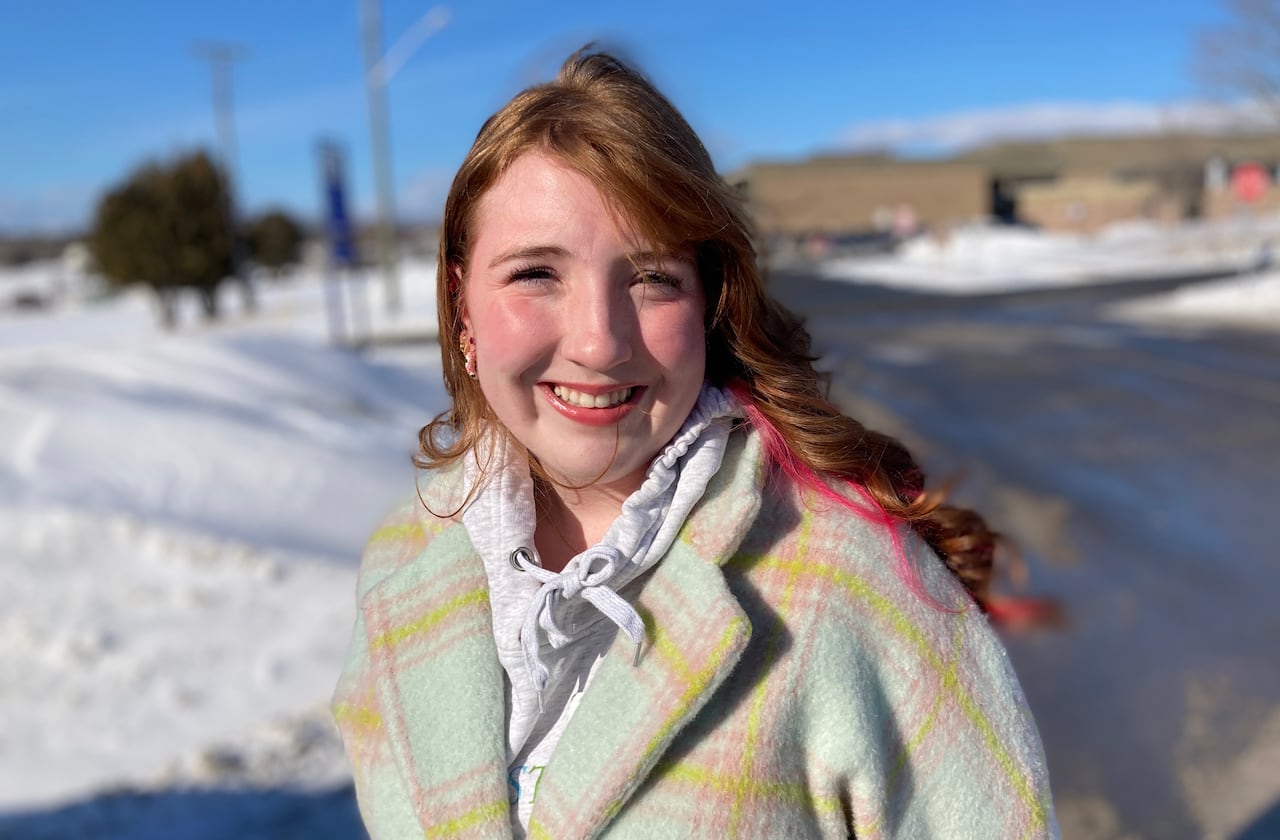 Gracelyn Grant, the youth council chair and a Grade 11 student at Woodstock High School, suggested an immersion program be prioritized. (Jacques Poitras/CBC)
Another factor driving the reaction in Woodstock is a fear that existing anglophone schools — two overcrowded kindergarten-to-Grade 8 schools, and the aging Woodstock High School which needs upgrades — will lose out.
That prompted the town to propose the province establish a francophone wing at one of the existing anglophone schools.
Retired law professor Michel Doucet said that raises complicated issues about the francophone community’s right to govern its own school system and the idea would probably be ruled unconstitutional in any court challenge.
Jones said there are other concerns, like whether efforts to engage youth in the town in community initiatives — part of her focus as mayor — will be harder if the school-age population is further fragmented.
Landry said that is a typical concern when minority-language schools are built for the first time in a community, but her research doesn’t indicate that a new school contributes to it.
“I don’t observe it in anywhere, really, in Canada,” she said.
Some of the comments at the Dec. 16 Woodstock council meeting drew a lot of attention, Jones said, but her letter acknowledged the province’s role in guaranteeing minority-language education rights.
It also said any investment in new school infrastructure “is welcomed and valued.”
“I think there was a misperception that everybody was opposed. I don’t think we used the word ‘opposed,’” Jones said.
But she added the onus is on the province to show other options are unworkable and to “do some broader communication” to explain why that is.
“We’re not in a mode where we’re going to say we oppose and we deny, because it’s really not our place. We want to make sure we’re encouraging and pointing out things they may not have considered,” she said.
“We’re not against them building a school, but what we want them to do is really be fruitful in what their analysis is, and maybe agree to come to the community level and make sure they’re thinking about everything.”