
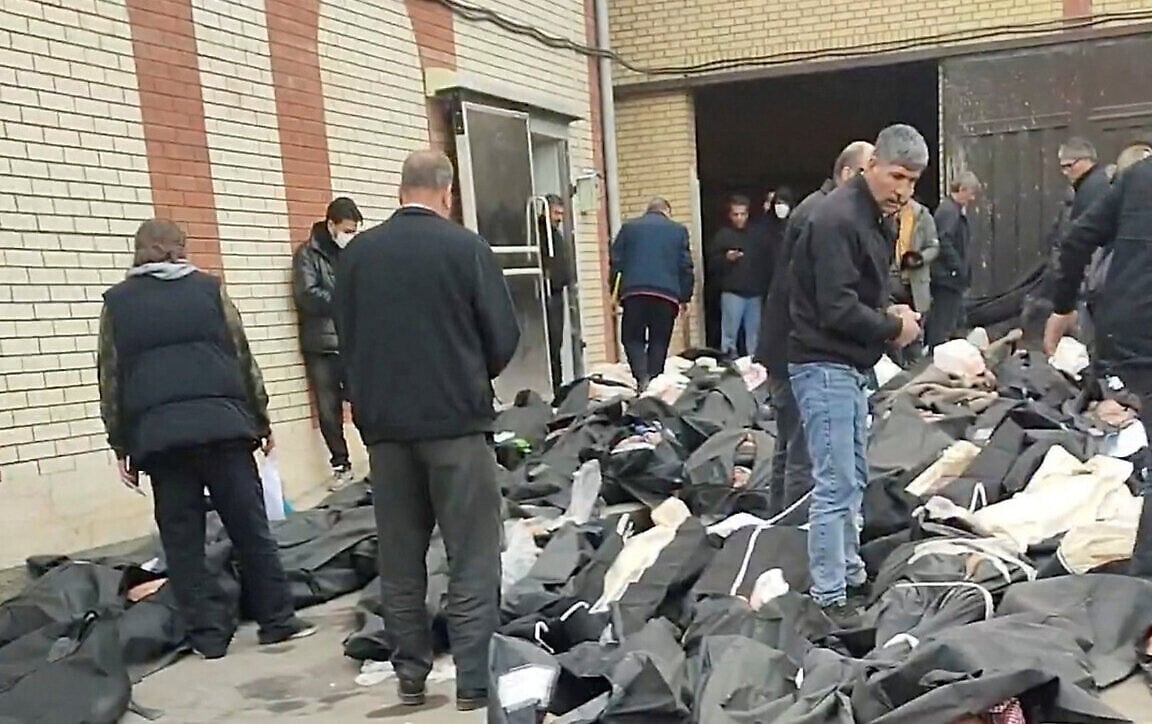
The death toll from Iran’s bloody crackdown on nationwide protests reached at least 5,002 people killed Friday, activists said, warning many more still were feared dead as the most comprehensive internet blackout in the country crossed the two-week mark.
The challenge in getting information out of Iran persists due to authorities cutting off access to the world through the internet on January 8, even as tensions rise between the United States and Iran as an American aircraft carrier group moves closer to the Middle East.
The US-based Human Rights Activists’ News Agency offered the toll, saying 4,716 were demonstrators, 203 were government-affiliated, 43 were children and 40 were civilians not taking part in the protests. It added that over 26,800 people had been detained in a widening arrest campaign by authorities.
The agency has been accurate in previous rounds of unrest in Iran and relies on a network of activists in Iran to verify deaths. Other groups have said the total death toll from the protests will be far higher.
Iran’s government offered its first death toll on Wednesday, saying 3,117 people were killed. It added that 2,427 of the dead in the demonstrations that began December 28 were civilians and security forces, with the rest being “terrorists.” Iran’s theocracy in the past has undercounted or not reported fatalities from unrest.
Get The Times of Israel’s Daily Edition
by email and never miss our top stories
By signing up, you agree to the terms
The Associated Press has been unable to independently assess the death toll, in part due to authorities cutting access to the internet and blocking international calls into the country. Iran also reportedly has limited the ability of journalists locally to report on the aftermath, instead repeatedly airing claims on state television that refer to demonstrators as “rioters” motivated by America and Israel, without offering evidence to support the allegation.
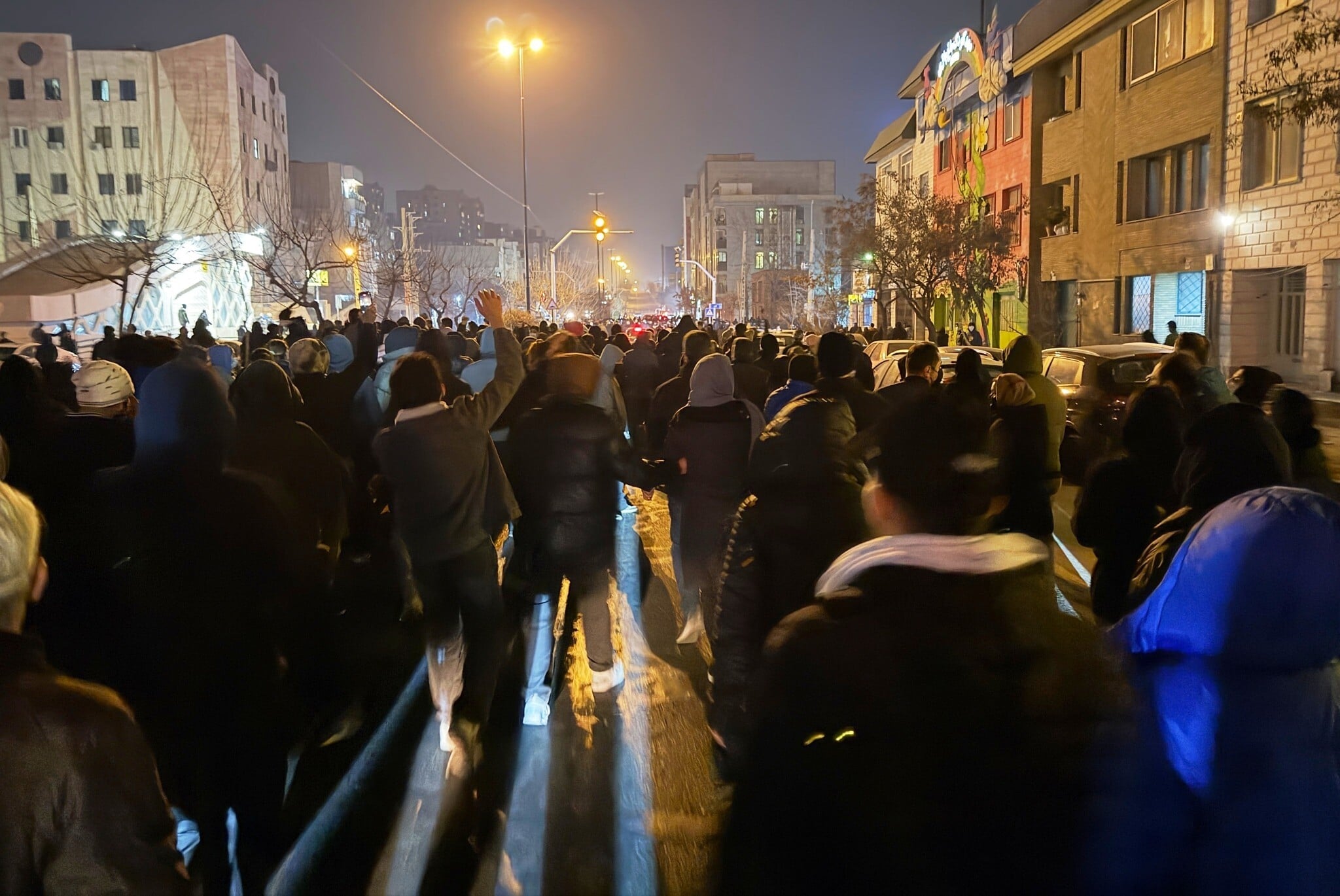
In this photo obtained by The Associated Press, Iranians attend an anti-government protest in Tehran, Iran, January 8, 2026. (UGC via AP)
The new toll comes as tensions remain high over US President Donald Trump laying down two red lines over the protests — the killing of peaceful demonstrators and Tehran conducting mass executions. The US military has moved more military assets toward the Mideast, including the aircraft carrier USS Abraham Lincoln and associated warships traveling with it from the South China Sea.
A US Navy official, who spoke on condition of anonymity to discuss military movements, said Thursday that the Lincoln strike group is currently in the Indian Ocean. One official said additional air-defense systems were also being eyed for the Middle East, which could be critical to guard against any Iranian strike on US bases in the region.
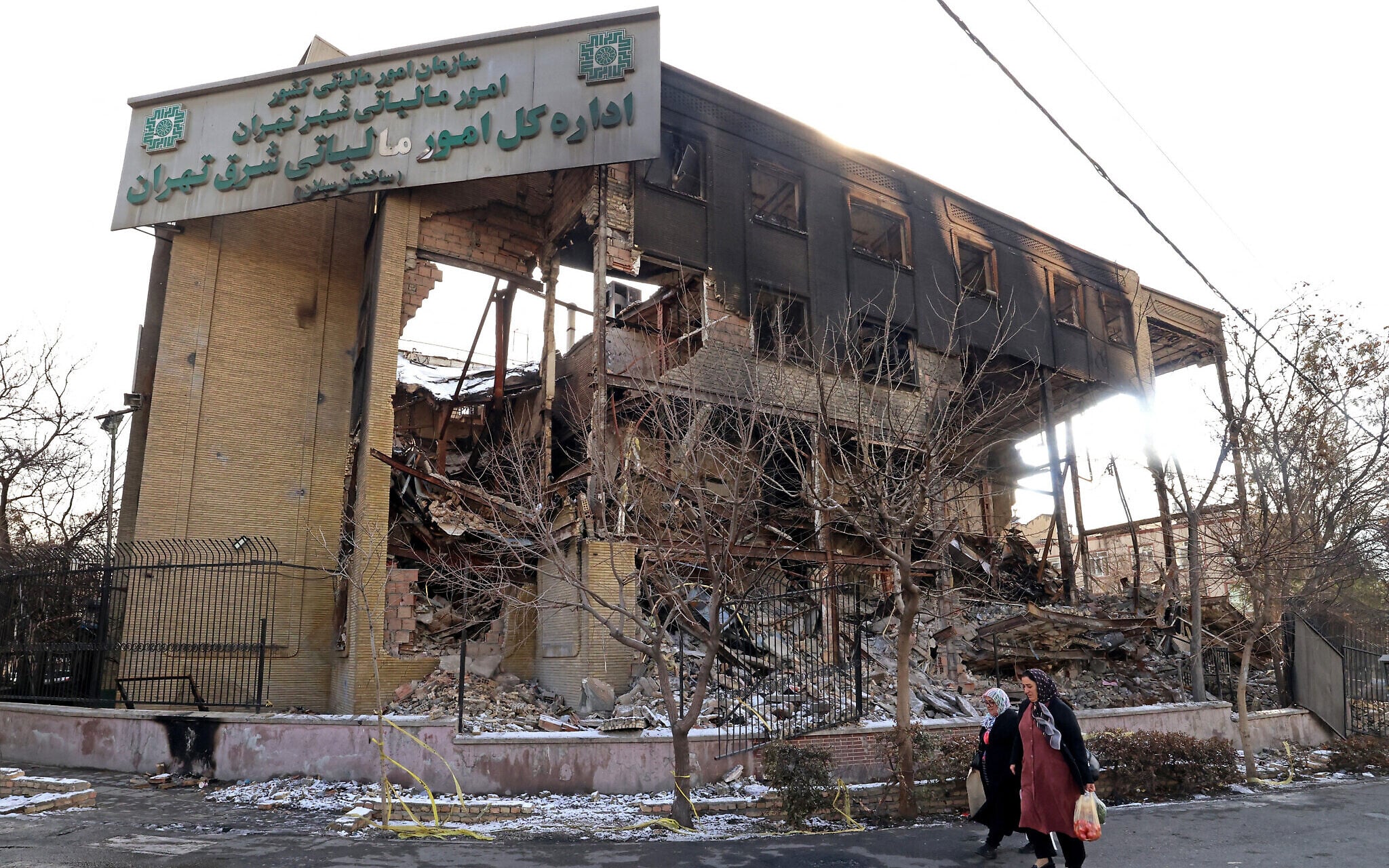
This photograph taken during a tour for foreign media shows women walking past a government building that was burnt during recent public protests, in Tehran on January 21, 2026. (Atta Kenare/AFP)
The deployments expand the options available to Trump, both to better defend US forces throughout the region at a moment of high tension and to take any additional military action after striking Iranian nuclear sites in June.
In the past, the US military has periodically surged forces to the Middle East at times of heightened tensions, moves that were often defensive. However, the US military staged a major buildup last year ahead of the June strikes.
In remarks on Thursday, Trump told reporters aboard Air Force One that the US is moving an “armada” of ships toward Iran “just in case” he wants to take action.
“We have a massive fleet heading in that direction and maybe we won’t have to use it,” Trump said. “I’d rather not see anything happen, but we’re watching them very closely.”
“At an hour before this horrible thing was going to take place, they canceled it,” he said, referring to the nearly 840 hangings that he claimed the Islamic Republic cancelled after his threats, calling it “a good sign.”
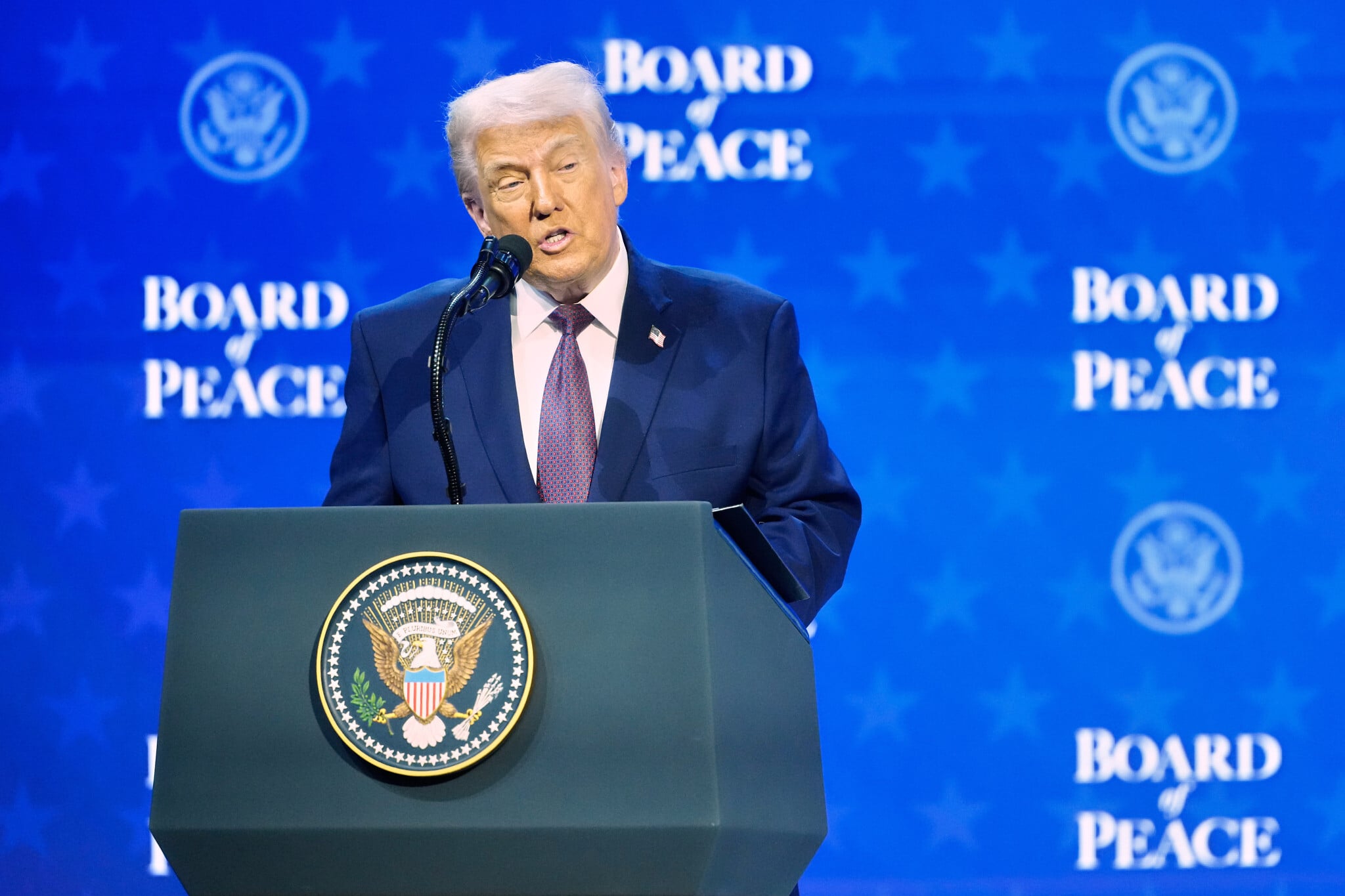
US President Donald Trump speaks at a Board of Peace charter announcement during the Annual Meeting of the World Economic Forum in Davos, Switzerland, January 22, 2026. (AP/Markus Schreiber)
Trump also mentioned the multiple rounds of talks American officials had with Iran over its nuclear program prior to Israel launching the 12-day war against the Islamic Republic in June and the US bombing of Iranian nuclear sites. He threatened Iran with military action that would make the earlier US strikes against its uranium enrichment sites “look like peanuts.”
“They should have made a deal before we hit them,” Trump added.
“If they try to do it again, they have to go to another area. We’ll hit them there too, just as easily,” he said.
Is accurate Israel coverage important to you?
If so, we have a request.
Every day during the past two years of war and rising global anti-Zionism and antisemitism, our journalists kept you abreast of the most important developments that merit your attention. Millions of people rely on ToI for fact-based coverage of Israel and the Jewish world.
We care about Israel – and we know you do too. So we have an ask for this new year of 2026: express your values by joining The Times of Israel Community, an exclusive group for readers like you who appreciate and financially support our work.
Already a member? Sign in to stop seeing this
You appreciate our journalism

You clearly find our careful reporting valuable, in a time when facts are often distorted and news coverage often lacks context.
Your support is essential to continue our work. We want to continue delivering the professional journalism you value, even as the demands on our newsroom have grown dramatically since October 7.
So today, please consider joining our reader support group, The Times of Israel Community. For as little as $6 a month you’ll become our partners while enjoying The Times of Israel AD-FREE, as well as accessing exclusive content available only to Times of Israel Community members.
Thank you,
David Horovitz, Founding Editor of The Times of Israel