
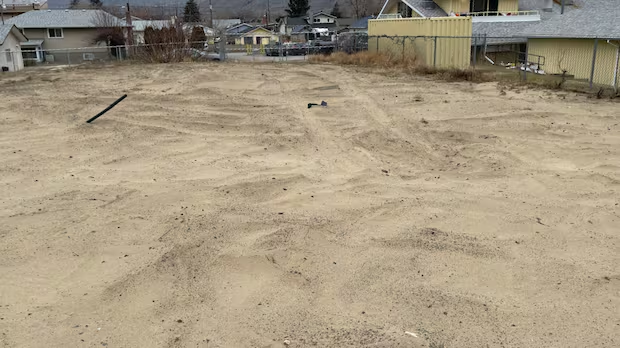
The discovery of human remains on an empty lot in North Kamloops, B.C., is prompting a local lawyer to warn property buyers about the costs associated with archaeological findings.
It all started last June when the owner decided they wanted to build a small garden on the empty lot, which they’d purchased in 2004, for residents of a neighbouring seniors facility.
“Within two scoops of a backhoe wielded by a contractor, two skulls were unearthed,” says Vancouver-based commercial real estate lawyer Christine Elliott, who represents the property owner.
Elliott said work stopped immediately, and police and the local First Nation, Tk̓emlúps te Secwépemc, were notified.
The next day, the First Nation issued a statement declaring that the remains were ancestral, of cultural significance, and that the site was deemed sacred.
“For Tḱemlúps te Secwépemc, the discovery of ancestral remains is not a matter of property or debate rather it is a matter of responsibility,” Kúkwpi7 (Chief) Rosanne Casimir said in a statement on Jan. 20. “These are our relatives, and our laws and cultural protocols obligate us to care for them with dignity and respect.”
Archaeologist Joanne Hammond, who is not involved with this site, said it’s no surprise someone would find historical items in that area — even though it’s in a fairly developed neighbourhood, surrounded by homes and businesses.
“We’re standing on a sandy hilltop in the middle of a valley … where people have lived for 10,000 years, so if I were looking for a site, I would start here,” she said.
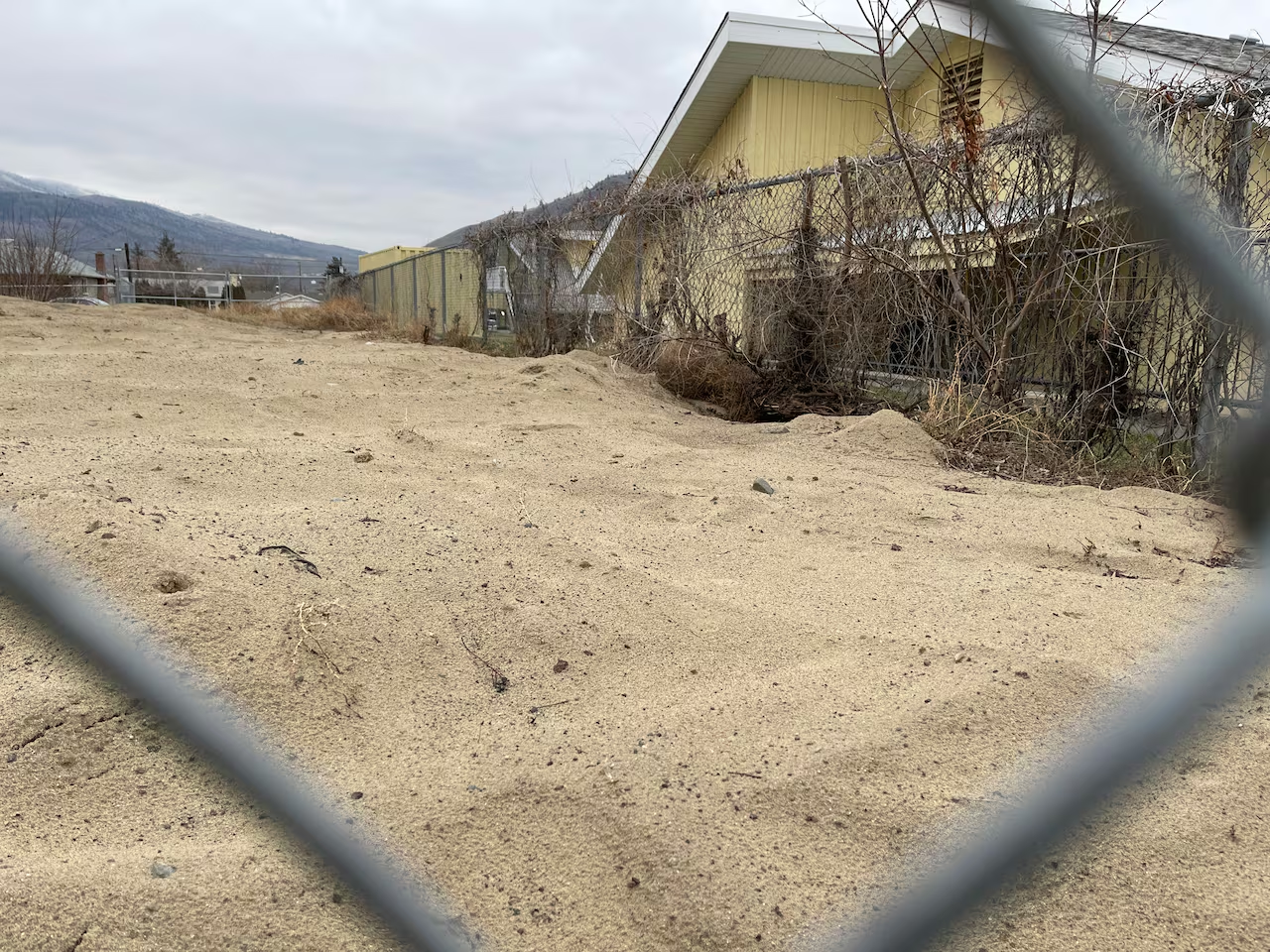 A sandy lot in North Kamloops, B.C., sits empty several months after human remains were uncovered when the property owner began work to build a community garden. (Shelley Joyce/CBC)
Weeks went by and Elliott struggled to get answers about what was happening at the site, if anything.
Seven months after the initial finding, Elliott says her client has racked up more than $130,000 in bills related to the situation so far — $50,000 in archaeological fees and $88,000 in legal — and there is no support to help them recoup any of it.
As the landowner continues to incur costs, the future of the site remains uncertain, Elliott added.
According to the province, no extensive archaeological work has been completed at the site other than a preliminary field reconnaissance survey, which it says doesn’t provide conclusive evidence as to the extent of the archaeological site.
Heritage Conservation Act reforms
It’s not the first time a property owner has run into some setbacks and unexpected costs after learning their land may be home to something of historical or cultural value in B.C.; a CBC News story dating back to 2010 shows a similar situation on Vancouver Island, where a property owner had to pay thousands of dollars in archaeological fees after remains were found when she was starting construction on a new house.
Casimir said First Nations have long called for the reformation of the Heritage Conservation Act, which is intended to facilitate the protection and conservation of “heritage property” in B.C. — something that, just this week, Forests Minister Ravi Parmar said has been postponed.
She said this situation highlights problems and confusion within the Heritage Conservation Act — particularly the lack of information sharing about archaeology in B.C., and lack of support from the province.
“It does concern me, as an archaeologist, that it is so contentious for people to find archaeological remains,” she said.
What happens when you find remains or historical items on your property?
If you or someone working on your property comes across something of archaeological or cultural interest, you must stop work right away and contact B.C.’s Archaeology Branch immediately. The province also suggests getting in touch with a nearby university’s archaeology or anthropology department, or calling a professional consulting anthropologist.
If you find human remains, specifically, the province says not to disturb them. Once you contact the Archaeology Branch, they will notify the coroner and local police, who will figure out whether the remains are archaeological in nature. If yes, local First Nations will be brought in for further assessment.
Who pays for costs associated with any work that needs to happen?
Short answer: the property owner.
“No one is coming to rescue you to the extent that you incur costs,” Elliott said.
The Ministry of Forests confirmed this, saying, “Costs can be minimized by taking early action and employing a low-impact approach to development.”
It notes the costs associated with this kind of work varies depending on the size and location of the land.
However, it said Heritage Conservation Permits and information from the province are free.
Is there any way to get ahead of it?
Something Elliott just learned of recently, after practicing commercial real estate law for 40 years, is a RAAD search — which stands for Remote Access to Archaeological Data — that shows information about B.C.’s archaeological sites. The B.C. Association of Professional Archaeologists suggests realtors get this information for prospective buyers.
While it’s not available to the public, you can fill out a request form to get information from the provincial Archaeology Branch.
“I do not look at land without doing a RAAD search,” Elliott said.
Other than that, just know that if you dig and you do find something, you could be in for big delays and big bills — and significant delays.
When can you resume work on the property?
If an archaeological site is located on your property, you have to get an HCA (Heritage Conservation Act) Permit to be able to continue work there. Permitting can take several weeks, as the Archaeology Branch reviews applications and sends them to affected First Nations before signing off.
“It could take quite awhile to resolve something like this,” Hammond said. “The wheels of archaeology turn very slowly.”