
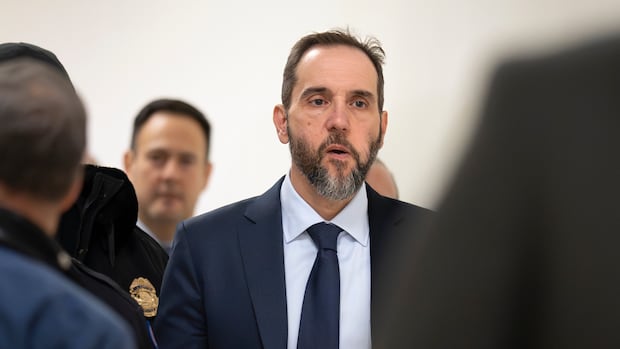
Former special counsel Jack Smith will make the case before a large American audience for the first time on Thursday as to why he believes that Donald Trump committed fraud in his actions and statements after his 2020 election loss.
Smith was appointed by the Justice Department to take over two pre-existing investigations of Trump once he declared his 2024 candidacy for president. But despite that significant post, the former prosecutor has made relatively few public comments outside of legal filings.
Smith and his team eventually indicted Trump on charges of conspiring to undo the 2020 election he lost to Joe Biden, and of willfully retaining classified documents into 2023, several of them top secret, at his Florida and New Jersey residences.
Smith, who never got to try his cases after Trump’s 2024 election win, testified behind closed doors before the same Republican-led House judiciary committee in December. A redacted transcript from that session reveals a mostly buttoned-up, professional display from all concerned, but Thursday’s public display could be more demonstrative.
Democrats have accused the Justice Department of doing Trump’s bidding instead of maintaining independence from the White House — the very kind of “weaponization” that Republican Congress members claimed took place during the Biden administration.
Trump has hurled a string of epithets at Smith, who worked in the federal government in the past in both Republican and Democratic administrations, calling him a “Radical left Marxist prosecutor” and a “sick son of a bitch” at the White House on Tuesday.
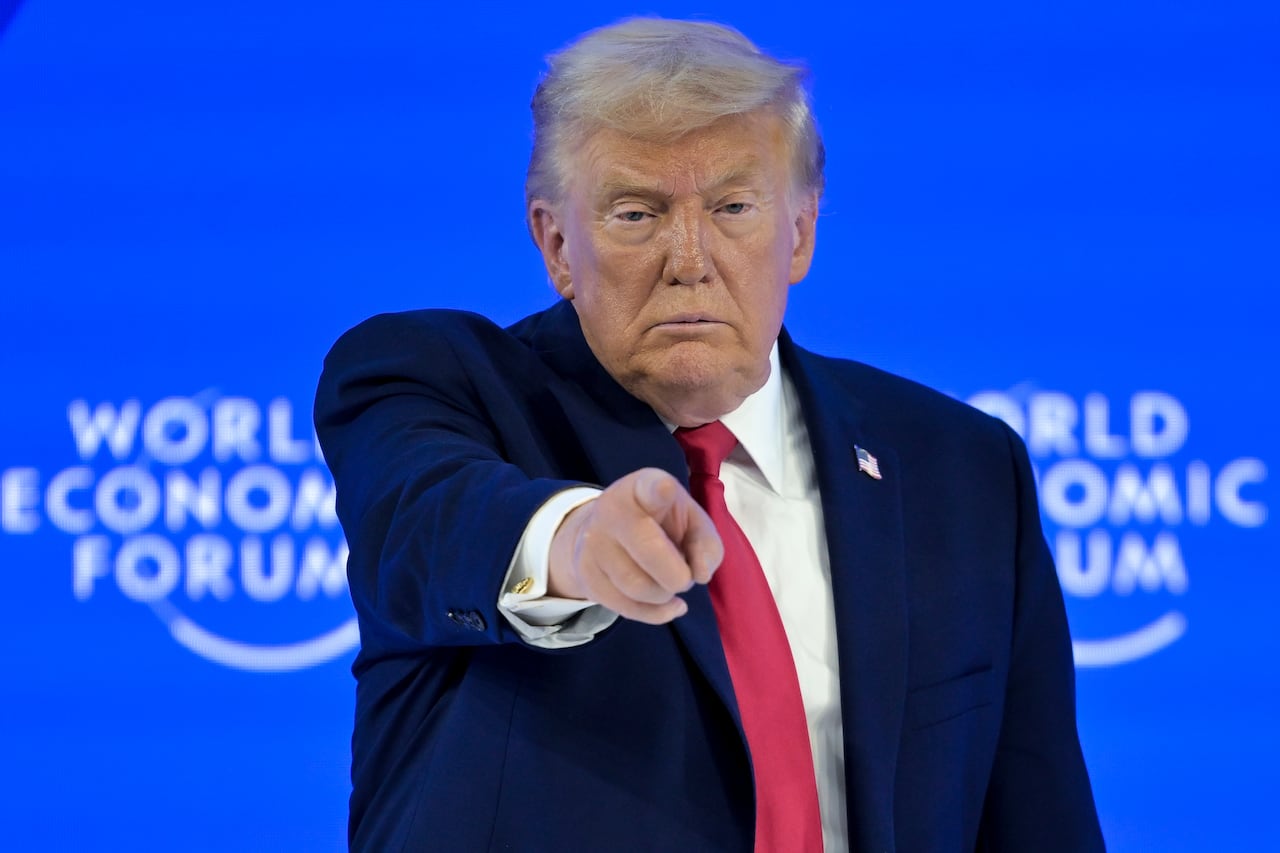 U.S. President Donald Trump gestures after his special address at the World Economic Forum in Davos, Switzerland on Wednesday. (Gian Ehrenzeller/Keystone/The Associated Press)
Smith is likely not to get into specific details of the classified documents case — considered by many legal analysts to be the most threatening of the four criminal indictments Trump once faced — as there’s a raging court battle still playing out on whether his report regarding his team’s findings in that case can even be made public.
But even if the discussion centres entirely around the period concerning the 2020 election and the Capitol riot two months later, here’s why what Smith has to say matters and is not just “old news.”
The 2020 vote is not over for Trump
In this month alone, Trump and the White House have issued an alternate history of the Jan. 6, 2021 Capitol riot that dramatically contradicts accounts laid out in Smith’s indictments, and pressured Colorado’s governor to pardon a Republican ally and country clerk convicted of criminal acts in the 2020 election period.
Trump’s far-ranging speech at the World Economic Forum in Davos on Wednesday included the false claim that the 2020 election was rigged.
“People will soon be prosecuted for what they did,” Trump promised, calling it “breaking news.”
Both the Trump-nominated FBI director Kash Patel and other officials now in the Justice Department appeared to agree with Trump’s post-2020 election denials.
Almost immediately after returning to the White House, Trump pardoned hundreds convicted of various offences at the Capitol riot, and commuted the sentences of militia group members, some of whom were convicted of seditious conspiracy.
Targeting opponents
In an interview that aired Tuesday on NewsNation, Trump complained about investigations and indictments that once hung over his head and declared, “In a way, I was the hunted, and now I’m more of the hunter, I must tell you.”
WATCH | Why Smith believes Trump went beyond free speech protections in 2020: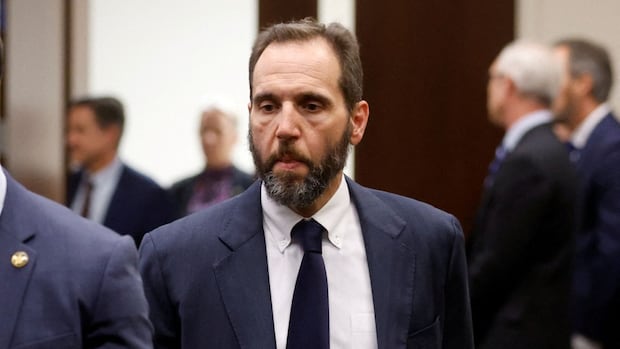
Trump used ‘lies as a weapon’ to try to retain power: special counsel report
Donald Trump engaged in an ‘unprecedented criminal effort’ to ‘unlawfully retain power’ after losing the 2020 election, special counsel Jack Smith said in a report published by the U.S. Justice Department.
A grand jury is being seated this month in Florida, reportedly over whether there was a conspiracy or criminal wrongdoing committed in past investigations of Trump, even as a previous Trump-appointed special counsel, John Durham, largely rejected that narrative.
Several politicians and officials who have angered Trump have faced indictment or the threat of a criminal probe in the past several months, including: his former national security adviser John Bolton, former FBI director James Comey, New York Attorney General Letitia James, Minnesota politicians Gov. Tim Walz and Minneapols Mayor Jacob Frey.
Also on that list is Jack Smith, who is facing an Office of Special Counsel probe.
Given those facts, one could fairly expect Justice Department officials to pore over Smith’s testimony on Thursday for any hint of impropriety or contradiction with what he testified to last month.
LISTEN | Ben Wittes of Lawfare on Trump’s retribution campaign (Oct. 2025):
Front Burner26:24Trump’s campaign of legal revenge
Taxpayer dollars potentially at stake
The New York Times in late 2025 reported that Trump had started an administrative process to seek up to $230 million from what he viewed as malicious prosecutions, concerning the documents case and an investigation in his first term over contacts between his presidential campaign and Russian officials.
Trump, known to reflexively issue “fake news” denials, lent instant credibility to the report by stating in the Oval Office he was “probably owed a lot of money.”
To be clear, Trump has not yet filed a lawsuit to pursue remuneration, but the prospect of the glaring ethical conflict was enough to prompt Democratic legislators to propose legislation to prohibit sitting presidents from seeking taxpayer-funded payouts.
‘Ridiculous’ and ‘bad faith’ legal challenges
Judges across the country in late 2020 set aside dozens of legal challenges filed by the Trump campaign and its various surrogates to prevent Biden’s wins in key battleground states.
In some cases, judges didn’t just reject the merits of lawsuits or legal standing, but used phrases and words such as “ridiculous,” and “bad faith.” One Pennsylvania judge said a Trump claim was “haphazardly stitched together” like “Frankenstein’s monster.”
The Justice Department’s submissions so far in Trump’s second administration have often elicited similar confusion and shock in federal judicial chambers across the U.S.
At various points, the government has been accused of “gaslighting” in a case over transgender rights, of contempt of court in deportation cases, and just this week of a “charade,” concerning an improperly appointed prosecutor.
WATCH | Trump clampdown on law-abiding migrants slammed by critics: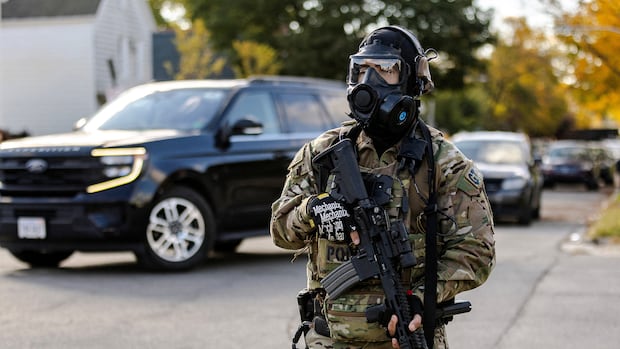
ICE raids and fear tactics: Is America becoming a police state?
U.S. President Donald Trump’s immigration crackdown is supposed to be targeting criminal illegal immigrants, but more American citizens and legal immigrants are being rounded up. For The National, CBC’s Terence McKenna talks to people who have been dragged away by ICE agents and asks: Is America becoming a police state?
Trump’s deployment of immigration and customs officers in deportation efforts has brought out a frankness not often seen from the bench. A judge last week accused a chief Border Patrol official of “outright lying” while a Trump-appointed judge in Oregon described the Justice Department’s depiction of a chaos-ravaged Portland as “simply untethered to the facts.”
Finally, even with Trump’s zeal to see opponents prosecuted, grand juries have rejected indictments more than once — an extremely rare occurrence, according to some legal experts — while charges against James and Comey were tossed over the administration’s inability to follow proper procedures.
Midterms are just around the corner
Above all, there are concerns that the chaos that surrounded the 2020 vote will play out again over this year’s midterms. Trump has already changed the rules of the game on that front, convincing a handful of Republican-led states to redraw House districts in a bid to try and prevent the frequent presidential disappointments in midterm results.
In a recent interview, Trump mused about cancelling the midterms, despite having no power to do so. The White House said that he was “simply joking.”
More ominously, Trump in another interview expressed regret that he didn’t seize voting machines in 2020 — which would likely require the use of the National Guard. Some Democrats are concerned their presence at polling stations could at minimum suppress voter turnout.
Finally, according to a fresh report, the Justice Department has admitted that Social Security information was inappropriately obtained in a voter roll inquiry by the Trump’s cost-cutting, informal Department of Government Efficiency (DOGE).
Read Jack Smith’s closed-door testimony in December: