
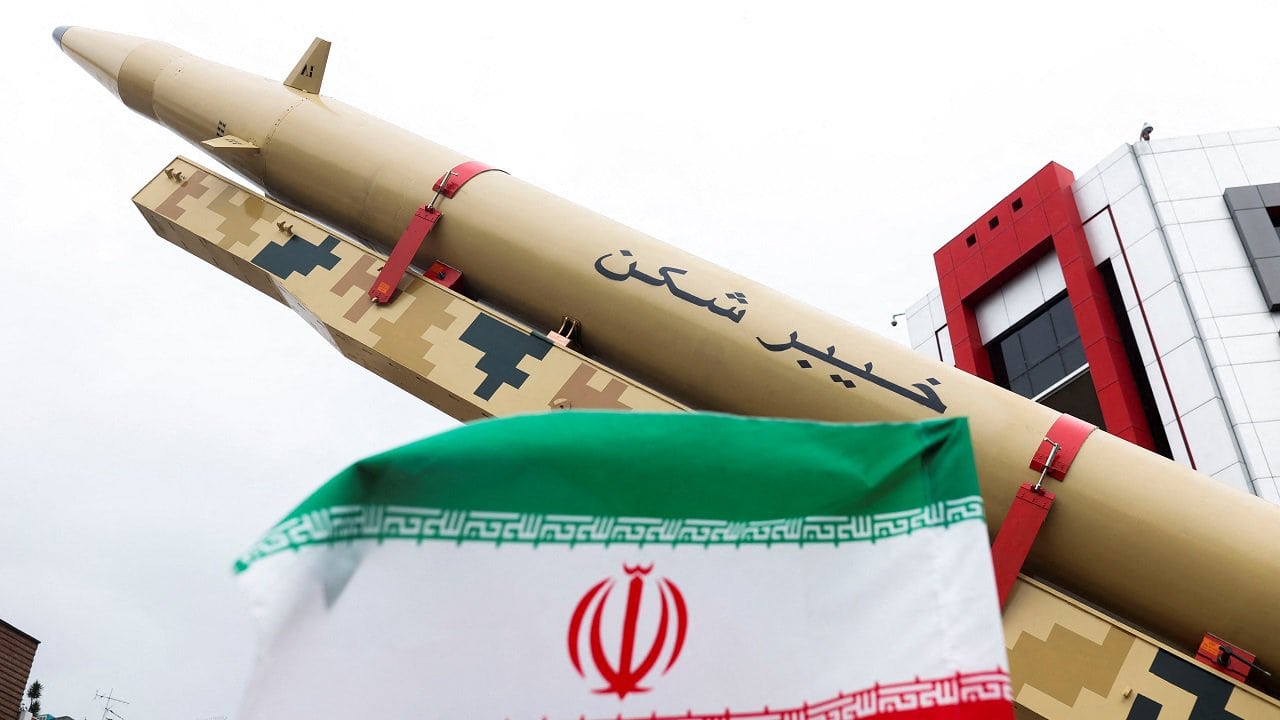
‘Rivers of Blood’: Hundreds of IRGC Officers Defect as Iran’s Regime Cracks
Western intelligence agencies report visible cracks in Iran’s security forces. According to reports from major Iranian cities, several hundred officers have defected from the Islamic Revolutionary Guard Corps (IRGC) and its volunteer militia, the Basij.
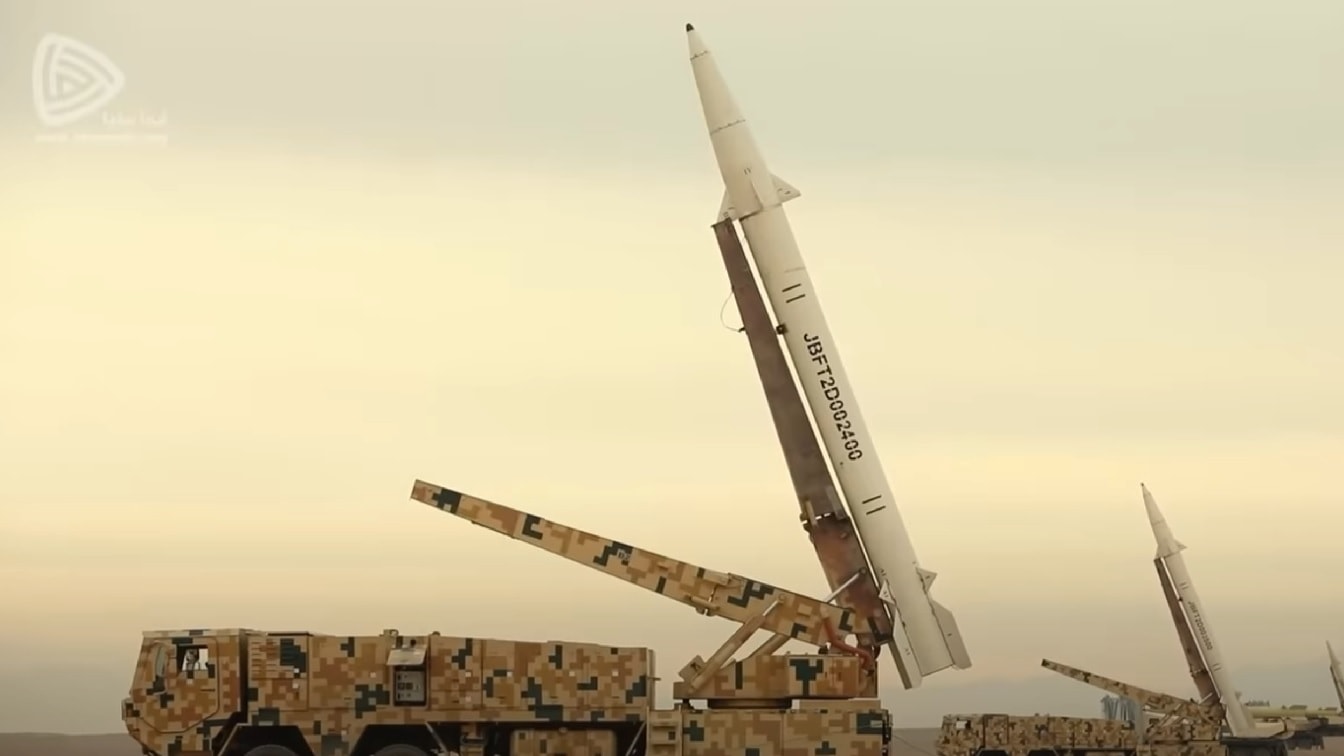
Iran Missiles from Video. Image Credit: YouTube Screenshot.
Any information about the events in Iran is intermittent because of the internet blackout that has been in place since January 8. Iran experts consider this blackout to be the country’s most severe ever.
Actions by the regime have now reportedly escalated to the point of security services hunting down and then confiscating Starlink terminals and other communications hardware. A message by one demonstrator from Fardis, in Alborz Province, made its way into the hands of the National Union for Democracy in Iran. It describes the degree to which ordinary Iranians are cut off from the outside world.
“Today, with great difficulty, after almost two weeks, I managed to connect to my landline internet,” the message reads. “Mobile internet is still cut off. I can only send text messages. It is absolutely impossible to send audio or video.
“I experienced the worst, worst, worst days of my life. With the things I saw and experienced, I don’t think I will ever be the same person as before. It is a crime against humanity. Tell the whole world that a crime against humanity has taken place here.”
Assessing the extent of protests is difficult, but there remain indicators that protest activity continues. The internet shutdown has also allowed the government to obscure the numbers of citizens murdered by security forces.

Shahed-136 Drone. Image Credit: YouTube Screenshot.
Some are describing these protests as a “Berlin Wall” moment that could be the final chapter for the ayatollahs’ regime. But the other analogy being drawn to the collapse of the regime in Romania, after security forces under the dictatorship of Nicolae Ceaușescu fired into crowds of protestors in the city of Timișoara and sparked a nationwide revolt.
The Jerusalem Post reports one unidentified Iranian involved in the protests as saying “the Islamic Republic turned the streets into rivers of blood. No one has been able to show the depth of the crimes, because the regime shut down the internet.”
Multiple Reports of Defections
The first news of senior officials beginning to defect came on January 18, with diplomatic sources reporting that Alireza Jiranieh Hokambad, a minister-counselor in Iran’s UN delegation to Geneva, sought asylum for himself and his family. His position is second-highest of the Iranian mission there.
Hokambad is reportedly unwilling to return to Iran, fearing persecution against officials of the current regime should it be toppled. He is not the only diplomatic representative seeking an escape route.
According to the same sources, several other Iranian diplomats made contact with European authorities in recent weeks seeking asylum.
Intelligence sources based in Europe add that several governments are considering making special allowances for Iranian diplomats to forgo some of the usual asylum application procedures. They may even bend the rules for cases in which Iranian applicants are unable to demonstrate an immediate and direct threat to their lives.
A former senior U.S. intelligence official tells 19FortyFive that these are “tell-tale signs that a regime could be on its last legs. These are also the kinds of scenarios that are a gold mine for western intelligence services—sometimes even better than the legions of people in Russia who despise what Putin is doing and want to undermine him and are volunteering their services to the UK, France and others.”
Disintegration From Within
Defections of diplomatic personnel stationed abroad are one matter, but when officials inside the country change allegiance—as is being reported as happening within the ranks of the IRGC and the Basij—it is another.
A January 17 report claims an official from Iran’s Interior Ministry has defected and has joined the ongoing protests. That ministry functionary is said to be calling on U.S. President Donald Trump to take direct action against the regime and the IRGC, according to a report from Iran Internationalon Tuesday.
The unidentified official has credited statements made by the exiled Crown Prince Reza Pahlavi for his decision to defect. The heir to the throne of the former Shah of Iran is encouraging military and government officials of the Islamic Republic to switch sides and intervene on behalf of those involved in the uprising.
On Tuesday, Pahlavi addressed the nation and the regime in a video message broadcast on social media.
“My address is to Ali Khamenei, the leader of the occupying regime of Iran,” the exiled crown prince said. “You are an anti-Iranian criminal. You have neither honor nor humanity. Your hands are stained with the blood of tens of thousands of Iranians.
“You, your regime, and all your mercenaries will be held accountable for every single drop of blood you have spilled – without exception.”
“Be ready,” he said as he asked all Iranians not to allow grief and fear to halt the movement for democracy. “The moment of returning to the streets will come—broader, stronger, more determined than ever: to take Tehran—to reclaim Iran.”
About the Author: Reuben F. Johnson
Reuben F. Johnson has thirty-six years of experience analyzing and reporting on foreign weapons systems, defense technologies, and international arms export policy. Johnson is the Director of Research at the Casimir Pulaski Foundation. He is also a survivor of the Russian invasion of Ukraine in February 2022. He worked for years in the American defense industry as a foreign technology analyst and later as a consultant for the U.S. Department of Defense, the Departments of the Navy and Air Force, and the governments of the United Kingdom and Australia. In 2022-2023, he won two awards in a row for his defense reporting. He holds a bachelor’s degree from DePauw University and a master’s degree from Miami University in Ohio, specializing in Soviet and Russian studies. He lives in Warsaw.