
Region’s economy is booming as mayor announces he’s quitting to run for Parliament
Rob Parsons Northern Agenda Editor
18:14, 24 Jan 2026
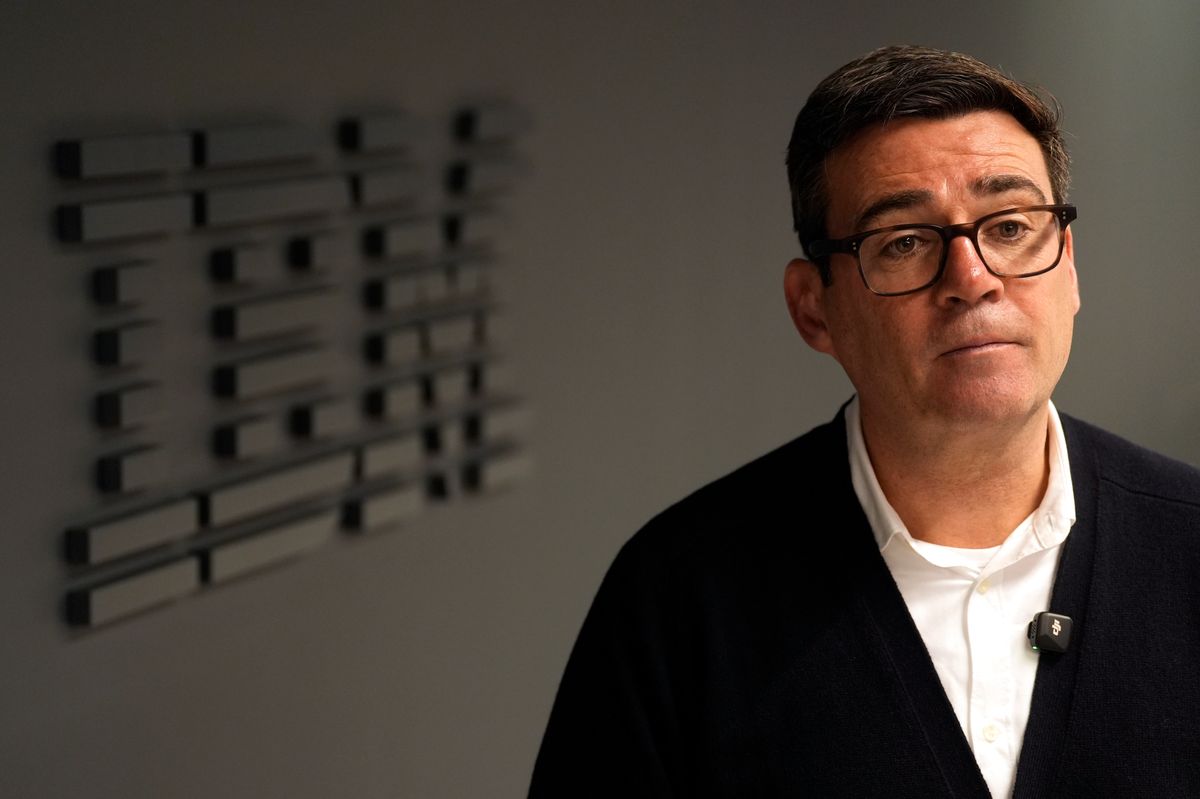
Mayor of Greater Manchester Andy Burnham during a visit to IBM in Manchester, to announce a milestone for technical education across the city region. (Image: Danny Lawson/PA Wire)
“There’s a mis-match between the economic importance of the great Northern cities and their political clout”, George Osborne told an audience at Manchester’s Museum of Science and Industry back in June 2014.
The Tory Chancellor’s plan to fix this imbalance was to create metro mayors – with powers comparable to the Mayor of London’s – for Greater Manchester and Leeds, complete with “serious devolution of powers and budgets”.
Not everything in Osborne’s speech has stood the test of time – the idea for a high-speed Northern Powerhouse Rail connecting the North’s big cities is barely any further on nearly 12 years later. And the process of handing powers and cash to elected city region mayors by central government has been slower and more cautious than many would like.
Read more: Andy Burnham’s mayoral tax to rise by £25 for ‘typical’ home – full list of charges
But the concept of ‘Andy Burnham-style mayors’ has now been embraced by successive governments and is being rolled out across the country. And the political clout it’s handed to the man himself has put him in a position where he’s considered the main Labour rival to Prime Minister Keir Starmer.
As he pitches himself to voters and Labour activists ahead of the Gorton and Denton by-election, Mr Burnham will be able to point to the roaring success of Greater Manchester’s economy, which has now emerged as one of the fastest-growing in the UK after decades of stagnation.
It’s hard to miss the signs of Manchester’s economic boom if you walk past the gleaming skyscrapers in the city centre, passing a steady stream of publicly-controlled yellow Bee Network buses. And there are hard facts too – since 2015, the city region has experienced an average annual growth rate of 3.1%, more than double the national rate.
MediaCity in Salford has the largest concentration of creative businesses outside the capital and Oxford Road boasts a world-class cluster of health innovation and life science research and development.
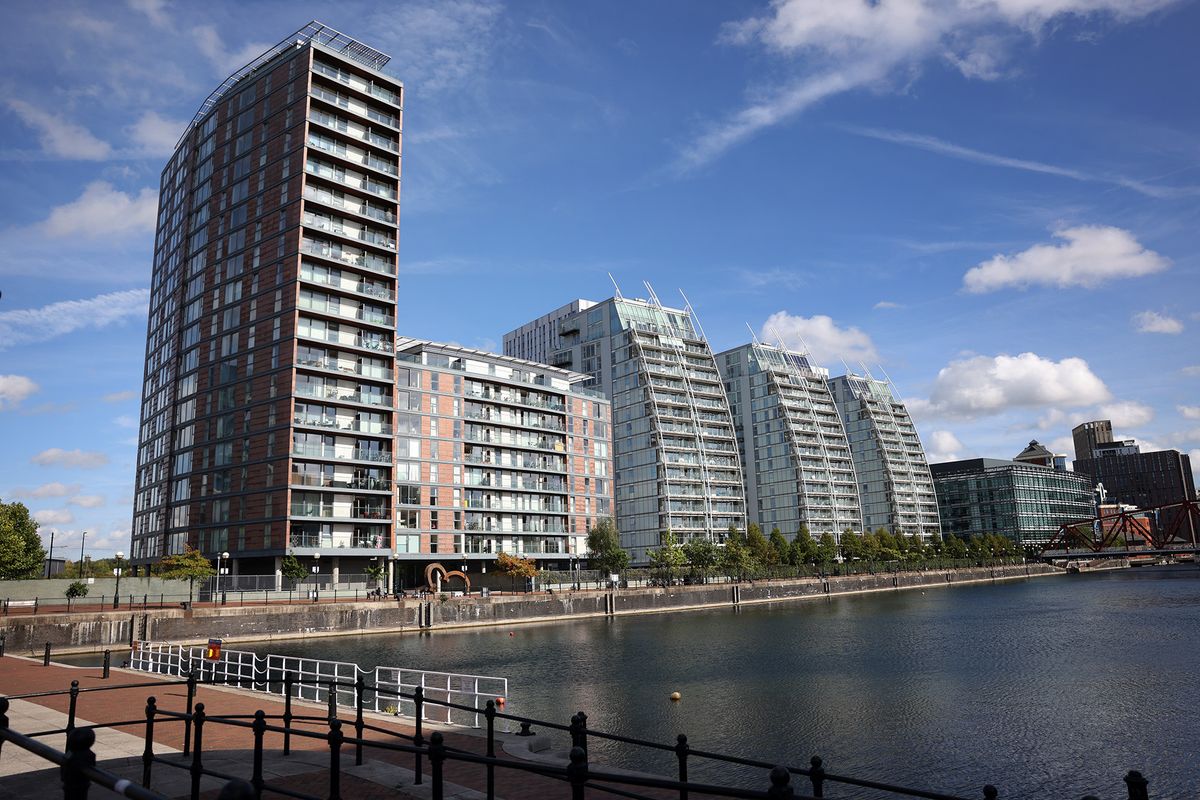
MediaCityUK is one of Greater Manchester’s big success stories(Image: )
But as the mayor admitted in a speech last week, this trend started a long time before he started his first term at the Greater Manchester Combined Authority in 2017.
He added: “I’m not going to stand here and try and take the credit, because people in our city region have been working at this for four decades, and they’ve done the hard yards of getting regional growth going.”
Much of Greater Manchester’s political architecture, which has allowed it to race ahead of other parts of England by taking on new devolved powers, came into being years earlier, as did its strengths in life sciences, and green tech.
And most observers attribute the city’s 21st century renaissance to Howard Bernstein and Richard Leese, the long serving chief executive and leader of Manchester City Council who reimagined the city and helped introduce regional devolution locally.
The task facing Mr Burnham – who last year launched a £1bn fund to promote ‘good growth’ across his patch – is ensuring the undoubted success of the city is felt in Greater Manchester’s outlying boroughs through schemes like the Atom Valley mayoral development zone.
Back in 2024 he told journalists: “I think the issue is, at the moment, if you’re a young person sitting in your bedroom — in Oldham, or in Hulme, or Old Trafford — and you can see the skyscrapers from your bedroom window, I don’t think currently you have a feeling of a path that takes you to a job within one of those buildings, or in MediaCity”.
His two flagship policies – the Bee Network of publicly-run buses and the Greater Manchester baccalaureate (MBacc) aiming to connect young people to jobs through technical education – are part of the region’s efforts to bridge that gap.
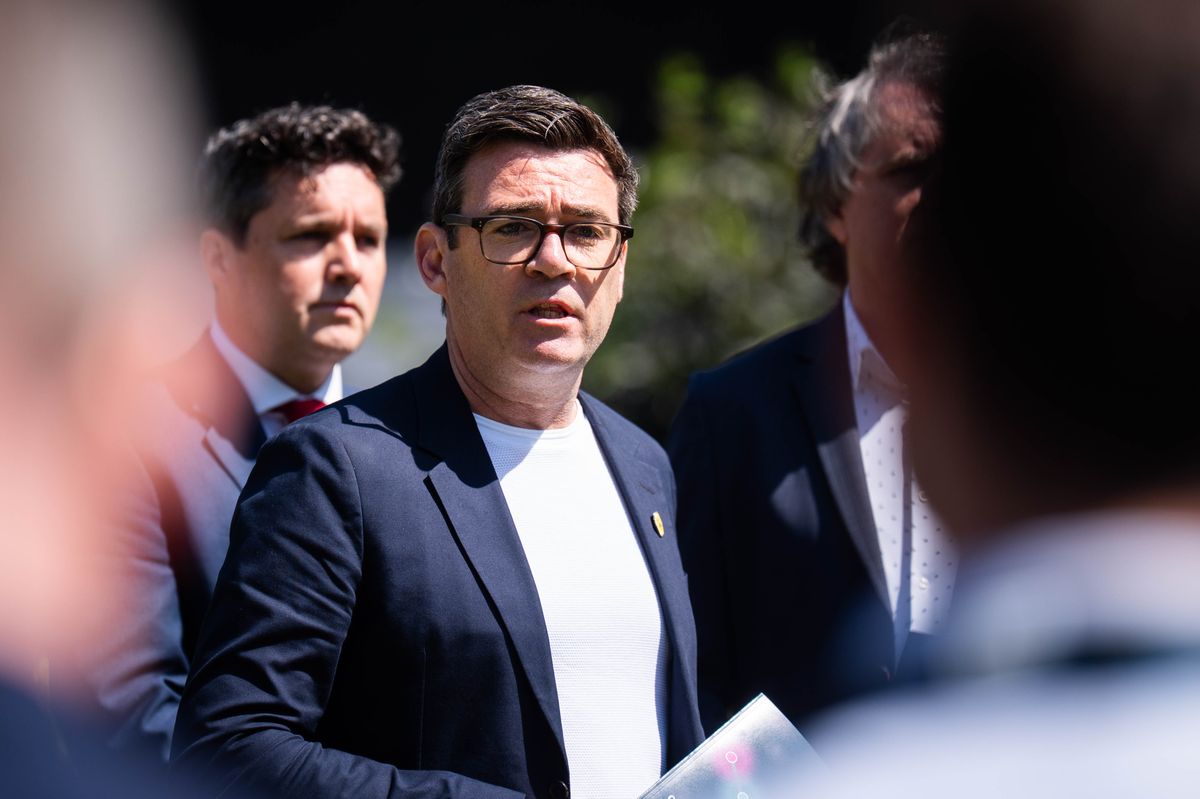
Andy Burnham said this year that MPs are privately urging him to challenge Sir Keir Starmer for the Labour leadership. Photo credit should read: James Manning/PA Wire (Image: )
The MBacc scheme won’t be up and running until 2030, having only recently got the backing of Keir Starmer’s Government. And after years of legal battles to create the first integrated, locally controlled transport system in England outside London, it’s still too early to accurately judge the success of the Bee Network, though the early signs look promising.
Tackling the housing crisis was Andy Burnham’s stated priority for his third term through measures like the Greater Manchester Good Landlord Charter and the creation of 10,000 new council homes by 2028.
But turning round a region’s economy is a task of decades, not years, and one leading figure fears that by leaving the mayoralty for Parliament he risks leaving the job unfinished.
Henri Murison, chief executive of the Northern Powerhouse Partnership advocacy group, said Mr Burnham “has made a significant contribution, most notably since he focused down on his goal being to build on the unprecedented productivity growth in Greater Manchester that he inherited”.
He adds: “The delivery of the bus system under public control and his support for the development of Stockport through the Mayoral Development Corporation there have been particularly notable.
“However, he has still much left to finish; including the further extension of the tram network, the delivery of Northern Gateway within the wider Atom Valley to bring more prosperity to the north of the conurbation and regeneration of the area around Old Trafford.
“To achieve a legacy in the same league of those like Sir Howard Bernstein or Sir Richard Leese is not just about vision, but the ability to stay the course.
“The risk of him leaving the mayoralty, and the strong likelihood of Reform taking control of it who are explicitly against Northern Powerhouse Rail from the airport through an underground Piccadilly, could see his considerable legacy and the economic future of the city centre which drives the wider region economically left in tatters.”
Zoë Billingham, Director of the IPPR North think-tank, adds: “In Greater Manchester, Andy Burnham has demonstrated how mayors can combine soft power, moral leadership and effective delivery.
“Whilst he was lucky to inherit the legacy of those came before him in Greater Manchester, he’s demonstrated to political parties across the spectrum the potential of the role. If he does head south to Westminster, I hope he will remain a champion of devolution and local power.”
Despite its successful decade, there remain deep-rooted issues in Greater Manchester, which still features some of the country’s highest rates of child poverty. In the booming city of Manchester there’s a severe housing crisis due to high demand and a shortage of supply. And rail transport in and out of the region continues to hold it back.

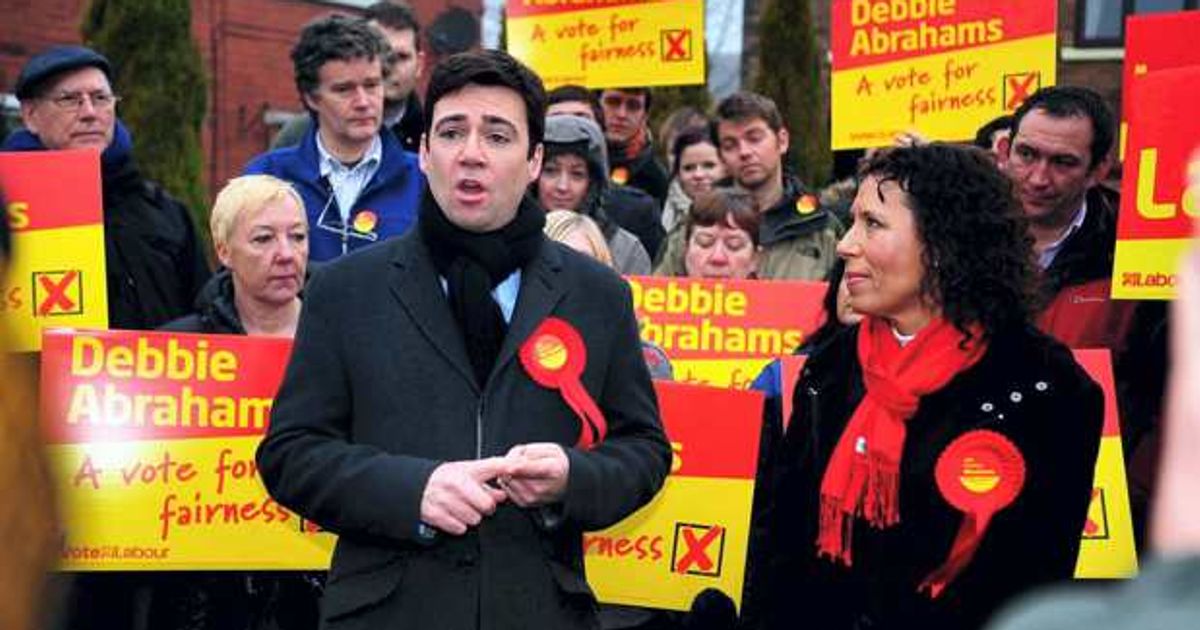
Andy Burnham campaigning with Debbie Abrahams in 2013(Image: )
But there are warm words to be found for Andy Burnham on both sides of the political spectrum. His former parliamentary private secretary Debbie Abrahams, Labour MP for Oldham East and Saddleworth, praised the mayor – who she said listened to her concerns about the NHS when he was a junior health minister – on social media this week.
She adds: “I believe he is one of the best politicians in the country, who will always act in the country’s interest. His achievements in Greater Manchester are absolutely outstanding, e.g., growth in GM is over 3%.
“Andy encouraged me to become an MP, supported me when I was elected, at re-elections too, and many more times besides.
“I believe we need the person who is most likely to win the Denton by-election, and that is clearly Andy. If Andy decides he wants to stand I hope the [Labour National Executive Committee] will allow him to.”
Sir Simon Clarke, director of centre-right think-tank Onward and a former Conservative Levelling Up Secretary, also praised Mr Burnham’s impact.
He told the M.E.N.: “When we set up the mayoralties under the last government, we wanted dynamic city leadership – and in fairness to Andy Burnham, I think he delivered.
“Manchester looks and feels a successful city, and the contrast with London under Sadiq Khan shows the difference Andy has made.
“Do I agree with all of his politics? Obviously not. But do I think he would be a significantly more capable and charismatic leader of the Labour Party than Keir Starmer? Yes. And we should be in no doubt that’s why he is seeking to return to Westminster.”