
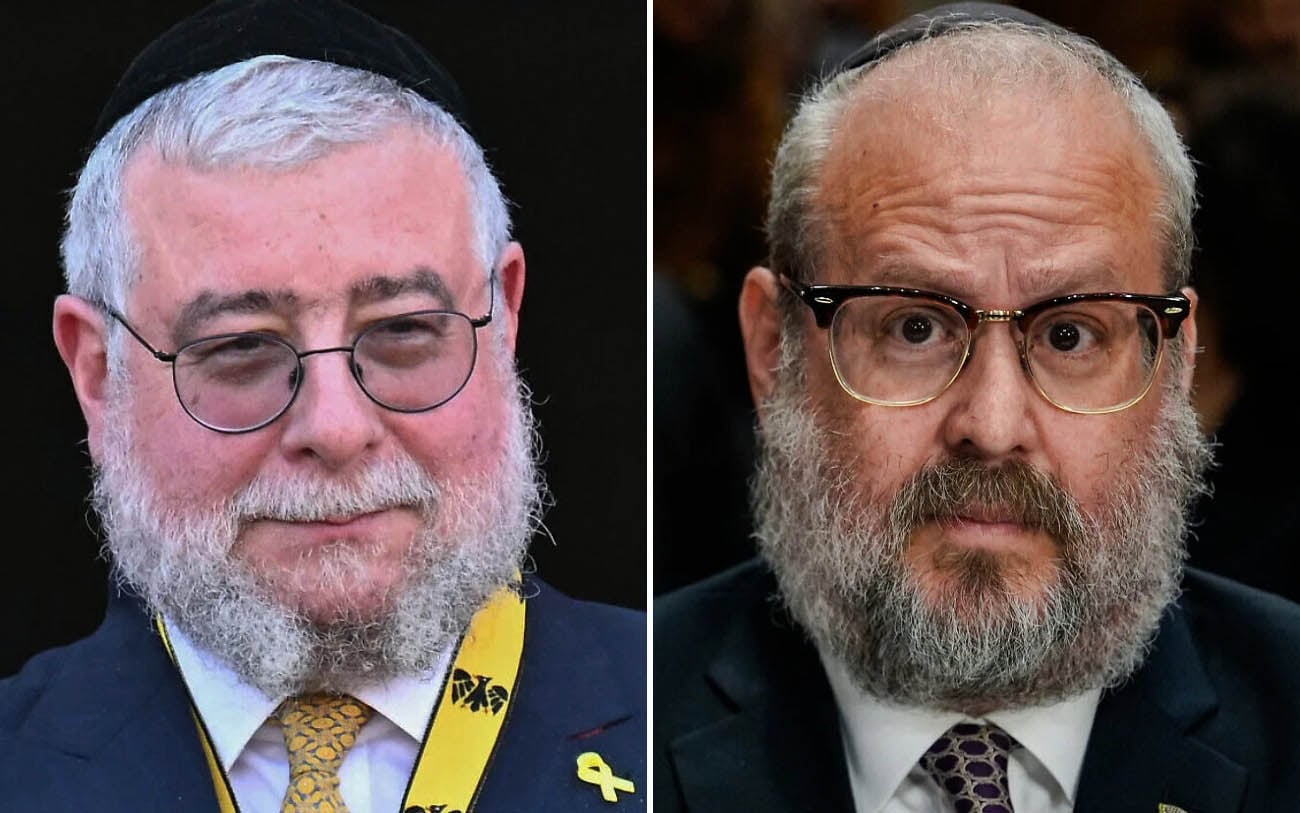
JTA — A disagreement over how to define the sources of rising antisemitism in Europe escalated into a public clash this week between two prominent Jewish leaders, with tech billionaire Elon Musk intervening to back the US government’s antisemitism envoy over a prominent European rabbi.
The dispute centers on remarks made Wednesday at the World Economic Forum by Rabbi Pinchas Goldschmidt, the president of the Conference of European Rabbis, during a panel discussion on antisemitism, extremism and social cohesion.
Responding to a question about the surge of antisemitism in Germany and beyond, Goldschmidt said the October 7, 2023, Hamas-led attack on Israel had triggered a dramatic global rise in antisemitic incidents, including what he described as organized and state-sponsored activity on university campuses and in public spaces.
Goldschmidt then linked broader political developments in Europe to immigration-related anxieties.
“I think the rise of the extreme right in many European countries is a response to the insecurity felt by the so-called old Europeans regarding the new immigrants who came from the Middle East,” he said.
Get The Times of Israel’s Daily Edition
by email and never miss our top stories
By signing up, you agree to the terms
He went on to argue that combating antisemitism and Islamophobia together was in the shared interest of Jewish and Muslim communities, pointing to past interfaith initiatives he said had helped promote social cohesion.
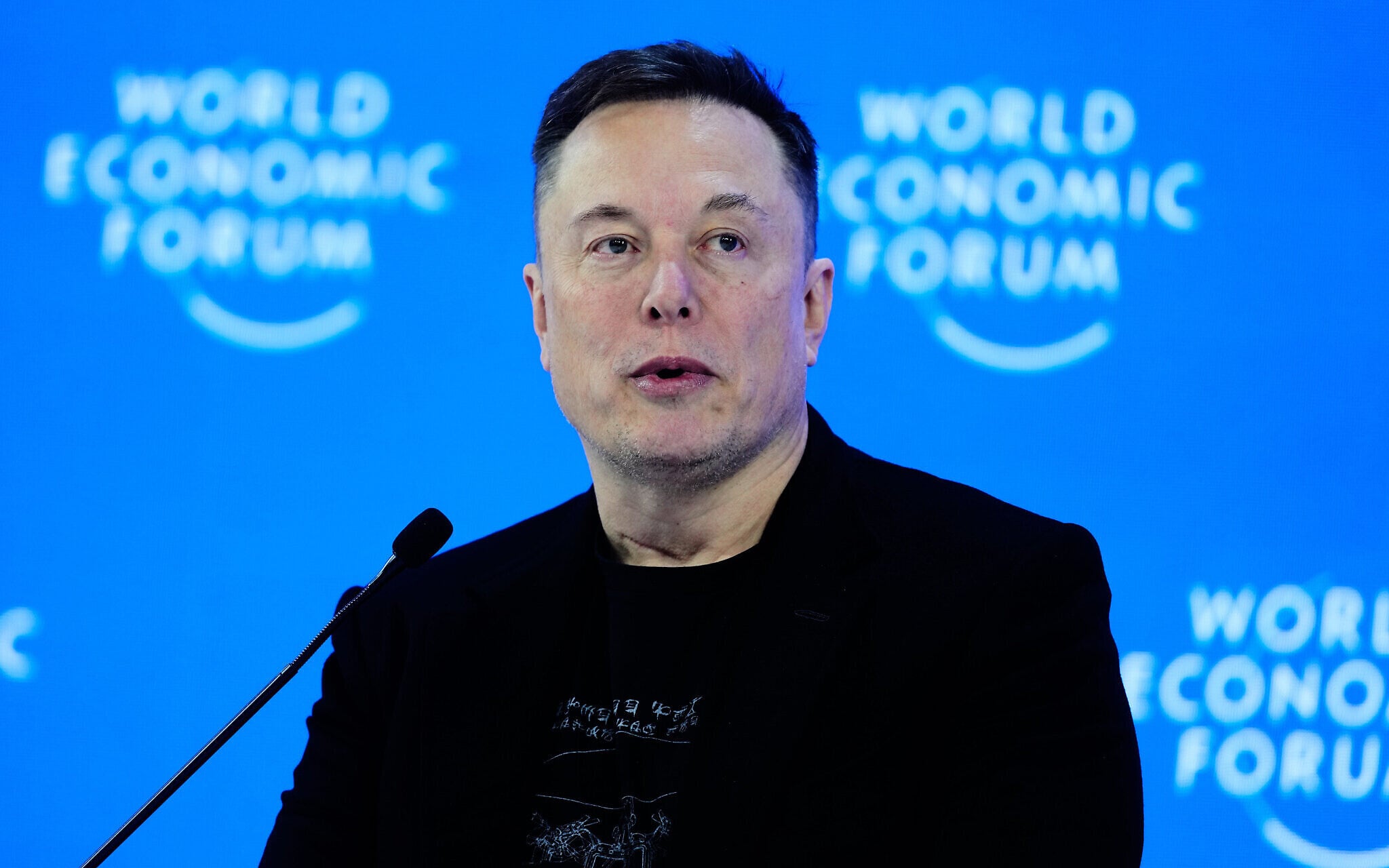
Elon Musk attends the Annual Meeting of the World Economic Forum in Davos, Switzerland, January 22, 2026. (AP Photo/Markus Schreiber)
Rabbi Yehuda Kaploun, the US special envoy to monitor and combat antisemitism, publicly criticized Goldschmidt’s remarks on X, calling them a misreading of the drivers of contemporary antisemitism in Europe. The intervention marked one of Kaploun’s first major public statements since his Senate confirmation in December.
“Blaming ‘old Europe’ for the present surge in antisemitism is disgraceful,” Kaploun wrote, arguing instead that mass migration has played a significant role in recent antisemitic violence and threats to Jewish safety.
“I am proud to serve in an administration that understands that mass migration is a huge driver of antisemitism,” Kaploun wrote. “It creates dramatic social changes and threatens the safety of all citizens. This administration, led by President Trump and Secretary Rubio, recognizes and confronts today’s challenges with clarity. Mass migration itself threatens the safety of Jews and all communities.”
Musk, the owner of X, amplified Kaploun’s critique by reposting his comments and replying, “Exactly. Thank you for speaking up,” a move that quickly broadened the dispute beyond Jewish communal circles.
Goldschmidt responded within hours, rejecting the characterization of his remarks and saying they had been taken out of context. He said he did not blame European culture for antisemitism and reiterated that he views antisemitism as stemming from multiple ideological sources, including the far right, the far left and radical Islamist violence.
“I never blamed ‘old Europe’ for the current rise in antisemitism,” Goldschmidt wrote, adding that his Davos comments were intended to explain political reactions to immigration, not to excuse antisemitic attacks.
The exchange highlights a growing divide among Jewish leaders over how to frame antisemitism amid polarized debates about immigration, integration and public safety — debates that have increasingly spilled into partisan politics in the United States.
Kaploun’s emphasis on migration echoes language used by Vice President JD Vance, who said in December that reducing immigration was “the single most significant thing” the United States could do to curb antisemitism, while dismissing claims of rising antisemitic sentiment within the Republican Party.
The dispute also reflects longstanding institutional tensions. Kaploun is affiliated with the Chabad-Lubavitch movement, which has grown into a dominant force in Jewish communal life in Russia and parts of Europe. Goldschmidt, a former chief rabbi of Moscow who left Russia after refusing to endorse the war in Ukraine, represents a European rabbinic establishment that has at times clashed with Chabad over authority and representation.
Is accurate Israel coverage important to you?
If so, we have a request.
Every day during the past two years of war and rising global anti-Zionism and antisemitism, our journalists kept you abreast of the most important developments that merit your attention. Millions of people rely on ToI for fact-based coverage of Israel and the Jewish world.
We care about Israel – and we know you do too. So we have an ask for this new year of 2026: express your values by joining The Times of Israel Community, an exclusive group for readers like you who appreciate and financially support our work.
Already a member? Sign in to stop seeing this
You appreciate our journalism
You clearly find our careful reporting valuable, in a time when facts are often distorted and news coverage often lacks context.
Your support is essential to continue our work. We want to continue delivering the professional journalism you value, even as the demands on our newsroom have grown dramatically since October 7.
So today, please consider joining our reader support group, The Times of Israel Community. For as little as $6 a month you’ll become our partners while enjoying The Times of Israel AD-FREE, as well as accessing exclusive content available only to Times of Israel Community members.
Thank you,
David Horovitz, Founding Editor of The Times of Israel