
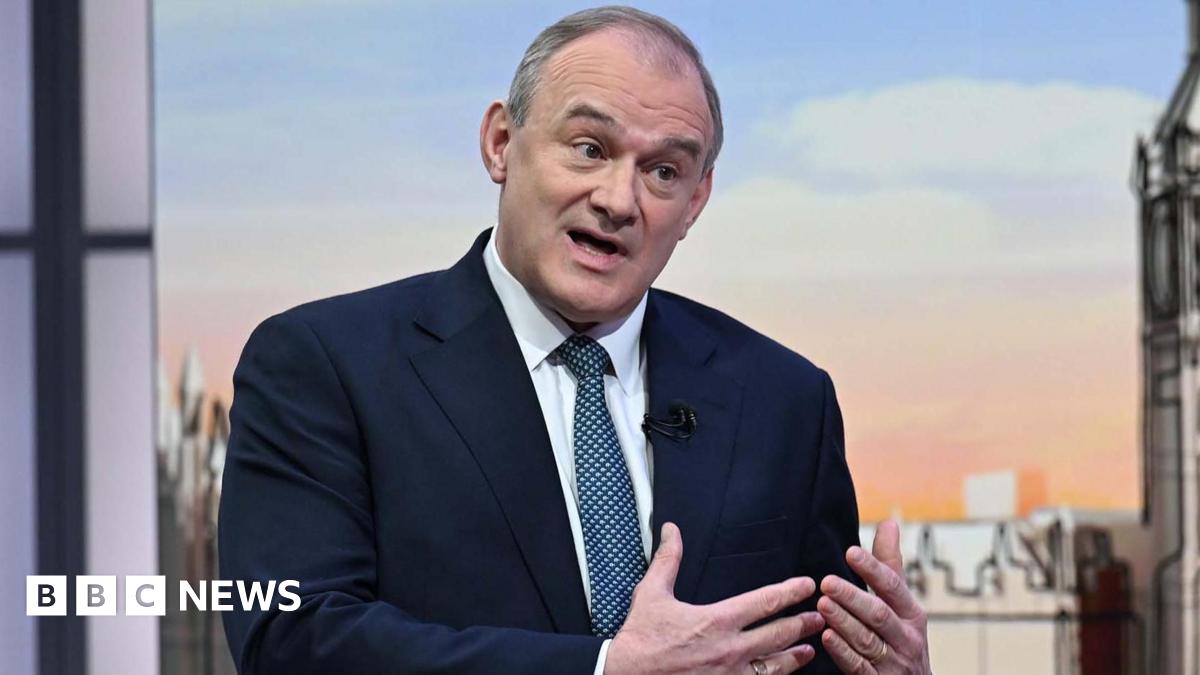
On Sunday, Davey said: “Everyone can see that since the last election things have changed dramatically. The way that Putin is prosecuting that [Ukraine] war, but as significantly, the attitude of Donald Trump to supporting European defence.”
He expressed concern about the Nato alliance given the approach of the US president.
“I deeply regret to say, because of Donald Trump, there has to be a question about whether we can rely on the United States. With him in the White House they’re no longer a reliable ally. We have to step up and fast,” he told the BBC.
The Liberal Democrats said the money raised from issuing bonds would be ring-fenced for defence and the investment would help deliver “growth, jobs and higher revenues” for the government “which would partially offset the cost of additional debt servicing”.
The party added the scheme would need to be accompanied by an overhaul of the Ministry of Defence procurement process, which has previously been criticised as wasteful.
Their proposal, the party says, would be similar to the bonds scheme used during World War One and World War Two.
Individual citizens could lend the government money, which would be paid back in six to 10 years with interest. By the end of 1945, the scheme had raised £1.754m.
Posters encouraging members of the public to buy bonds – or national savings certificates – used slogans including “lend to defend” and “feed the guns with war bonds”.
Dan Coatsworth, head of markets at investors AJ Bell, said: “War bonds are a proven way of raising money to fund national defence spending, but they can burden a government with long-term debt.
“In theory, the public might demand a better rate of interest than they could get on cash in the bank to take up the bonds.
“While some people might think it is their duty to support the country, there will be others who treat such a bond in the same way as any type of investment.”