
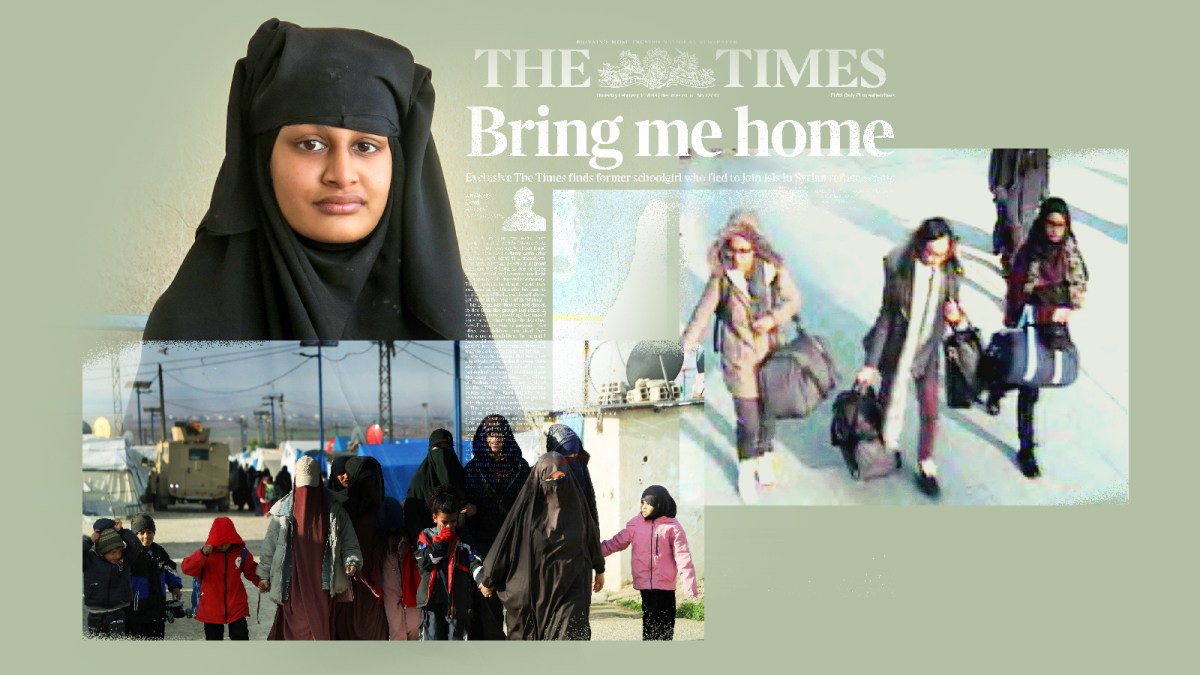
Britain has quietly repatriated Islamic State-linked women and children who were held alongside Shamima Begum in Syria, according to a director of the camp that holds the so-called Isis brides.
Six women in camps held by the western-backed Syrian Democratic Forces (SDF) have been sent back to Britain without fanfare, along with nine children.
There have been concerns that Isis prisoners might escape in the chaos engulfing eastern Syria as the central authorities begin to reclaim territory from the Kurdish-led SDF.
However, the SDF remains in control of al-Roj camp near the Iraqi border, where Begum and the other British women were held. A camp official told The Times that 29 women and children who hold or held British passports remained in the camp, which is likely to be transferred to the authority of the Damascus government led by Ahmed al-Sharaa, the country’s president.
• Terror in the streets and camps as Syrian military turns to force
Citizenship was stripped from Begum, one of three girls from Bethnal Green, east London, who travelled to Syria to join Isis in 2015 at the age of 15. The other two girls are both thought to have died in fighting between the western-led coalition and Isis jihadists.
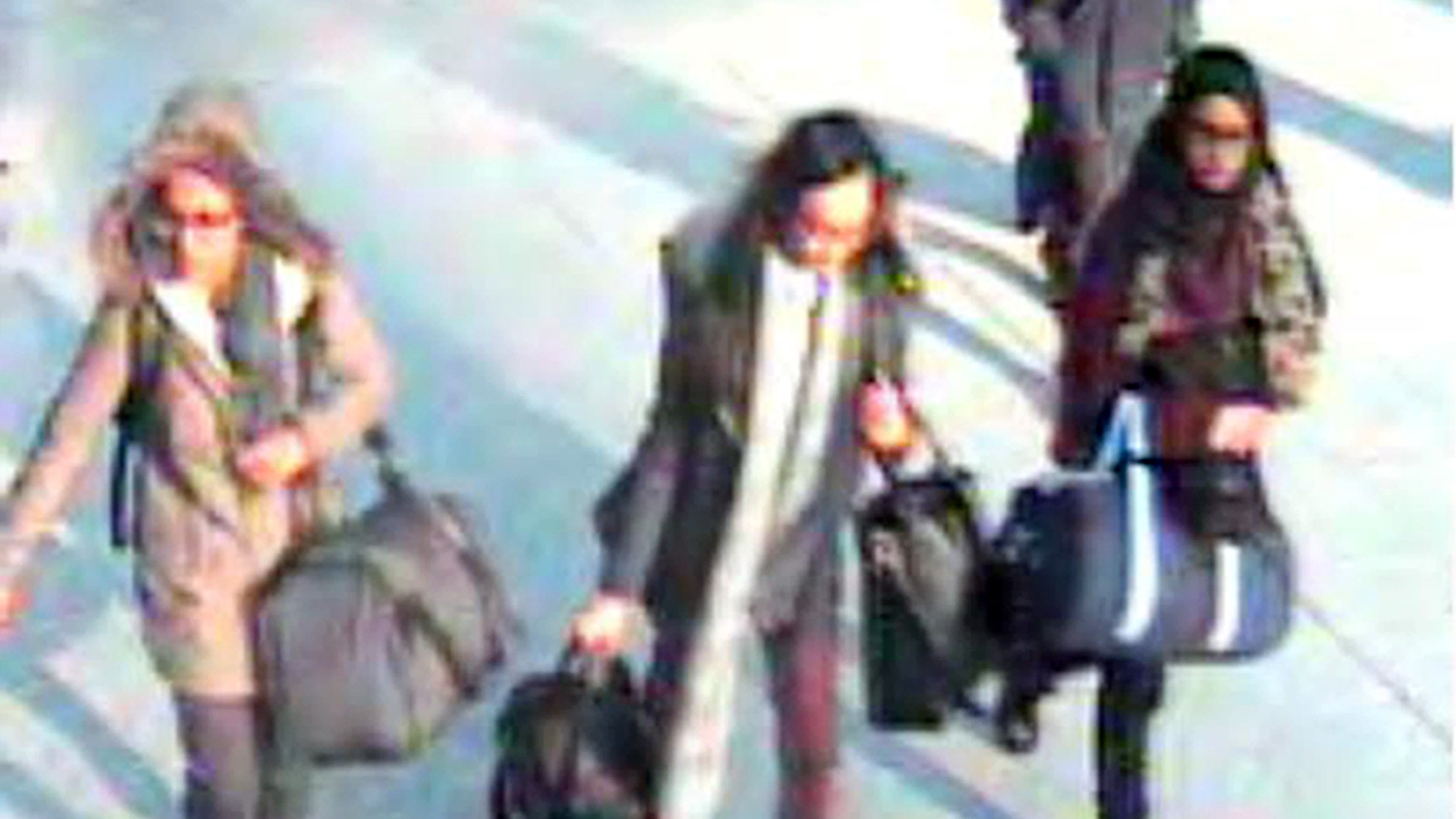
Amira Abase, Kadiza Sultana and Shamima Begum, at Gatwick airport in February 2015
METROPOLITAN POLICE/PA
After Begum was discovered by The Times in SDF detention in 2019, an outcry forced the then-Conservative government to declare she would not be allowed to return to Britain. The policy was applied to other women after the last Isis holdouts fell to the SDF.
Some unaccompanied minors were allowed to return to the UK and were handed to social services under conditions of anonymity. However, minors who were with their mothers were forced to remain in Syria.
The UK’s official policy remains unchanged, but the Foreign Office has allowed a handful of women to return with their children on a case-by-case basis. Most of those repatriated have been women who were taken or travelled to Syria there when they were under 18.
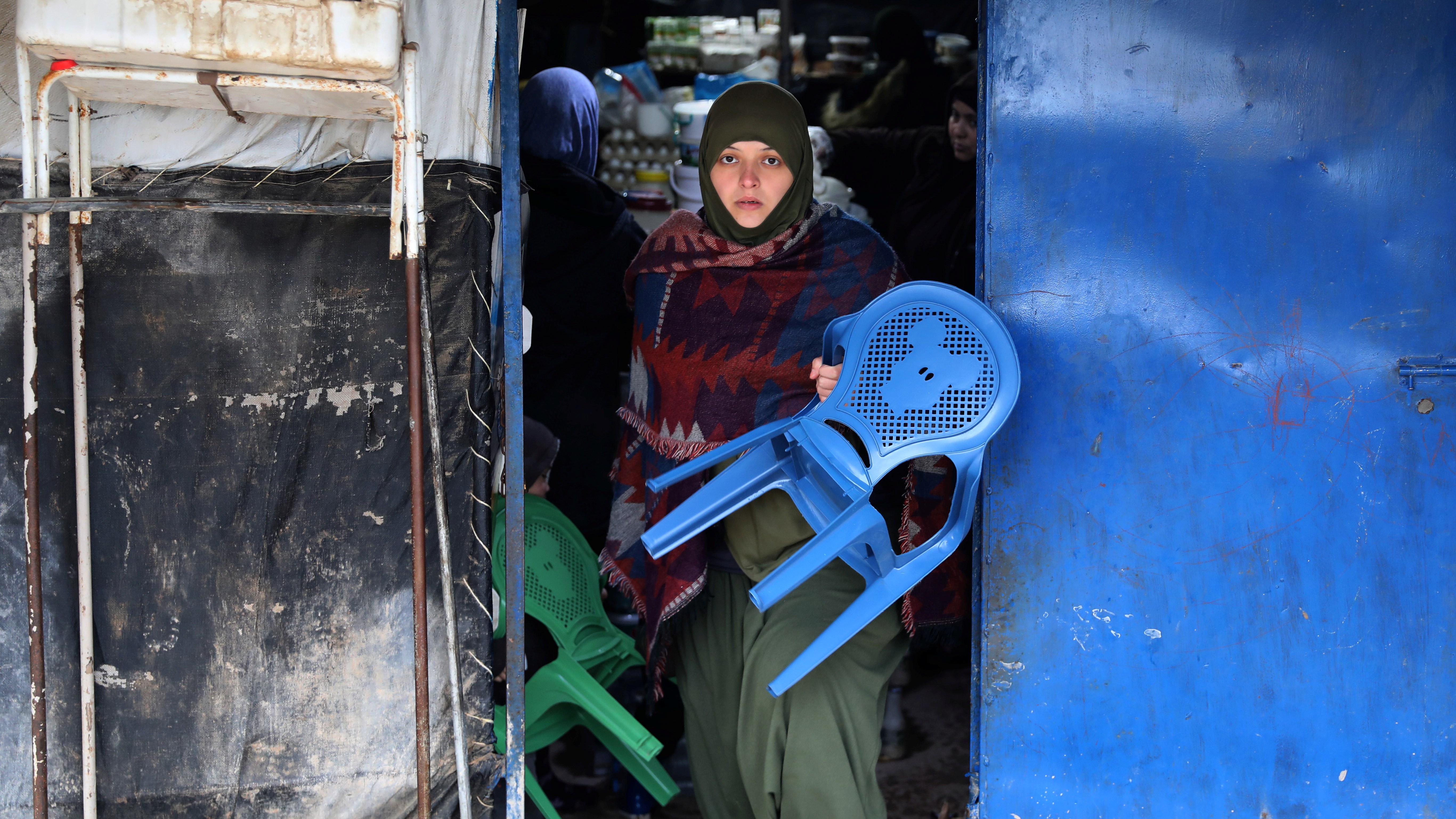
A woman carries chairs out of a shop in al-Roj camp
GORAN TOMASEVIC/REUTERS
In November, a report by the Independent Commission on Counter-Terrorism Law, Policy and Practice suggested that three adult women and 18 children had been repatriated, but there have only been public announcements regarding two women, one of whom returned in 2022 with her son and another woman with five children in 2023. It is understood that two more families returned in 2024 and 2025.
The government is preparing to resume deportations of foreign criminals and failed asylum seekers to Syria. The UK began voluntary returns after the fall of the Assad regime in December 2024. In November Shabana Mahmood, the home secretary, announced that the Home Office had begun exploring the possibility of enforced returns for the first time in 15 years.
The details about Begum and al-Roj camp were confirmed by its co-director, Rasheed Afrin. He said six UK women and nine children had been sent home in recent years.
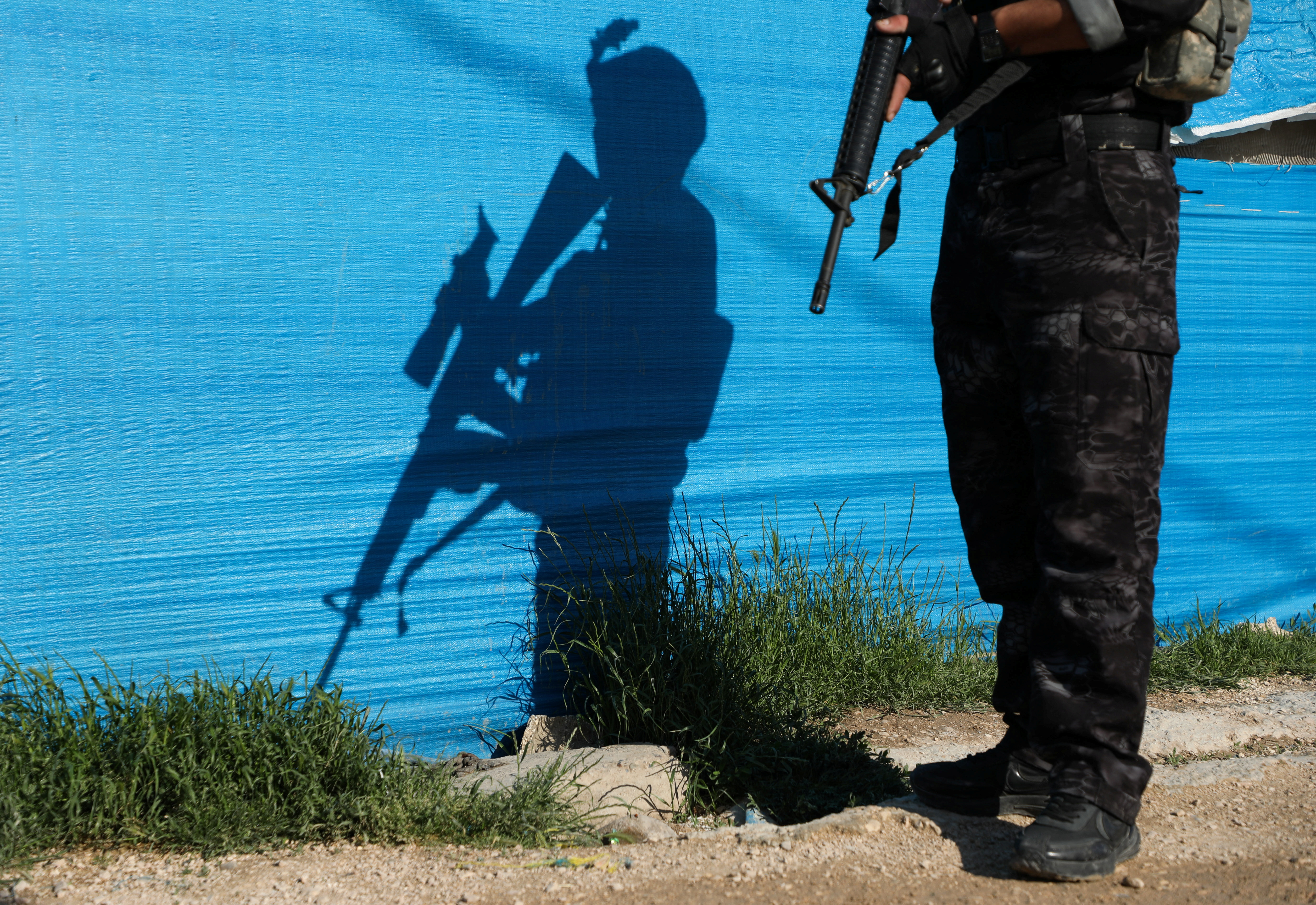
Kurdish internal security forces and Women’s Protection Unit conduct a security operation in al-Roj camp in April 2025
ORHAN QEREMAN/REUTERS
The fate of the remaining women and children hangs in the balance after a larger camp was taken over by the Syrian military, which has launched an operation to end Kurdish autonomy in the northeast.
In al-Hawl, the larger camp, the handover was chaotic. The Kurdish SDF pulled out its troops as the army advanced, leading to riots and arson and dozens of the women escaping.
The US, which is debating withdrawing its forces from Syria, has brokered a deal to transfer male Isis prisoners to neighbouring Iraq.
Prisoners in the camps had languished under Kurdish guard for years after the demise of Isis’s so-called caliphate. The caliphate was meant to endure and expand, as the Isis slogan goes, but in Syria it shrank to the two prison camps.
At al-Hawl, the women raised their children in tents on the apocalyptic beliefs of Isis. Children would chant that slogan at visitors as they pelted them with stones. Boys who reached puberty were forced into sex with women to produce more “lion cubs” for the caliphate that lay behind a flimsy wire fence.
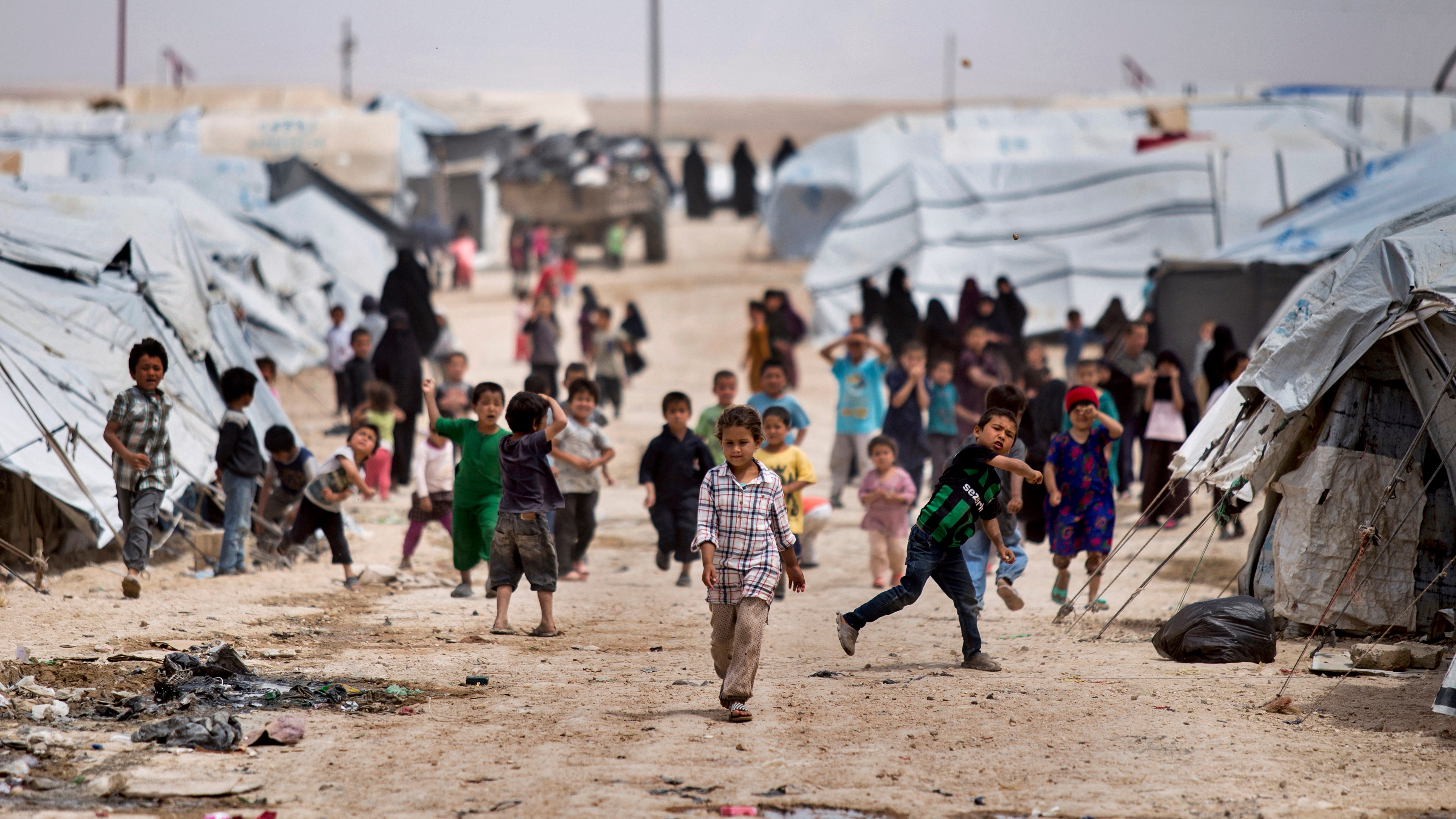
Children outside their tents at the al-Hawl camp
BADERKHAN AHMAD/AP PHOTO
Jihan Hanan, who was the director of al-Hawl until this week, said: “There were no preparations for the handover. I’m looking at the videos and pictures coming out and it burns my heart. The people inside, the international community’s indifference. At the end of the day these are women and children.”
The SDF had called on countries to repatriate their citizens, but most have refused. “Enough, the international community should say enough, this matter needs to be resolved,” she said.
Hanan said the wives and children of the Isis members varied, from the ultra-fanatic to those who were sucked into the extremist group, or were born to parents who were.
• Rioting Isis wives escape prison camp as Syrian army advances
Al-Hawl once held more than 40,000 residents, but the number dropped to 23,407 at the beginning of the year after Iraq agreed to repatriate its citizens. Thousands of Syrians had also been allowed to leave, she said.
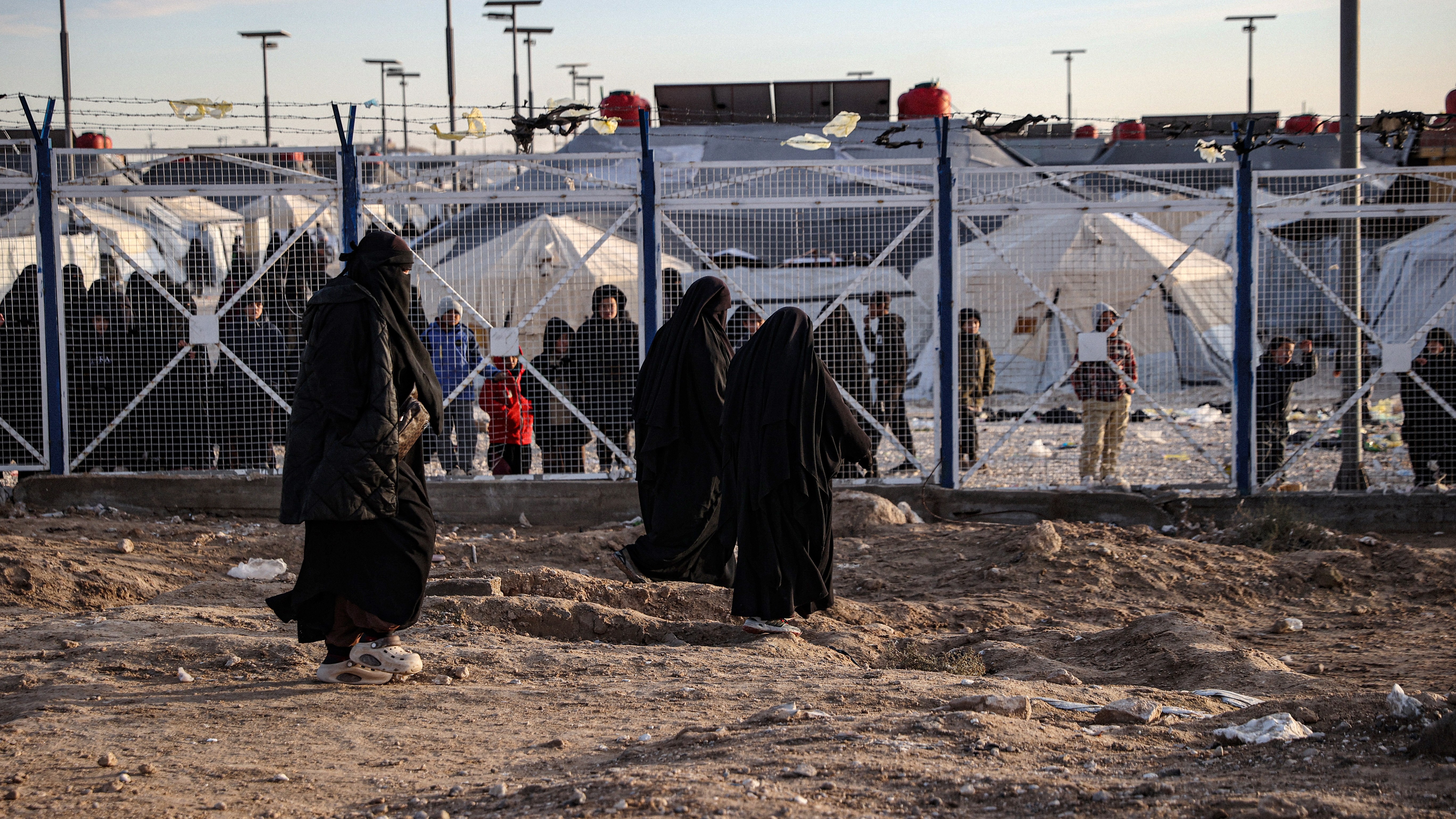
The Al-Hawl camp is encircled by a wire metal fence
IZZ ALDIEN ALQASEM/ANADOLU/GETTY IMAGES
However, the Syrian military takeover has made the matter more pressing than ever. Aaron Zelin, an expert on jihadist groups with the Washington Institute for Near East Policy, said: “The Syrian government pushed too hard too quick without having a plan of co-ordination with the SDF and US.
“The biggest question is what happens to all the third-country nationals. We haven’t heard anything from any that they’re willing to take anyone back. So I imagine we’ll see a continuation of this play out, where the foreigners are just left there to rot.”
Reprieve, a human rights charity that represents some of the foreign families detained in the camps, reiterated calls for the UK government to change its policy in order to repatriate the remaining British citizens in the camps.
Maya Foa, chief executive of the charity, said: “While all of our security allies have a policy of repatriating families, Britain has taken a ‘do nothing’ approach.
“Over two governments they have brought home just a handful of women and children — and there have been even fewer under this government than the previous one.
“This approach is totally inadequate in the current moment, when British families are at acute risk, in a dangerous detention camp that could collapse at any time. The US brought its people back long ago and has urged Britain to do the same. Where there are cases to answer, the adults can be prosecuted in British courts.”