
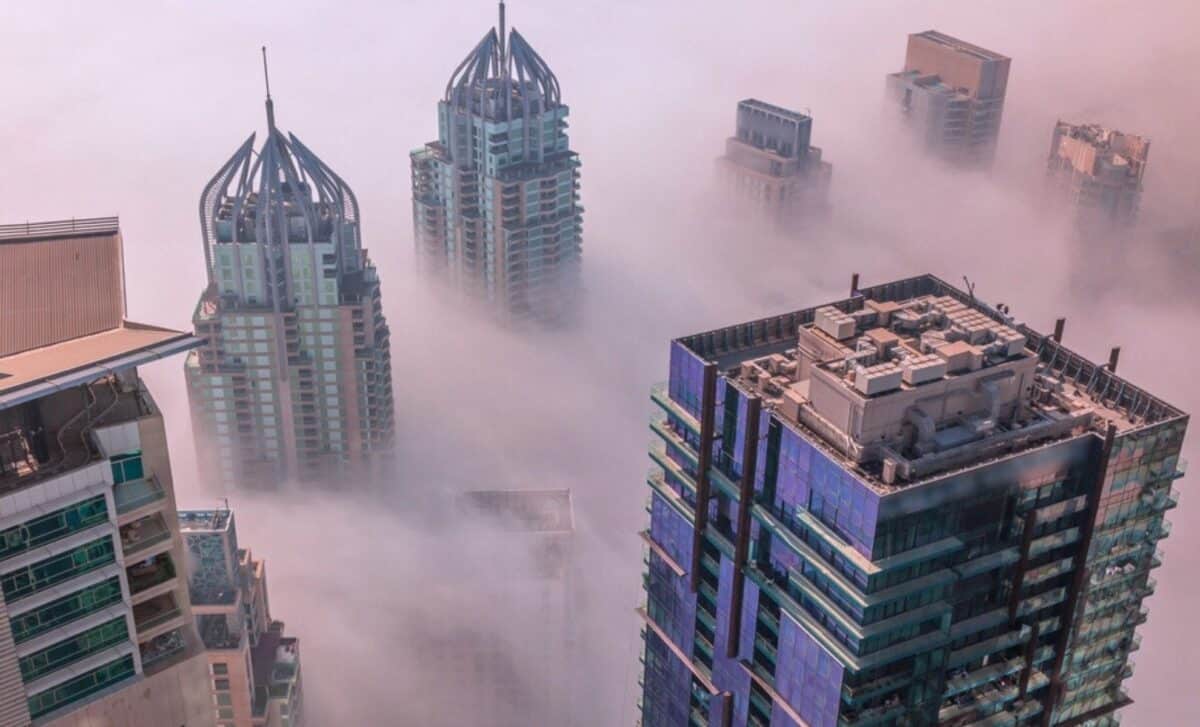
Scientific models released through 2025 reveal a stark global divide in climate vulnerability. Urban centers across the tropics are projected to face escalating exposure to extreme heat and severe precipitation within the next seven decades.
Several nations across South Asia, Africa, and parts of South America are expected to confront persistent environmental pressures that test human physiological limits. Cities on the front line of this crisis often lack the infrastructure and financial capacity to manage these changes, leaving millions at risk.
Heat Index Projections Suggest Widespread Uninhabitability by 2100
Peer-reviewed analysis published in Nature Communications projected that many regions within the tropics will regularly exceed the Heat Index threshold of 103°F (39.4°C) by the end of the century. This level is categorized as “dangerous” by the U.S. National Weather Service and is linked to increased rates of heat exhaustion, reduced labor capacity, and elevated mortality risk.
By using probabilistic projections of anthropogenic CO₂ emissions and a novel pattern-scaling approach, researchers showed that global exposure to dangerous heat levels could double even if the Paris Agreement target of 2°C warming is met.
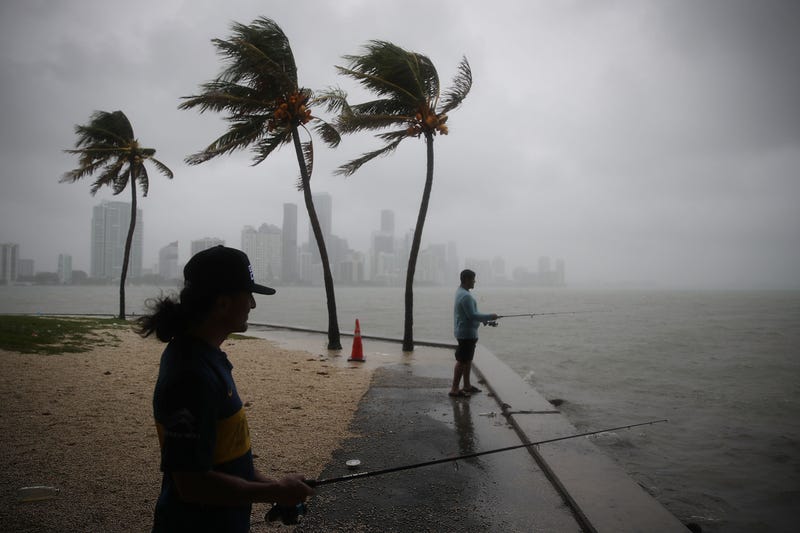 Miami residents fish during Tropical Storm Gordon on September 3, 2018. Credit: Joe Raedle/Getty Images
The projected impact grows more severe under higher-emissions scenarios. The same study concluded that, by 2100, the majority of the population in the tropics could experience extreme heat most days of the year.
Regions such as India, Pakistan, Central Africa, and parts of the Arabian Peninsula are expected to reach what researchers label “extremely dangerous” conditions, where the Heat Index exceeds 124°F (51.1°C). Exposure to this level of heat stress may result in fatal heat stroke without immediate intervention, particularly in areas lacking access to cooling infrastructure.
Heavy rainfall events set to increase in frequency and intensity
A Nature Geoscience study found that daily extreme rainfall over land could increase by approximately 41 percent by 2100 under high-emission scenarios. The largest surges are projected across the southern hemisphere, particularly in South America, Indonesia, Central Africa, India, and Southeast Asia.
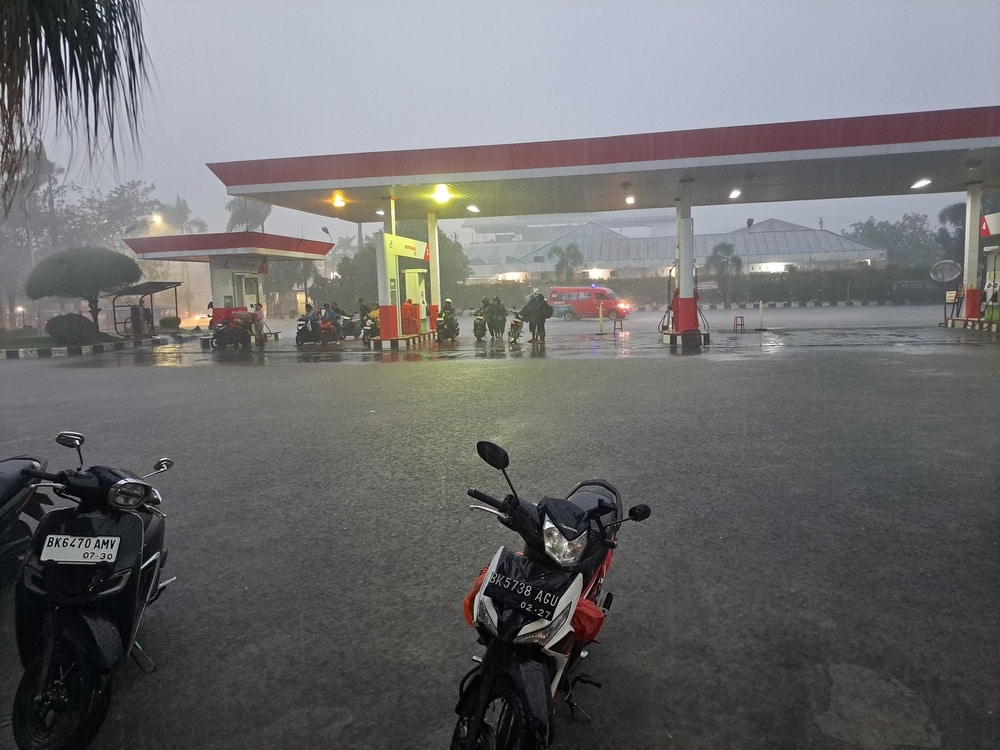 A storm affected the entire city of Medan, and several weeks later, severe flooding occurred in multiple areas of North Sumatra due to continuous heavy rainfall over several days. Credit: Shutterstock
These rainfall spikes, triggered by a warming atmosphere with higher moisture capacity, will intensify flooding risks and test urban resilience in rapidly growing megacities. In Southeast Asia and parts of East Africa, where drainage systems and flood defenses remain underdeveloped, repeated inundation could render large areas functionally uninhabitable.
One simulation cited by the study shows that the southeastern United States and eastern Canada may also face rising flood risks, though to a lesser extent than equatorial regions. The projected changes to the water cycle are nonlinear and geographically uneven, with some areas experiencing drier conditions even under global precipitation increases.
Over 200 Cities Could Breach the Human Climate Niche
A 2025 study published in Scientific Reports assessed 1,563 of the world’s largest cities and found that 217 could exceed a 29°C mean annual temperature (MAT) by 2100 under a high-emissions trajectory. The 29°C benchmark is a widely accepted threshold for the human climate niche, beyond which basic productivity and health begin to decline across populations.
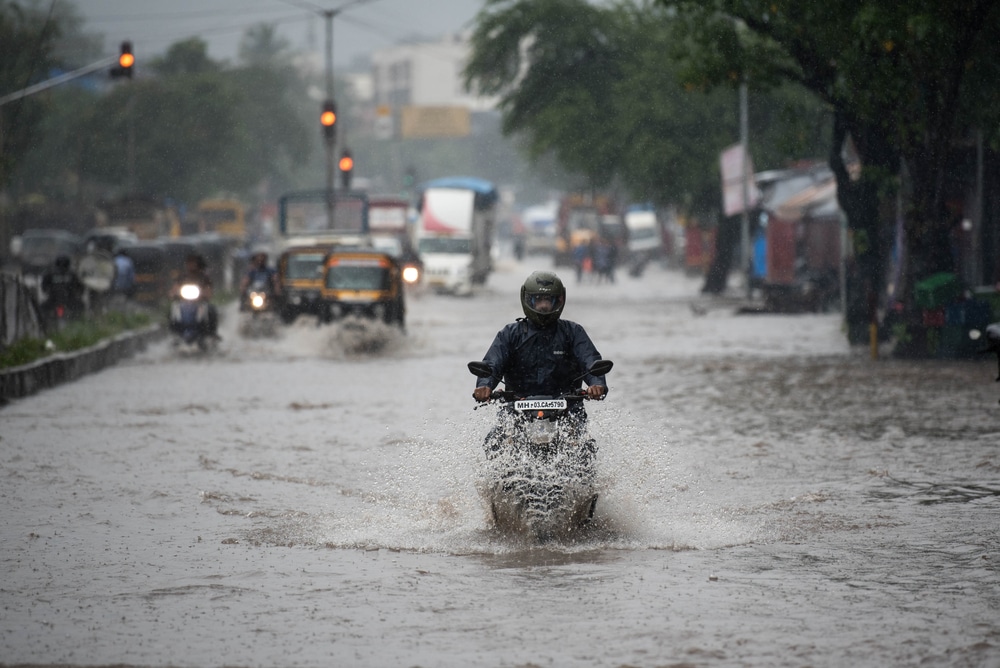 A man rides a motorcycle through a flooded street during heavy rains at Kurla. Credit: Shutterstock
The same study estimates that over 320 million people may live in cities surpassing this limit by the end of the century. The majority are projected to reside in Asia and Africa, with notable concentrations in:
Mumbai, India
Khartoum, Sudan
Kuwait City, Kuwait
Niamey, Niger
Risk factors driving climate exposure in these cities include:
Persistent high annual temperatures (above 29°C MAT)
Limited access to air conditioning and cooling infrastructure
Dense, impervious urban surfaces that trap heat
Rapid population growth outpacing adaptation planning
Low availability of greenspaces and water features for natural cooling
Urban morphology plays a significant role in heat vulnerability. Cities dominated by impervious surfaces and low vegetative cover—typical in fast-growing low-income urban zones—retain more heat and reduce evaporative cooling. In contrast, areas with greater pervious surface fractions, greenspaces, and reflective materials show stronger potential for local heat mitigation.
Bangladesh and Coastal Cities Already Facing Habitability Pressure
Evidence of early displacement has already emerged. In Bangladesh, recurring floods, coastal erosion, and sea-level rise have reduced arable land and intensified migration toward urban centers. Reporting from Business Insider highlighted the vulnerability of cities like Dhaka, where millions face annual flooding and groundwater salinization.
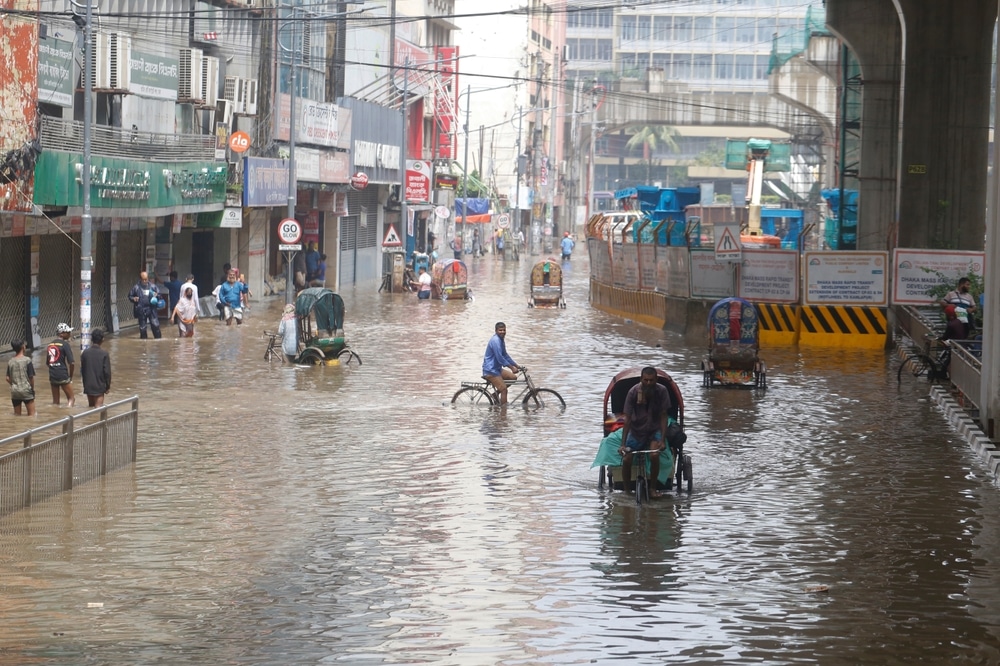 People make their way through a flooded street after heavy monsoon rainfall in Dhaka. Credit: Shutterstock
These patterns signal broader climate migration trends. Urban areas are absorbing displaced populations even as their own exposure to heat and hydrological risks increases. This accelerates pressure on housing, sanitation, and energy systems, compounding the stress of climate change.
Policy Gaps and Financial Constraints Delay Urban Adaptation
Many national climate action plans reference adaptation strategies, yet execution remains inconsistent. City-level interventions such as reflective roofing, tree planting, and urban water features are often absent from municipal budgets, particularly in regions where GDP per capita remains low.
The Scientific Reports study linked the feasibility of climate adaptation to economic capacity. African cities projected to exceed MAT thresholds by 2100 often show the lowest financial means to implement large-scale changes. Even cities with higher GDP, such as Delhi, face challenges in scaling adaptive infrastructure across informal settlements and densely built environments.
In higher-income areas, including Chicago, adaptation plans are more advanced. The deadly 1995 heatwave, which resulted in nearly 800 excess deaths, led to the establishment of heat warning systems and cooling centers. However, a study in PNAS warned that similarly intense heat events could become annual occurrences in U.S. midlatitude cities by the end of the century.