

Miss something this week? Don’t panic. CBC’s Marketplace rounds up the consumer and health news you need.
Want this in your inbox? Get the Marketplace newsletter every Friday.
How grocery giants control who can sell food in your neighbourhoodWATCH | Property controls hindering competition in the grocery sector:
Property controls hindering competition in the grocery sector
CBC Marketplace investigates deals made between developers and grocery giants and how they are controlling what surrounding stores are allowed to sell.
Canada’s biggest grocery giants — including Loblaws, Sobeys and Metro — are using property law to control how other grocery stores, dollar stores, pharmacies and gas stations can compete with them, an investigation by CBC’s Marketplace has found.
Property controls are deals made between a land owner and retailer that restrict what kinds of businesses can operate nearby, and what the competitors are able to sell. The terms are negotiated to incentivize the business to open their store on the land.
Known in legal terms as restrictive covenants or exclusivity clauses, property controls are common across industries. In a plaza, for example, they could limit the number of veterinary offices or dental practices. While they aren’t unusual, there is criticism about their use in the grocery sector.
“These are not mom and pop shops,” said Jim Stanford, an economist and grocery industry critic. “They are not subject to the same competitive constraints as firms in other industries.”
Marketplace obtained legal documents for dozens of properties across Canada — locked behind opaque systems and paywalls — and found several property controls buried in lease agreements or even registered directly on property titles. The scope of the terms negotiated by grocery giants varied significantly from property to property.
While some contracts stipulate the giants cannot “unreasonably” withhold permission for competitors to open up or to sell food, others explicitly grant them any and all discretion.
For example, the property control attached to a Sobeys in Winnipeg states no one can sell food on the adjacent land unless Sobeys says so, and that permission can be withheld “unreasonably and arbitrarily.”
Meanwhile, a Metro property control in Waterloo, Ont., restricts what food products a Shoppers Drug Mart can sell in the same plaza and prohibits restaurants with a 50-seat capacity or more from opening within 61 metres of Metro’s store.
Metro and Sobeys have both denied that property controls are a barrier to competition, while Loblaws acknowledged last year that property controls restrict competition, but wouldn’t agree to eliminate all of them unless other major grocery retailers do the same.
Read more from Marketplace journalists Katie Pedersen, Jenny Cowley, Chris Glover and Tomi Raji.
Uber called out by service dog users fed up with ride rejectionsWATCH | Some Uber drivers reject riders with service dogs: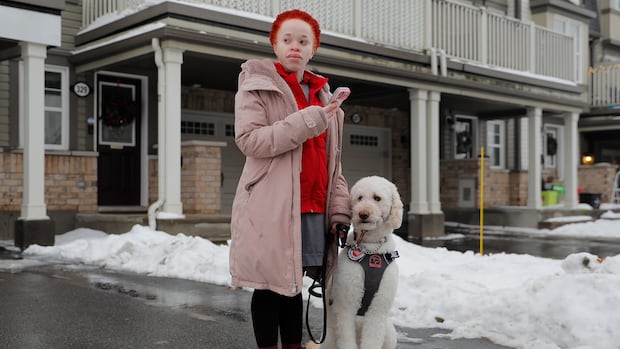
Uber drivers called out for leaving service dogs at curb | Go Public
People with disabilities have the legal right to travel with a service animal, but several told CBC’s Go Public some Uber drivers are leaving them at the curb.
Salome Solomon, who is legally blind, relies on two things to get around Ottawa: her guide dog, Zurich, and Uber.
But she says Canada’s dominant ride-hailing service keeps letting her down by failing to uphold her legal right to ride with a service animal.
Solomon, a frequent Uber user, says she was denied service around 20 times last year by drivers who refused to transport her guide dog. She has filed numerous complaints with the company, and says she’s now reaching her breaking point.
“Every rejection breaks you down, so, for me, it basically hits deep. It’s like a dagger to my heart,” said Solomon, wiping away tears.
Under Canada’s human rights legislation, people with disabilities have a legal right to travel with a service animal. Even so, rideshare denials remain an ongoing problem. A survey done by the advocacy group Guide Dogs for the Blind found that of the 185 U.S. and Canadian members surveyed, 83 per cent reported rideshare rejections in the first two months of 2023.
In line with Canadian legislation, Uber’s corporate policy states its drivers must accommodate service animals. But CBC’s Go Public interviewed several customers in Ontario who say they’ve been denied rides by Uber drivers within the past few months, because of their service dogs.
Uber Canada spokesperson Keerthana Rang says the company is committed to accessible service, and, over the past several years, has taken concrete steps to remedy the problem.
Efforts include an educational video, launched in 2024, that all of Uber’s more than 100,000 drivers must watch. They also get periodic email reminders about their legal obligations, she said.
Rang added that drivers caught breaking the rules are barred from the ride-hailing app.
“We take this issue seriously,” she said. “We believe in equal transportation for all Canadians.”
Read more from CBC Go Public’s Sophia Harris and Yvette Brend.
Chinese EVs are coming to Canada. How soon will they be here? How much will they cost?WATCH | Why Carney lowered the EV tariff: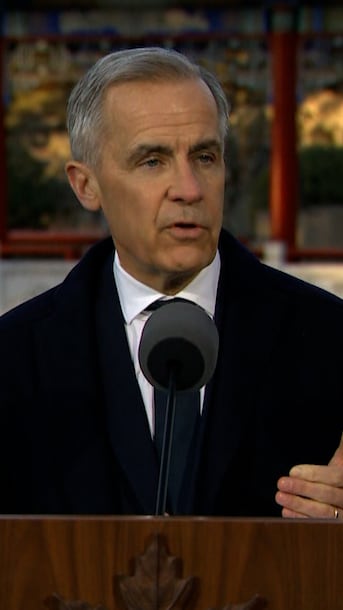
Canada loosens tariffs on Chinese EVs
Prime Minister Mark Carney announced a trade deal with China to allow up to 49,000 Chinese electric vehicles into Canada. In return, Ottawa expects Beijing to drop canola seed duties to 15 per cent by March.
Buckle up! The electric vehicle market in this country is about to take a sharp turn.
Prime Minister Mark Carney is reopening Canada to Chinese-made EVs, lowering a 100 per cent tariff on imports, imposed in 2024, to six per cent.
There’s demand for more affordable and climate-conscious EVs and, for an average customer, having Chinese EVs in the market means “more choice” and “greater tech,” said Max Morris, sales manager at Shift Electric Vehicles in Burlington, Ont.
But there has also been criticism of the deal with China from Canada’s automotive industry, saying it may put the domestic market on shakier ground.
China has shaken up the global EV landscape in recent years, offering more affordable cars, SUVs and other battery-powered and hybrid electric automobiles.
Chinese EVs can cost $10,000 to $15,000 less than those of similar size and range that are already popular in Canada.
While some are applauding the EV market opening up, others are raising other concerns about the safety and security of vehicles from companies tied to the Chinese government.
Read more from CBC’s Nick Logan.
What else is going on?
Health Canada warns about fake or unauthorized versions of GLP-1 drugs
Health Canada says it has found retailers in Canada selling unauthorized GLP-1 products
WestJet reversing move to install tight seating layout
Reconfiguration faced pushback from customers and employees
TikTok can operate in Canada for now, federal court rules, telling Ottawa to review the case
Social media giant says it welcomes decision overturning earlier government order
2026 will likely be among the hottest on record: Environment Canada
There’s a 12 per cent chance of exceeding important threshold of 1.5 C this year
Inflation ticks up to 2.4% in December as last year’s GST break impacts data
Figures are compared to December 2024, when Ottawa imposed a GST break that brought some prices down
Marketplace needs your help!
Have you complained to the consumer protection office in your province or territory? If so, we want to know how it went. Email us at marketplace@cbc.ca.

Are you planning on calling customer service for your cell, cable or internet provider? Or are you looking to cancel your service? Before you do, Marketplace wants to hear from you! Email us at marketplace@cbc.ca.
Catch up on past episodes of Marketplace on CBC Gem.