

The United States has adopted a revised national defense strategy that redirects military focus away from traditional overseas engagements. Framed as a return to core national interests, the policy redefines Washington’s role in global security at a time marked by geopolitical fragmentation and intensifying strategic competition.
Released in January 2026, the strategy outlines a framework centered on homeland defense, reduced dependence on foreign deployments, and greater self-reliance among allies. The Department of War confirmed that the document will guide force structure, industrial investment, and international coordination through the end of the decade.
President Donald Trump has described the policy as a modern extension of the Monroe Doctrine, designed to address emerging threats in the Western Hemisphere and consolidate U.S. strategic dominance closer to home.
Homeland Security and Regional Control Top Priorities
At the forefront of the 34-page strategy is a renewed commitment to domestic protection. Priorities include fortifying U.S. borders, expanding missile defense through the Golden Dome system, and developing counter-drone capabilities. The document highlights key strategic terrain—specifically the Panama Canal, Greenland, and the Gulf of Mexico—as critical to national defense.
Details published in Military.com’s analysis show the strategy aligns with the administration’s broader National Security Strategy released in late 2025. That guidance called for a focus on actionable priorities and a move away from expansive interventions.
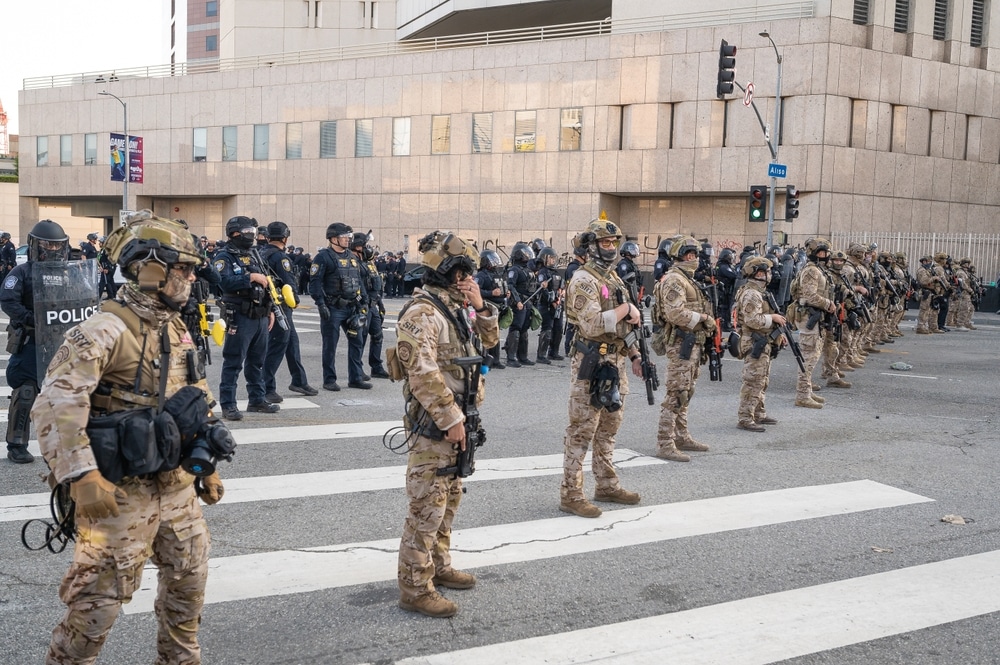 The 2026 National Defense Strategy puts homeland protection at the center of U.S. military planning. Key initiatives include border fortification, advanced missile defense, and securing access to vital locations like the Panama Canal and Greenland. Credit: Shutterstock
The shift is already visible. In January, U.S. forces captured Venezuelan leader Nicolás Maduro during Operation Absolute Resolve, a covert military action in Caracas. Officials framed the mission as a necessary step to stabilize the region and reaffirm U.S. authority in Latin America. The full strategy document affirms the right to conduct “focused, decisive action” if regional partners fail to align with U.S. interests.
The document states: “We will engage in good faith with our neighbors, from Canada to our partners in Central and South America, but we will ensure that they respect and do their part to defend our shared interests. And where they do not, we will stand ready to take focused, decisive action that concretely advances U.S. interests.”
Allies Expected to Lead Regional Security
The strategy outlines a significant transfer of responsibility to U.S. allies. In Europe, NATO members are described as economically and militarily capable of defending against Russian aggression. With larger GDPs and modernized forces, they are expected to lead on conventional deterrence, including support for Ukraine.
The policy states: “Our NATO allies are therefore strongly positioned to take primary responsibility for Europe’s conventional defense, with critical but more limited U.S. support.” American engagement in the region remains, but the emphasis is now on selective participation rather than broad presence.
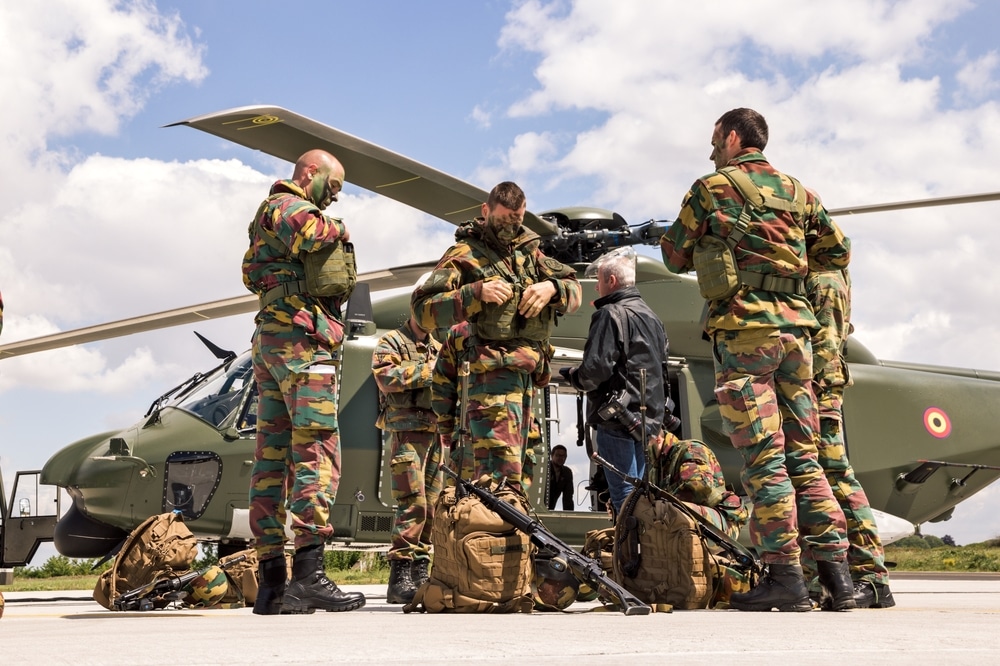 Washington’s updated defense posture reduces direct military commitments abroad, urging NATO allies and Indo-Pacific partners to assume greater responsibility. European nations are expected to lead efforts against Russia, while South Korea is tasked with deterring North Korea. Credit: Shutterstock
In the Indo-Pacific, Washington is adopting a denial strategy that seeks to balance power without escalating conflict. Reporting from ABC News contrasts this posture with the 2022 strategy under President Biden, which emphasized China’s aggressive actions and support for Taiwan’s self-defense. The new document omits any direct reference to Taiwan, focusing instead on preventing regional domination by any single actor.
“Our goal is far more scoped and reasonable than [domination]: It is simply to ensure that neither China nor anyone else can dominate us or our allies,” the document reads. In this context, South Korea is expected to manage its own deterrence strategy against North Korea, supported by its high defense spending, conscription system, and industrial base.
Industrial Capacity and Supply Resilience Reprioritized
The 2026 strategy places strong emphasis on revitalizing the U.S. defense industrial base, citing the need to accelerate weapons production and expand technological innovation. Defense manufacturing is now positioned as a central element of strategic readiness, aimed at supporting both U.S. forces and partner nations.
During the “Arsenal of Freedom” tour, Secretary of War Pete Hegseth underscored the urgency of restoring supply chains, integrating AI into defense logistics, and clearing production bottlenecks. The document frames this effort as essential to deterrence and long-term stability.
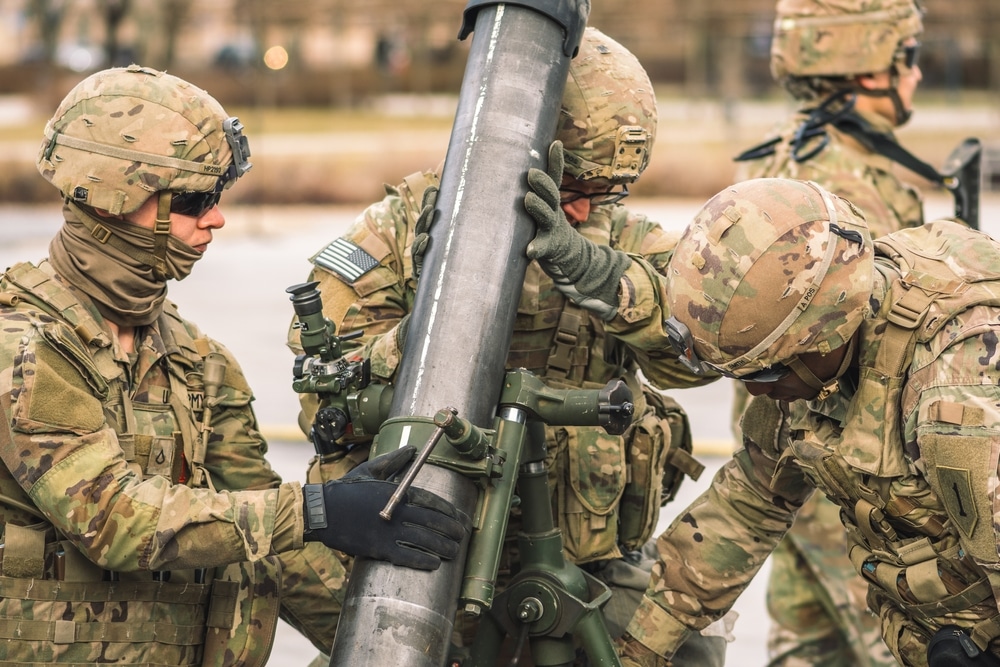 The new strategy prioritizes rebuilding America’s defense industrial base. Investments target high-speed weapons production, AI-driven logistics, and simplified export pathways for allies. Credit: Shutterstock
The strategy notes: “We must return to being the world’s premier arsenal, one that can produce not only for ourselves but also for our allies and partners at scale, rapidly, and at the highest levels of quality.”
Unlike the 2022 strategy, the current version excludes climate security from its threat assessments. Previously labeled as a strategic risk multiplier, climate change is no longer referenced in national defense planning. The revised focus centers on conventional threats—border incursions, weapons proliferation, and access denial in contested zones.
Implications for Alliances and Legality
Congress is now reviewing the 2026 defense budget proposal, which is expected to reflect the new priorities. Specific details about troop realignments and treaty-based commitments have not yet been released.
Diplomatic reaction has been mixed. At the World Economic Forum in Davos, Canadian Prime Minister Mark Carney described the shift as “a rupture” in the postwar security order. NATO members have raised concerns about the capacity of European forces to absorb additional costs and responsibilities.
Regional organizations are also assessing the implications of unilateral operations. The Organization of American States has launched a legal review of Operation Absolute Resolve, citing potential violations of international law and regional charters.
Key questions remain unresolved: How will allies adjust to a U.S. posture that prioritizes strategic restraint? Can regional militaries expand quickly enough to meet new expectations? And will adversaries interpret the policy shift as a window of opportunity—or a recalibrated show of strength?