
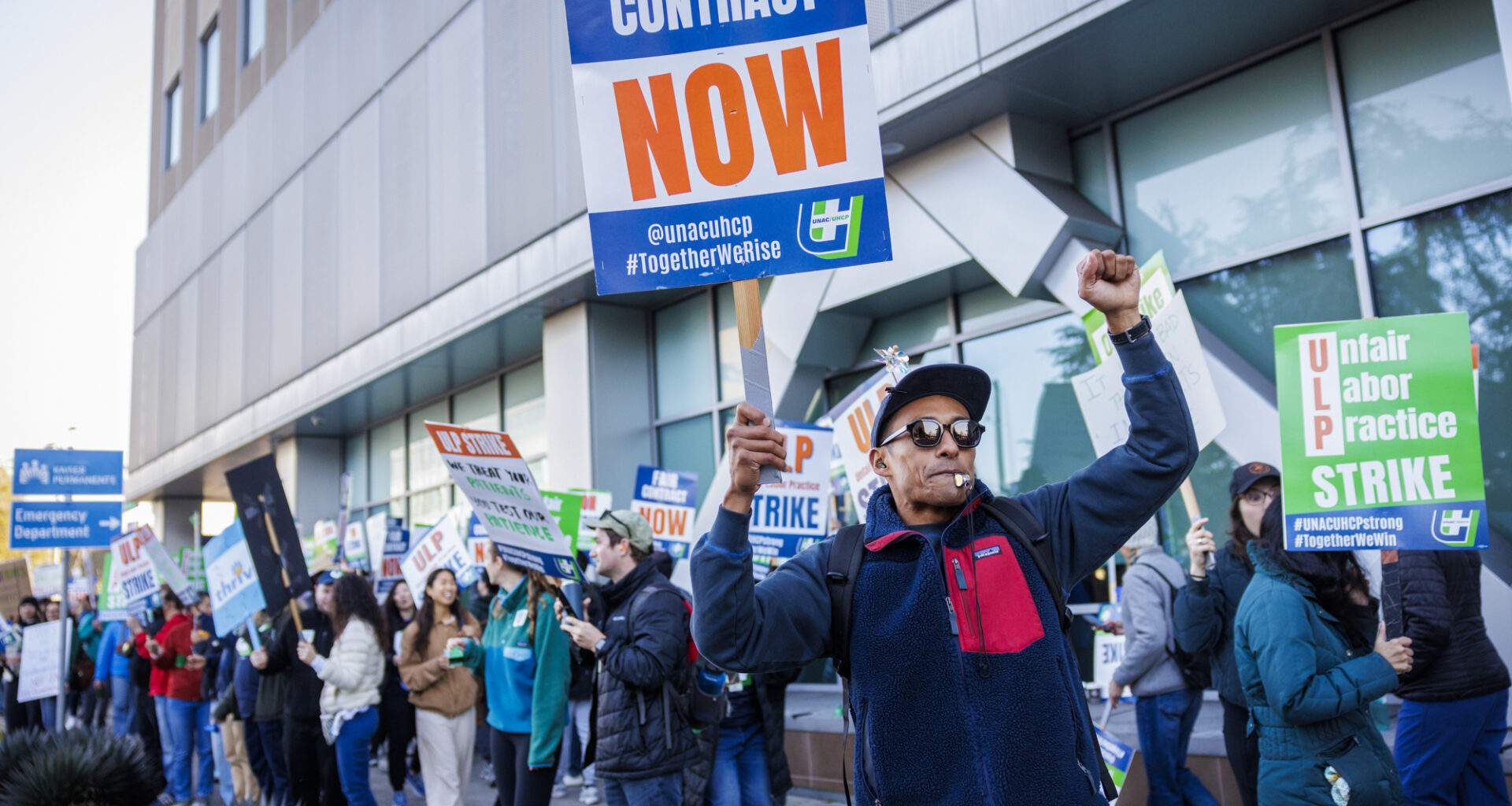
For months, the union has sought a 25% pay increase over a four-year contract, but management has stuck to its offer to raise wages by 21.5%, calling it the strongest compensation package in Kaiser’s national bargaining history. Since the October walkout, the employer said it reached tentative agreements with other Alliance unions, strengthening staffing and scheduling.
“It is disheartening that UNAC/UHCP leaders continue to talk about improving care, when this strike, and their actions over the past several months, are really all about higher wages,” Sims said.
Kaiser, founded in 1945 in Oakland, employs more than 180,000 people in nine states and the District of Columbia. As a nonprofit health plan and care provider, Kaiser said it reinvests its revenue into running and improving its hospitals, clinics and community programs, emphasizing preventive medicine.
The company rebounded from a net loss of about $4.5 billion in 2022 to positive net income from operations and investments in later years, posting nearly $13 billion in 2024 and $8 billion for the first three quarters of 2025, according to its most recent financial results.
This month, the U.S. Department of Justice announced Kaiser agreed to pay $556 million to settle allegations that it defrauded Medicare to increase reimbursements by pressuring doctors in California and Colorado to alter medical records and add diagnoses after patient visits.
Brian Mason, UNAC/UHCP’s lead negotiator, said the company floated cutting retirement and health care benefits for newer union members, which would neutralize higher wages. He said management has also refused to bargain on proposals that would allow workers to give patients the care and time they need, though Kaiser disputes that.
“Nobody wants to go to an appointment when you’re sick and feel like you’re being rushed because your provider has to get to the next patient and the next,” Mason said. “This strike is to ensure that patient care continues to be the best that it can be and that Kaiser doesn’t continue down this financial-lies path where they’re treating health care like a hedge fund.”
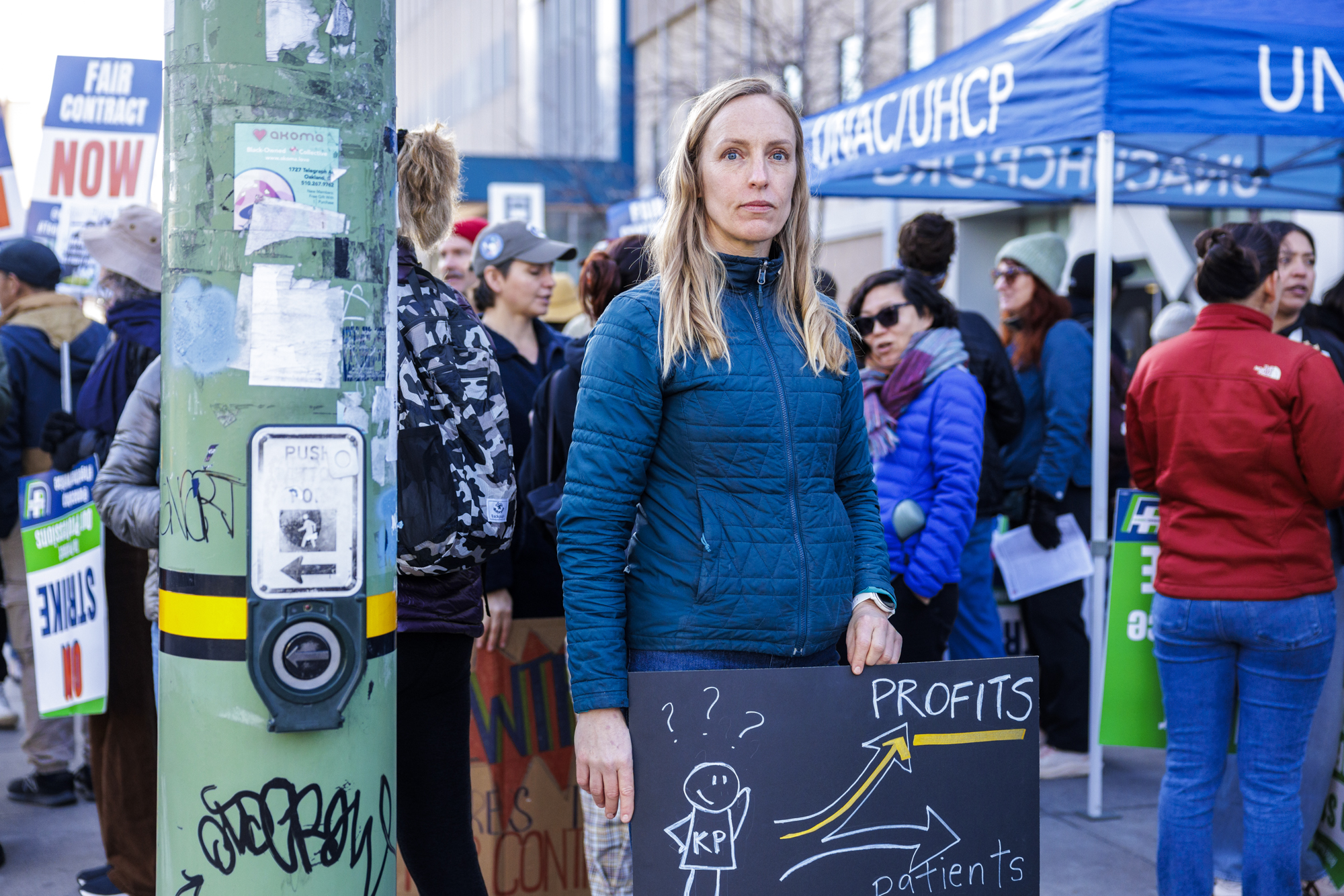 Sanne Jacobsen attends the strike at Kaiser Oakland Medical Center in Oakland on Jan. 26, 2026. (Martin do Nascimento/KQED)
Sanne Jacobsen, a nurse anesthetist in Oakland, said providers are overbooked and left out of scheduling conversations. She said that the company has struggled to recruit and retain staff.
“It’s delayed appointments, delayed surgeries… and in places like the clinics where people are getting physical therapy, those physical therapists don’t have adequate time to actually treat the patients well,” Jacobsen said.
Staffing ratios and wages became top concerns for health care workers as the sector has increasingly consolidated and executive pay has soared, according to labor experts.
More than 15,000 nurses at three major hospitals in New York went on strike this month, and hundreds more in Grand Blanc, Michigan, remained at the picket line under freezing conditions. Nurses in five other states are threatening walkouts, according to the website nurse.org.
One factor in Kaiser’s reluctance to commit to additional payroll costs is an uncertain financial forecast under the Trump administration, said John Logan, who chairs the labor and employment studies program at San Francisco State University. Federal policies that are expected to increase the number of uninsured Americans could affect Kaiser’s bottom line.