
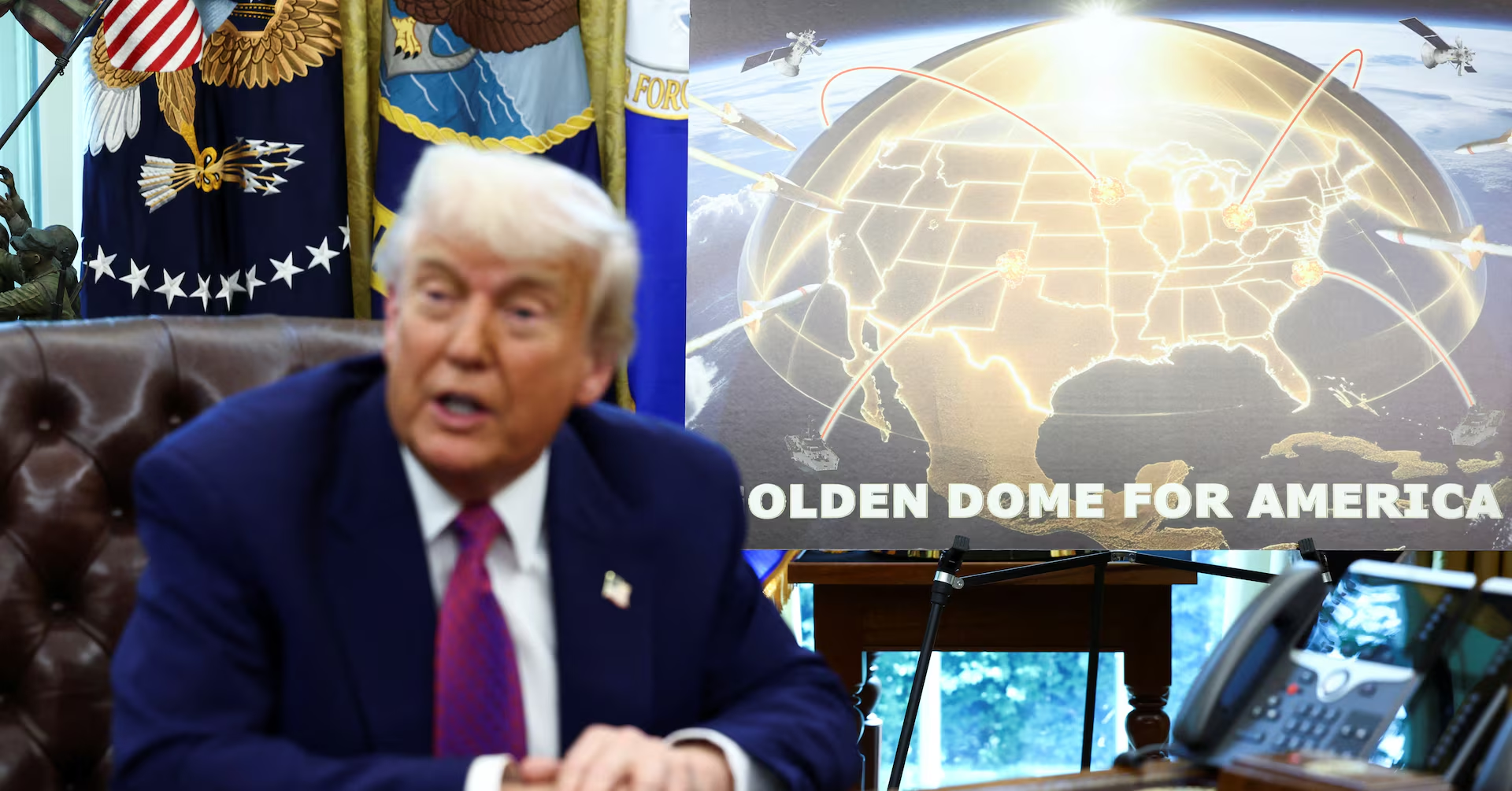
Program has yet to spend much of $25 billion availableTechnical disputes and space-based concerns delay Golden Dome progressFew contracts awarded, confusion over Greenland’s role in the initiativeWASHINGTON, Jan 27 (Reuters) – One year after its launch, U.S. President Donald Trump’s Golden Dome missile-defense initiative has made little visible progress, bogged down by technical disputes and concerns over space‑based components that have delayed the release of billions of dollars and stalled one of his most ambitious national security projects.
The executive order establishing Golden Dome, signed on January 27, 2025, set an aggressive timetable to field a comprehensive homeland missile-defense system by 2028. A year later, however, the program has yet to spend much of the $25 billion appropriated last summer, as officials continue to debate fundamental elements of its space‑based architecture.
Sign up here.
According to two U.S. officials, work to finalize the architecture of the missile defense shield is still underway, and large‑scale execution of funds has not begun. The money is available, the officials said, and significant amounts could be released in the coming days once key decisions are made.
“The Golden Dome office continues to meet the goals outlined in Executive Order,” a Pentagon official said in response to Reuters’ questions.
“The implementation plan and associated technologies are dynamic; however, the foundational elements of the architecture are now established. The specifics of architecture are classified.”
WEAPONS IN SPACE DEBATE
Golden Dome envisions expanding existing ground‑based defenses such as interceptor missiles, sensors and command‑and‑control systems while adding more experimental space‑based elements meant to detect, track and potentially counter incoming threats from orbit. These would include advanced satellite networks and still‑debated on‑orbit weaponry.
One source of delay has been internal debate over classified space‑based equipment, one of the officials said. A defense industry executive, speaking on condition of anonymity, said the systems under discussion likely involve communications standards. Another executive said they could be anti‑satellite capabilities, raising questions about how such weapons would align with a defensive missile shield.
The U.S. has historically opposed anti-satellite weapons over concerns about space debris, and criticized China in 2007 for conducting an anti-satellite missile test.
The space-based architecture remains one of the issues that must be decided before General Michael Guetlein, the program’s director, can move forward with what is anticipated to be a series of procurement contracts for existing weaponry, the first U.S. official and industry executives said.
ONLY A SMALL HANDFUL OF CONTRACTS AWARDEDThe Space Force awarded about a half dozen small-value Golden Dome contracts in November to build competing missile defense prototypes, including awards to Northrop Grumman (NOC.N), opens new tab, True Anomaly, Lockheed Martin (LMT.N), opens new tab and Anduril, sources previously told Reuters. Those contracts, valued around $120,000 each, represent the first tangible steps in a program Trump has said will eventually cost $175 billion.
Since December, there has been at least one classified briefing for defense companies on the architecture, the U.S. officials said.
Tom Karako, a weapons security expert at the Washington‑based Center for Strategic and International Studies, said much of the past year had been consumed by security reviews, staffing decisions and the approval of complex plans. He said the Golden Dome project was unlikely to be fully completed by 2028.
“There is a lot that can be done in the next three years in terms of better integrating what we already have, but there’s no question that there will be things that will be implemented and evolve after 2028.”
Another unresolved issue surrounding Golden Dome is the role Greenland could play.
Trump has recently linked U.S. control of the Danish territory to the missile defense initiative, repeatedly saying that acquiring Greenland is “vital” to the project. Defense experts note, however, that existing agreements already allow expanded U.S. military operations on the island. One U.S. official said Greenland is not part of Golden Dome’s proposed architecture.
Reporting by Mike Stone in Washington; Editing by Joe Brock and Diane Craft
Our Standards: The Thomson Reuters Trust Principles., opens new tab