
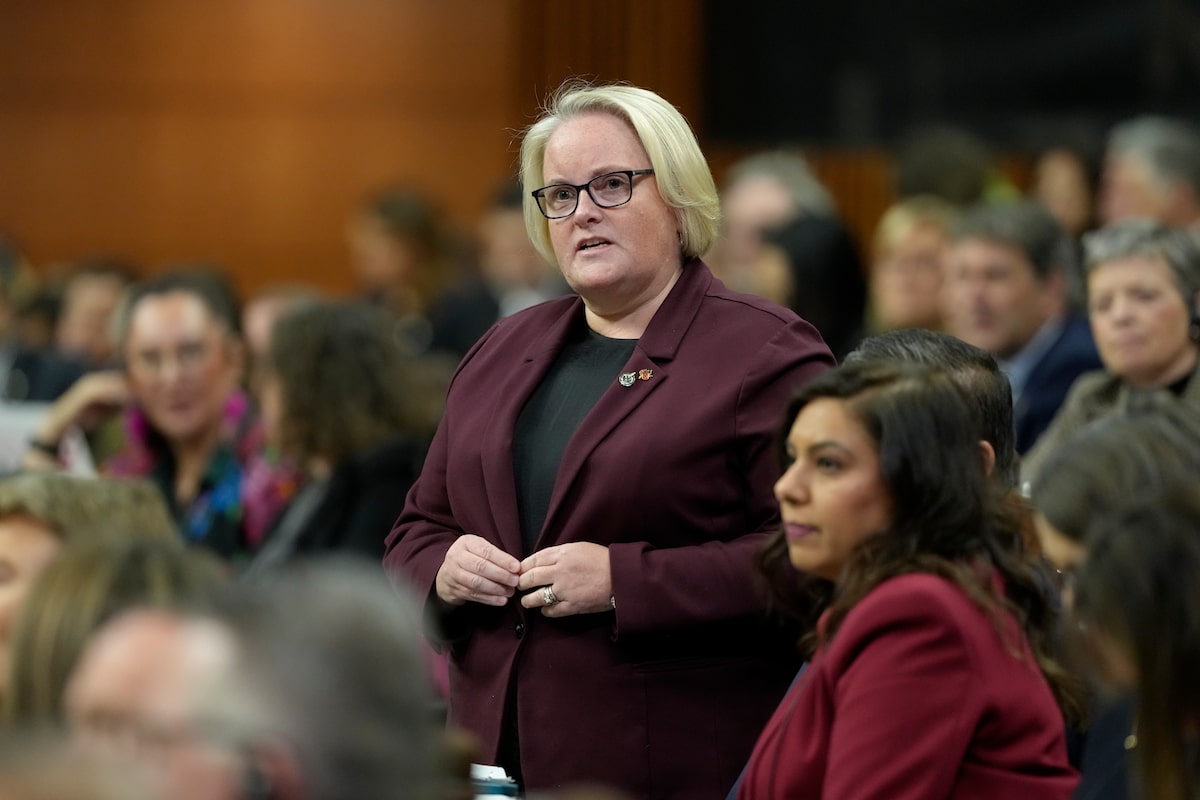
Minister of Veterans Affairs Jill McKnight. Five of the 12 members of the Women Veterans Council stepped down after a meeting with the minister.Adrian Wyld/The Canadian Press
Five of the 12 members of the Women Veterans Council, appointed to advise Ottawa on the implementation of a landmark report on the experience of female soldiers, have quit.
The veterans, all retired members of the Canadian Armed Forces, decided to tender their resignations after a meeting earlier this month with Veterans Affairs Minister Jill McKnight.
One of the veterans, retired sergeant Jessica Miller, said the meeting left some of the group feeling the minister had limited interest in engaging on how the department of veterans affairs struggles to account for female soldiers having needs distinct from their male counterparts, such as dealing with the trauma of sexual assault or the ways in which combat gear affects women’s bodies.
Ms. Miller said the government has cut funding for research into female veterans’ health, refused to give the advisory council a budget, dawdled on providing clear directions and complicated the efforts of council members to speak with other female veterans to help inform the minister’s work.
“We were just gaslit and we don’t know why,” Ms. Miller said in an interview.
Veterans concerned about health coverage changes for shock-wave treatments
The establishment of the council was one of 42 recommendations in the Invisible No More report, published in 2024 by the House of Commons’ veterans affairs committee.
The study was the largest the committee had ever done and the first to focus exclusively on the experience of female veterans.
More than a dozen of the 93 witnesses who appeared before the committee were former soldiers who spoke openly and emotionally about the physical and mental toll it took to be a woman in the Canadian Armed Forces or RCMP, and their struggles getting Ottawa to understand it.
MPs heard stories about how ballistic gear, for example, doesn’t account for women’s breasts, leading to injuries that Veterans Affairs is slow to acknowledge, or service-related infertility not being taken seriously.
Among the report’s recommendations was for a council of female veterans from the CAF and the RCMP to be set up to advise the minister.
Its mandate includes providing advice and recommendations to the minister on issues such as research priorities for the department, transition supports for CAF and RCMP women, and equitable access to benefits.
Opinion: We must preserve the stories of our veterans before it’s too late
Records of discussion of the council’s four meetings in 2025, posted online, show its members asking for more direction and clarity from the veterans affairs department and the minister, and wanting to do more to reach out to other female veterans.
Ms. Miller said she and the other four members of the council who quit were intending to serve out a three-year term.
When they quit, they decided to post an open letter about their experiences, because they were worried what impression their departure was leaving.
“This collective departure must not be interpreted as a failure of women, nor as evidence that women veterans are unable to work together,” the letter reads.
“Rather, it underscores a deeper and persistent challenges within Veterans Affairs Canada in translating stated intent into concrete, sustained action on issues affecting women veterans.”
Ms. McKnight declined to speak in person with reporters on Tuesday.
In a statement sent by e-mail from her office, she thanked the departing members.
“Their contributions have helped shape important conversations and I remain grateful for their efforts,” she said.
“As a voluntary advisory group, we respect the decision of any member who chooses to move on to other opportunities and continue to welcome their advocacy, should they wish to advance it in other ways, on issues impacting Women Veterans.”
The Globe and Mail’s efforts to reach members who remain on the council was unsuccessful. Veterans Affairs did not immediately respond to questions about the scope of the funding cuts.
Conservative veterans’ affairs critic Blake Richards said that at a time when the government is trying to boost military recruitment, the way in which veterans are being treated matters.
“Nobody in their right mind is going to want to join our military if they know that when they leave, they will be treated the way veterans are being treated right now,” he said.