
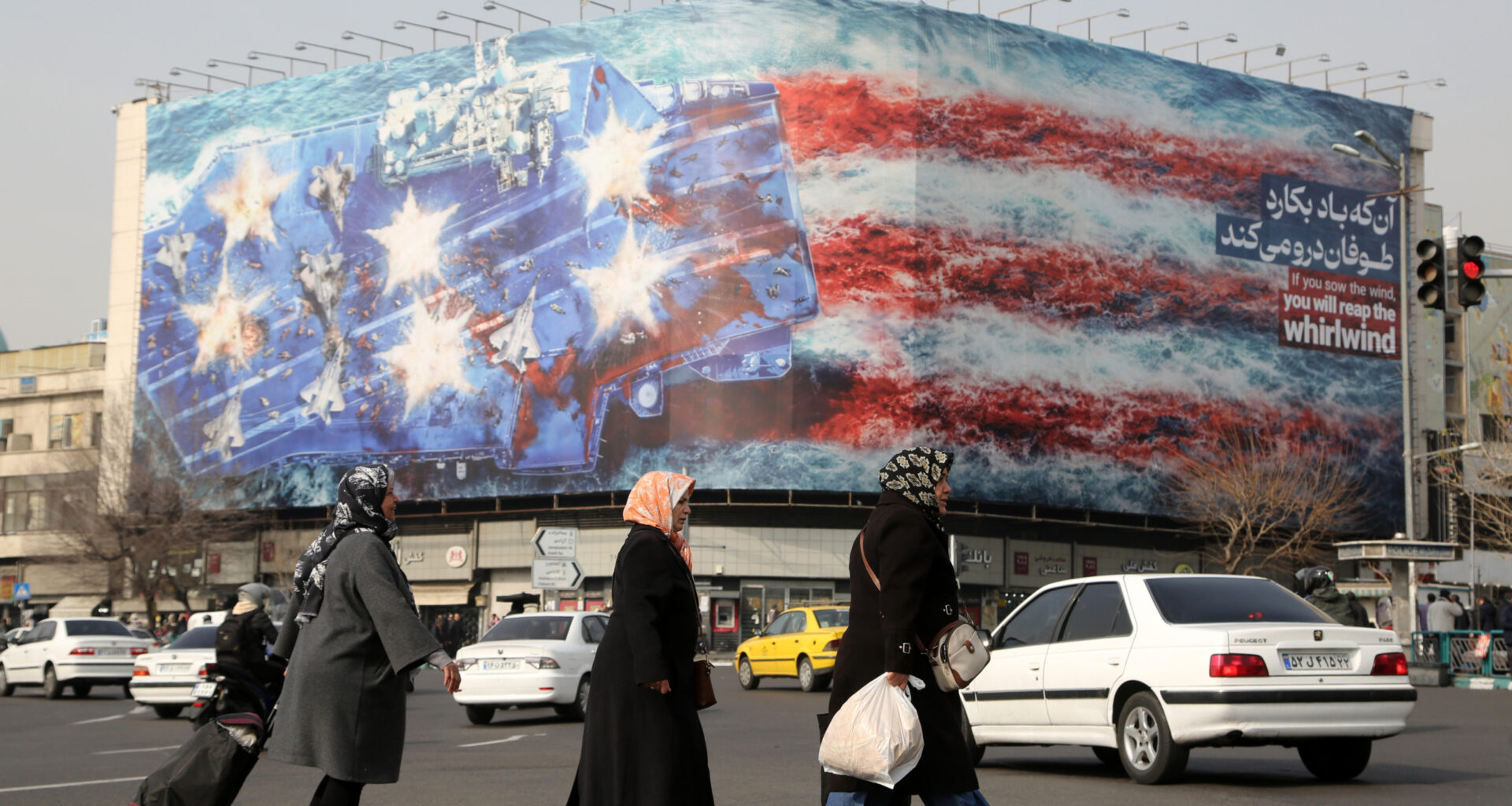
Since 1979, most American presidents—now including Donald Trump—have had to calculate if the Islamic Republic of Iran can be toppled by military force. Following the Iranian government’s brutal crackdown against nationwide protests, which rights groups say have so far left over 6,000 dead, he told Iranians “help is on the way”.
But Trump’s endgame on Iran remains unpredictable. Since the protests began in late December, Trump has repeatedly threatened military action against Iran while leaving the door open to diplomacy. In recent days, American fighter jets and warships have arrived in the Middle East, which will enhance the United States’ attack, defence and deterrence options, and potentially strengthen US leverage in diplomatic efforts.
The moral imperative to protect civilians is understandable, as is the strategic allure of punishing the regime in Tehran. The US and Europe should take as many viable steps as they can to support the Iranian population. But after the painful experiences in Afghanistan, Iraq, Libya and Syria, they also need to be realistic about the limits of Western influence and the dangers of prolonged war with Iran. The risks attached to further military intervention are severe, with little assurance this sustainably helps Iranians on the ground.
An immediate consideration for the US, and for European states with key regional interests, is the risk of blowback. If America launches significant attacks, possibly with a regime change endgame, Tehran is likely to directly increase the cost to Trump in an election year by targeting American soldiers stationed across the Middle East. Iran’s military also has the operational capability to attack oil facilities in the Middle East and to interrupt the flow of international shipping through the Strait of Hormuz, spiking global energy and commodity prices. Iran could also mobilise its shrinking (but still armed) network of allies in the region (such as the Houthis, Hizbollah and Iraqi resistance groups) to coordinate attacks against US allies, notably—but not restricted to—Israel.
During the 12-day war in June 2025, Iran did not resort to these escalatory measures. But if its regime stability comes under unprecedented existential threat from ground-up pressure domestically and bombing from the skies, the Islamic Republic is likely to use all its cards before they lose them. While Iran will take the biggest hit from such a regional conflict, Trump is unlikely to come out a winner with the type of “decisive” blow he seeks.
The past two decades of US military intervention in similar contexts suggests more bloodshed and instability, while also hollowing out the economy and sidelining moderate forces pushing for democratic change
America must weigh taking such risks against the chance of success. Those pushing for US strikes argue that they can protect civilians and also tip the balance of hard power in favour of actors seeking to topple the Islamic Republic on the ground. Yet the past two decades of US intervention in similar contexts suggests this will lead to more bloodshed and instability, while also hollowing out the economy and sidelining moderate forces pushing for democratic change.
US intervention in Libya and Syria, for example, aimed to protect civilians facing repression from dictatorial rule. However, they were a prelude to deep US and European engagement that was nonetheless insufficient to cement democratic transformation. Intervention in Libya delivered ongoing chaos and fragmentation. The costly US covert operations in Syria exacerbated the violence and extremism. After a long, bloody civil war in which many external countries jumped in to profit, Libya and Syria have been torn apart. Both conflicts resulted in a major surge of migration to Europe.
There is a chance that Iran is a different story. But it would be folly to ignore all the evidence to the contrary. The fight in Iran is likely to be even harder. The Iranian military apparatus will not fold easily: despite its command and control being shaken by the 12-day war and recent protests, it remains unified and proven it has a high tolerance for violence against its own people. Parts of the security establishment, who are religiously zealot and devoted to Iran’s supreme leader, will view a foreign-backed regime change as part of a holy war. No matter how many are bombed or imprisoned, for example as Israel has attempted with Hamas in Gaza, armed remnants are likely to remain and resist.
Finally, Iran is too big to risk breaking. The combination of Iran’s sheer territorial size and population of over 90 million is unmatched in the region. Iran is almost four times the size of Iraq and has a population 3.5 times larger than Iraq at the time of the 2003 US invasion. Libya’s population during the NATO-led military intervention in 2011 was 15 times less than the current Iranian population. Countries like Bosnia and Kosovo, where NATO did manage to successfully intervene to stop bloodshed of civilians, are dwarfed by Iran’s size, geography and big power competition. These factors means the US or NATO face a much bigger challenge in deploying military tools in order to sustainably stop state repression or support regime change efforts in Iran than elsewhere.
Despite their tensions with Tehran, Iran’s Arab neighbours and Turkey have also lobbied Trump hard against military intervention. Given Iran has 13 land and sea borders, the risks of migration flows and instability are grave. Turkey, having experienced this following the wars in next door Syria and Iraq, has reportedly already established buffer zones to manage a surge in migration from Iran in the event of prolonged conflict. A power vacuum in Iran could also pose nuclear threats for the region if the most extreme elements take control of Iran’s near-weapons grade uranium stockpile, or if the nuclear reactors on the Persian Gulf coastline are sabotaged.
It is tempting to argue that Trump can simply do a replay of the 12-day war with surgical strikes against Iranian military facilities and target senior leadership figures. These could disrupt Iran’s ability to deploy the iron fist against its own people and punish regime elites, but without wider intervention will not fundamentally dismantle the internal security forces. It will in consequence raise expectations among the pro-interventionist camps for more US military attacks. In June, Trump was dragged by Israel into a bombing campaign targeting Iran’s nuclear programme. Now, he faces growing calls for attack on human-rights grounds. In a few months, Trump will be pressed to go back in. This game of whack-a-mole traps Trump in a never-ending military conflict with Iran.
However, refraining from military intervention does not mean that Americans or Europeans should sit on their hands in response to the horrific events inside Iran. Western leverage (including its military posturing and targeted sanctions) should be deployed to double down on demands for Iran to urgently end to all violence against the civilian population, place a moratorium on executions inside Iran, release minors and political prisoners, and provide medical assistance to injured civilians.
The US and Europe can also step up cooperation with the private sector and the intelligence community to reconnect Iranians to the internet and reduce future communication blackouts, while disrupting the ability of Iranian authorities to deepen repression. This will help document human rights abuses and amplify the voices of civil society actors inside the country.
In addition, Western governments should step up funding to NGOs that are credibly documenting Iran’s human rights violations, push for accountability—including taking recourse at international forums—and aiding the safe passage of Iranians who wish to leave the country.
European capitals should already have measures in place to protect and evacuate their own citizens, diplomats and military personnel inside Iran and across the Middle East if the US attacks. In this scenario, European countries should coordinate with Arab partners, such as Saudi Arabia and Qatar, in pressing Tehran and Trump towards a quick de-escalation off-ramp—before the conflict spills into an ever deeper and more perilous regional war.
The European Council on Foreign Relations does not take collective positions. ECFR publications only represent the views of their individual authors.