
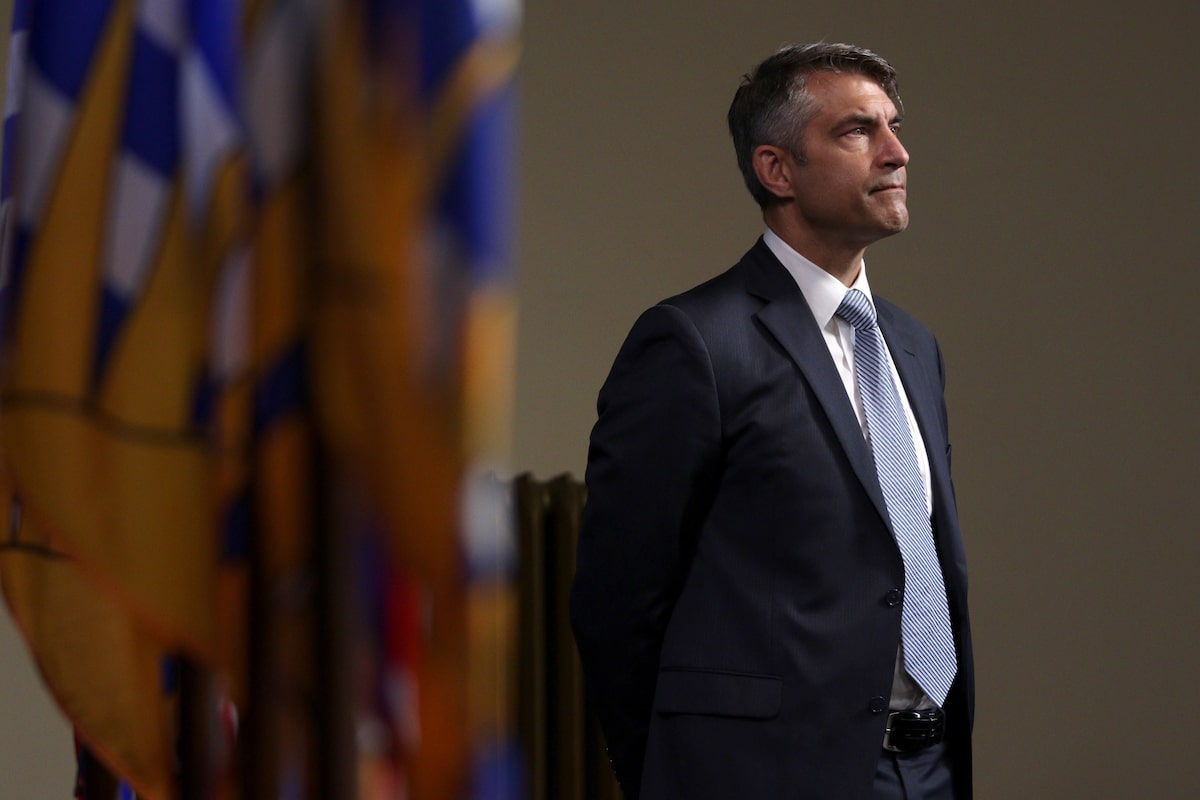
Then-British Columbia chief electoral officer Anton Boegman in Victoria, in September, 2020.CHAD HIPOLITO/The Canadian Press
The federal government has proposed former British Columbia chief electoral officer Anton Boegman as head of the soon-to-be-created Foreign Influence Transparency Registry, two sources say.
Mr. Boegman’s selection, which is being run past the opposition parties for informal approval, comes more than a year after the previous Liberal government promised to name an independent commissioner to lead the registry.
Before Christmas, opposition MPs, national security experts and human-rights activists had complained that the federal government was dragging its feet on setting up the registry, a measure aimed at curbing foreign interference, particularly from China and Russia. It was enabled by legislation passed in mid-2024.
Once the registry is operational, anyone who arranges to work on behalf of a foreign government or state company would be required to register with the federal government. Diplomats would be exempt, as would foreign government employees acting openly in their official capacities.
Marie-Josée Hogue, who led a public inquiry into foreign interference that presented its final report in January, 2025, was also strongly in favour of a registry. Ms. Hogue, now retired as a judge, was recently named deputy minister of justice in the Carney government.
Carney government accused of dragging its feet on foreign agent registry
A registry has long been recommended by members of Parliament and national security experts who argue that Canada should have a system similar to those in other Western countries.
Public Safety Minister Gary Anandasangaree told reporters Tuesday that he has sent a letter to recognized opposition parties and to Senate groups, recommending the government’s choice for commissioner.
The government is required to consult opposition parties on who it selects as an independent commissioner to oversee the long-promised registry.
Mr. Anandasangaree did not reveal the name of the government’s choice, saying he must first solicit input from opposition party leaders in the House of Commons and Senate groups.
“We’re looking for feedback, and in due course, we will put that name forward,” he said.
Editorial: The sad history of the foreign agents registry
But two sources told The Globe and Mail that Mr. Boegman, who served as B.C. chief electoral officer from June, 2018, to November, 2025, has been selected for the role.
The Globe is not identifying the sources because they were not authorized to discuss publicly the choice of Mr. Boegman.
The government has presented draft regulations for the registry, which include significant financial penalties for non-compliance, and require those registering to divulge personal financial information.
The consultation process on these draft regulations ends on Feb. 2.
In his role in B.C.’s chief electoral officer, the fluently bilingual Mr. Boegman gained experience in handling foreign interference and disinformation in provincial elections.
Opinion: Carney’s can-do government is way behind on foreign registry
Prior to the 2024 B.C. provincial election, Mr. Boegman assembled an election integrity working group to counter disinformation and electoral interference. The group included the RCMP, the Canadian Security Intelligence Service, the Canadian Centre for Cyber Security as well as British Columbia’s privacy commissioner, chief information officer and the lobbyists registrar.
The last Liberal government, under then-prime minister Justin Trudeau, passed enabling legislation in June, 2024, to set up a registry and name a commissioner to oversee it.
The United States has had a foreign agent registry since 1938, while Australia set one up in 2018 and Britain in 2023.
The types of work on behalf of foreign governments that would require registration would include communicating with a public office holder or with the public, disbursing money, or providing a service or use of facilities in relation to any political or legislative matter, or to an election or referendum.
Anyone who fails to register could face fines of up to $1-million.
Campbell Clark: Pierre Poilievre does his best to miss the point on foreign interference
The Trudeau government tabled the Foreign Influence Transparency Registry legislation amid fallout from media attention to Chinese foreign interference in Canadian domestic politics. That reporting led to a public inquiry, headed by then-Justice Hogue.
In her first inquiry report in May, 2024, she issued a call for the government to vigorously enact measures to tackle what she called a “malign” threat to Canadian democracy.
She described foreign interference as a “stain on our electoral process” that discourages diaspora communities from participating in Canadian democracy.
Justice Hogue identified China as the “most persistent and sophisticated foreign interference threat to Canada.” She also cited India, saying intelligence revealed a “Government of India proxy agent” may have attempted to clandestinely funnel money to candidates in 2021.
The acts of foreign interference that occurred, or are suspected to have occurred, “impacted the process leading up to the actual vote,” she wrote.
The Carney government has moved to repair fractured relations with China and India, which the Canadian Security Intelligence Service has identified as the principal countries involved in foreign interference in Canada.