
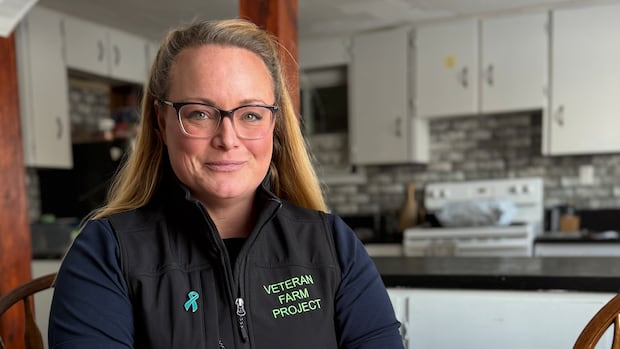
Five Canadian Armed Forces members of the Women Veterans Council have quit over what they say is a failure of “institutional conditions needed to enable meaningful, impactful work.”
The council, made up of 12 members, was created last year. It was a recommendation in the 2024 Invisible No More Report, which concluded that female veterans’ unique medical and physical needs are being ignored and neglected by the military and veterans programs.
“Sex-based discrimination still lives within our government and within the Canadian Forces and we feel that Invisible No More hasn’t been taken as seriously as it should be,” Jessica Miller, one of the CAF members who left the council, told CBC News.
“The government lost an opportunity to make impactful, meaningful, long-term change for women and women’s health and I’m disappointed in that.”
In an open letter to the Canadian women veterans community dated Jan. 25, the five members who left said they didn’t have a clear and operational mandate, credible mechanisms to engage with the community, real opportunities to influence decisions and dedicated resources to fulfill the role that had been publicly presented.
“Despite language emphasizing collaboration and co-creation, the structures in place did not allow the Council’s work to translate into real outcomes,” reads the letter.
“This created a significant gap between the legitimate expectations of the community and what was possible in practice.”
Miller, a retired sergeant with the Canadian Armed Forces from Sweets Corner, N.S., told CBC News the council started out well. She said it was an opportunity to “finally get things going for women.”
“Like better equipment while serving, you know, better support for disabilities … Anything to do with women’s pelvic health, reproductive health, certain physical injuries due to ill-fitting equipment, those kinds of things,” she said.
“It was our opportunity to come together as council to help make change for those areas that have been neglected for a very long time.”
‘We wouldn’t get any response’
Miller said she was excited to be part of the council, but that things took a turn.
“We gave the minister opportunities. We would ask directive questions, we would send them in. We wouldn’t get any response,” Miller said.
Miller said she had to change her morals in order to be on the council and she felt all of the advocacy work she had done was being lost.
“I was no longer able to speak, as a woman veteran, how I thought I would be able to,” she said.
Miller said she and the others thought the council would be able to engage with other serving members and veterans, but couldn’t because they had signed non-disclosure agreements.
“One of the most important tools that we have is communication. And so we wanted to ensure that the right messages were being sent to the community, letting them know that we are working on these recommendations within the [Standing Committee on Veterans Affairs],” Miller said.
“And we pushed and we asked time and time again, ‘Could we have an email address where women could email us directly so we could understand concerns going on in the community?’ The reason why we weren’t allowed to have that email address was because they felt it would be unsafe to those who sent emails in.”
Feeling belittled
Miller said they felt “belittled” by that because among the council were women with relevant expertise.
“We have a medic, paramedic, we have aide-de-camp to Michaëlle Jean, we have a doctor, a masters of physiotherapy in women’s health. We have strong, licenced, engaged lived-experience women … yet we were told, ‘Sorry, you can’t have an email address to engage with your community.’”
Miller said there is an email address listed on the Veterans Affairs website to reach the council, but she said those emails don’t actually go to the council.
Minister doesn’t address specific concerns
“You will get an automated reply saying that VAC is going to monitor this and they’ll decide where it’s going to go in consultation with the Women Veterans Council — which never happened,” Miller said, adding they had no way to respond to messages sent there.
Jill McKnight, Minister of Veterans Affairs Canada, declined an interview with CBC News but in a statement thanked all the women in the council for their “advice and insight” and said their “contributions have helped shape important conversations and I remain grateful for their efforts.”
“As a voluntary advisory group, we respect the decision of any member who chooses to move on to other opportunities and continue to welcome their advocacy, should they wish to advance it in other ways, on issues impacting Women Veterans,” McKnight said.
“I look forward to continuing our work with the Council to address the unique challenges faced by women Veterans.”
Conservative MP Blake Richards said the departure of CAF members is a pattern.
“It’s pretty ironic when the very council that’s put in charge of ensuring there’s action is now saying, ‘We’re being treated like pawns here,'” Richards told CBC News.
MORE TOP STORIES