

Listen to this article
Estimated 6 minutes
The audio version of this article is generated by AI-based technology. Mispronunciations can occur. We are working with our partners to continually review and improve the results.
The rules that shape building in Ottawa are on the cusp of a radical change, with council set to vote on a new comprehensive zoning bylaw on Wednesday.
If they pass without major amendments, it will mean denser housing, more neighbourhood retail and an end to minimum parking rules.
Here’s what you need to know.
What is a comprehensive zoning bylaw, anyway?
The zoning bylaw dictates what can be built on every property in the city.
Every lot gets put into a category, called a zone. Each zone has a list of permitted uses, so a landfill doesn’t end up next to a bed and breakfast.
A lot on a small suburban street might be limited to single-family homes, while a downtown lot could welcome tall towers and streetfront retail. Zoning controls everything from the space between houses to how many parking spots developers have to put in an apartment building.
Ottawa’s current bylaw is getting out of date. It’s now 18 years old, though many of the rules predate amalgamation.
 Carole Ruddy, an urban planner who is the city’s program manager of the zoning and intensification, has been leading the years-long quest to update the zoning bylaw. (Stu Mills/CBC)
With more than 140 different subzones for residential areas alone, it’s become an unwieldy and complicated hodgepodge.
City planning staff have been working on a replacement for years. Councillors are now ready to vote on the third and final draft.
More density, everywhere
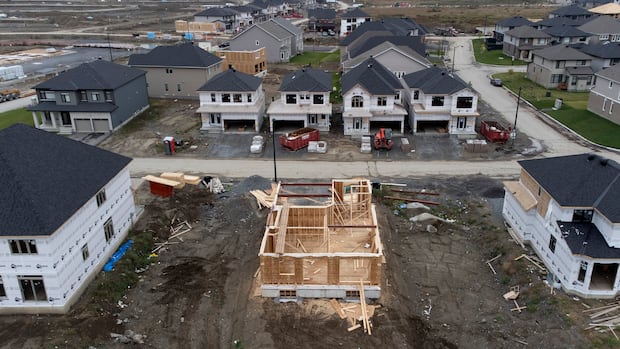
Ottawa has made promises to the feds, the province and the public. The city committed to make it easier to build housing, and the new zoning bylaw will be one of its most powerful tools to keep that pledge.
It would allow four housing units on every serviced residential lot and raise height limits to three storeys essentially everywhere.
But that’s just the start. Permitted densities get higher closer to major streets. Even in low-rise neighbourhoods, it’s easy to find lots that will allow six or 10 units, sometimes even more.
One of the biggest changes will hit dozens of moderately busy streets, like Maitland Avenue in the west or Donald Street in the east. They will be designated “minor collectors,” with height limits of four, five or even six storeys.
Those changes are supposed to clear the way for “missing middle” housing, like townhomes and mid-rise apartments.
The bylaw will also make it easier to build tall towers, with more permissive zoning along the busiest streets and near major transit stations.
More business closer to you
For decades, car-focused suburban development was based on the idea that home and work should be separate, with different zones for commercial and residential uses.
The new zoning bylaw is based on a new outlook: that different uses should be more closely knit, making it easier to walk to the office or the grocery store.
That starts at home. The new bylaw will make it easier to open a home-based business, like a bakery, with permission for more space and more employees.
Shops and restaurants will be able to open in many more areas, especially along those “minor collectors.” Streets like Pleasant Park Road and Holland Avenue, currently lined with houses, could soon be peppered with retail.
‘Parking choice’
The city has a new approach to parking: let the market decide.
The current bylaw forces developers to provide a set number of parking spaces for new buildings. In many areas, the rule is one space per residential unit. In others, it’s a bit more or a bit less.
Those rules, known as minimum parking space rates, have largely disappeared from the new bylaw.
Except in rural areas, the only requirement is a small number of visitor parking spaces in major developments.
The logic is that parking minimums drive up prices, since developers pass the cost of those spaces on to homeowners or tenants, whether they need them or not.
Developers will still build parking where demand warrants. Where it doesn’t, maybe in areas served by frequent transit routes, they can build less.
Last minute changes
Councillors have made last-minute tweaks to the bylaw during committee meetings, nudging a handful of lots in their ward from one subzone to another or adjusting requirements for bicycle parking.
 Kitchissippi Coun. Jeff Leiper, who chairs council’s planning and housing committee, said more motions are on the way in advance of Wednesday’s vote, but they’re not expected to upend the most radical changes in the bylaw. (Giacomo Panico/CBC)
Most were extremely minor and passed without controversy. The only significant dispute came over the fate of two green spaces the NCC wanted rezoned to set them aside for housing.
Councillors voted to protect them at committee, though staff warned there’s little they can do to block federal housing plans.
According to planning and housing committee chair Jeff Leiper, it looks like there’s little appetite to reconsider that file on Wednesday.
He’s expecting another round of minor tweaks, with little chance that council will tear up the biggest changes in the bylaw.
What it means for you
It’s easy to see precisely how the bylaw will transform your neighbourhood — and change what you can do with your property.
You can click on any lot to see the old and new zoning, with a link to the section of the new bylaw that lays out the new rules. Some of the links to the old bylaw are broken, but it’s available in full here.
There’s also a 3D map, though it lacks the before and after slider.
If approved, the new bylaw won’t come into effect right away. It’s scheduled for enactment in March, but the city is expecting appeals to a provincial tribunal that could tie up some sections. Unappealed sections are expected to come into effect in September.