
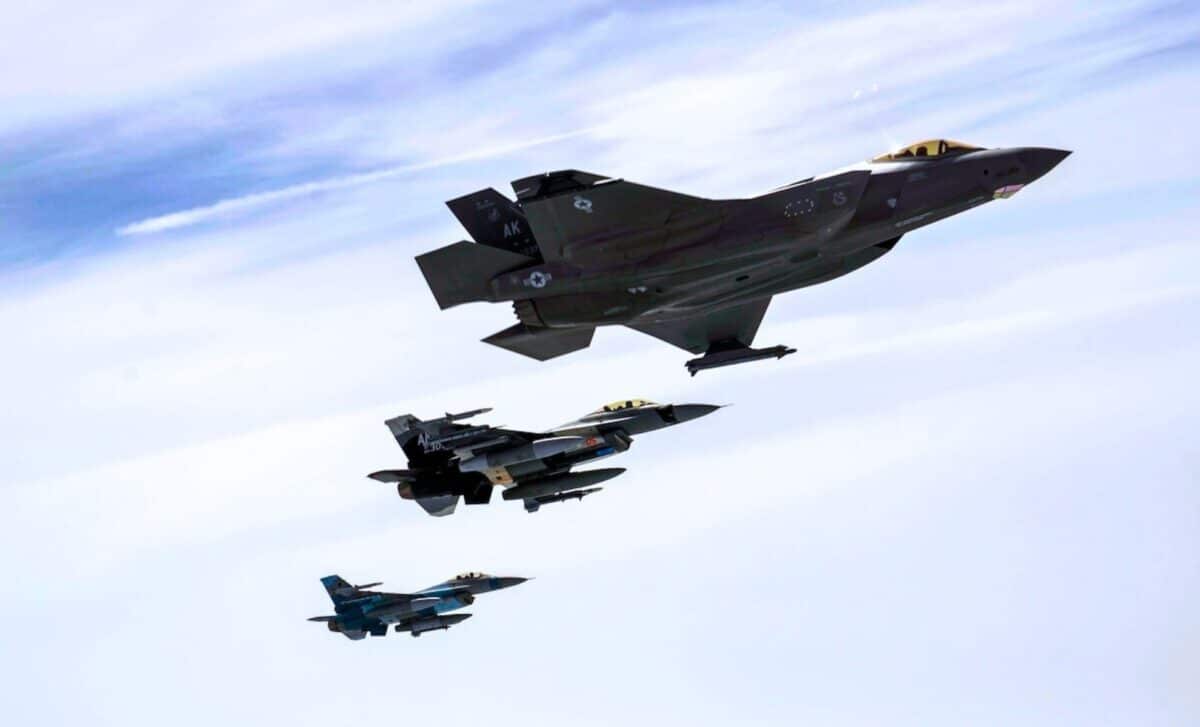
Tensions are quietly mounting across North America’s shared defense perimeter. A longstanding alliance that has governed airspace operations for more than six decades is now under quiet review. Behind closed doors, officials in Ottawa and Washington are reassessing the terms of cooperation that have historically remained stable.
At the center of this developing story lies an unresolved question: what happens when one partner in a defense pact considers stepping away from a jointly approved system? As the Canadian government weighs alternatives to a multi-billion-dollar fighter jet contract, the future of coordinated air defense may hang in the balance.
Details of the dispute remain limited in official channels, but recent public statements from senior diplomats suggest that cross-border operations could soon take on a different shape. What was once a symbol of seamless military collaboration may be entering a more conditional phase.
Us Warns of NORAD Renegotiation if Canada Cancels F-35 Deal
In January 2026, U.S. Ambassador to Canada Pete Hoekstra warned that the North American Aerospace Defense Command (NORAD) agreement might require fundamental changes if Canada abandons its planned purchase of 88 F-35A fighter jets from Lockheed Martin. His comments came amid signals from Ottawa that the procurement, initially signed in 2022, is under active review following cost escalations and delivery delays.
“If they decide they’re going with an inferior product that is not as interchangeable, interoperable as what the F-35 is, that changes our defense capability,” Hoekstra told CBC News. “And as such, we have to figure out how we’re going to replace that.”
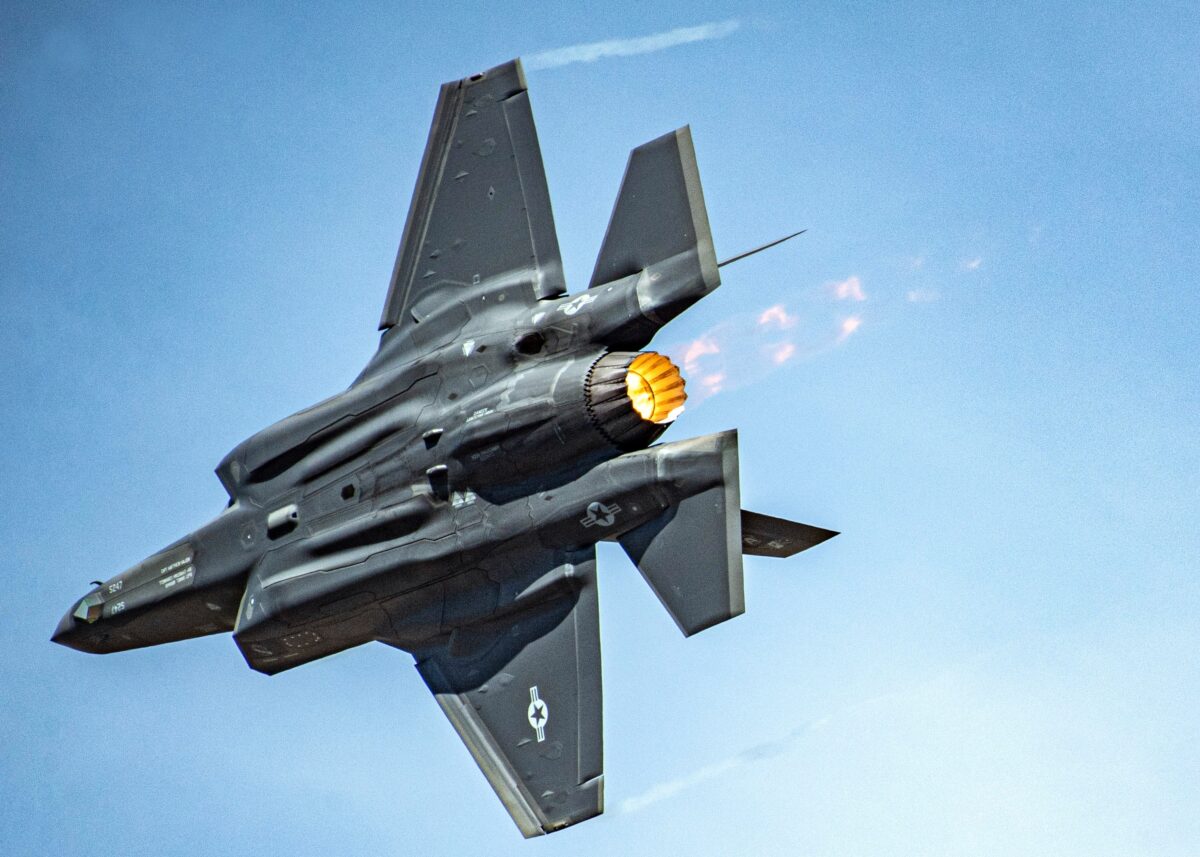 Maj. Kristin Wolfe, F-35A Lightning II Demonstration Team commander, performs an aerial maneuver during the Reno Air Races in Reno, Nev., Sept. 19, 2021. The demonstration team is based out of Hill Air Force Base, Utah. © U.S. Air Force photo by Tech. Sgt. Nicolas Myers
The original contract committed Canada to buying 88 F-35A aircraft, starting with 16 units. However, a federal audit completed in 2025 found the program’s projected cost had ballooned to CAD $27.7 billion, up from the original CAD $19 billion, raising concerns among lawmakers and prompting a government-led review. The delivery timeline has also fallen behind schedule, with Lockheed Martin citing ongoing manufacturing constraints.
Under current NORAD terms, both countries have the authority to operate within each other’s airspace to intercept potential threats. Hoekstra suggested the U.S. could increase direct operations over Canadian territory to maintain coverage if Canada were to select a non-compatible platform, as reported by The Independent.
Saab Offers Domestic Production With Gripen E Alternative
In response to rising costs and political pressure, Canada is now exploring alternate suppliers, including Sweden’s Saab Group, which has proposed its JAS 39 Gripen E fighter jet. The proposal includes local assembly, creating an estimated 12,600 jobs within Canada’s aerospace sector. Saab also offers the GlobalEye early warning and control system as part of the broader package.
CBC News confirmed the Canadian government is seriously considering the Gripen offer. Minister of Industry Mélanie Joly stated: “The government is interested in all major projects that can not only protect Canada’s security and sovereignty, but also create jobs across the country.”
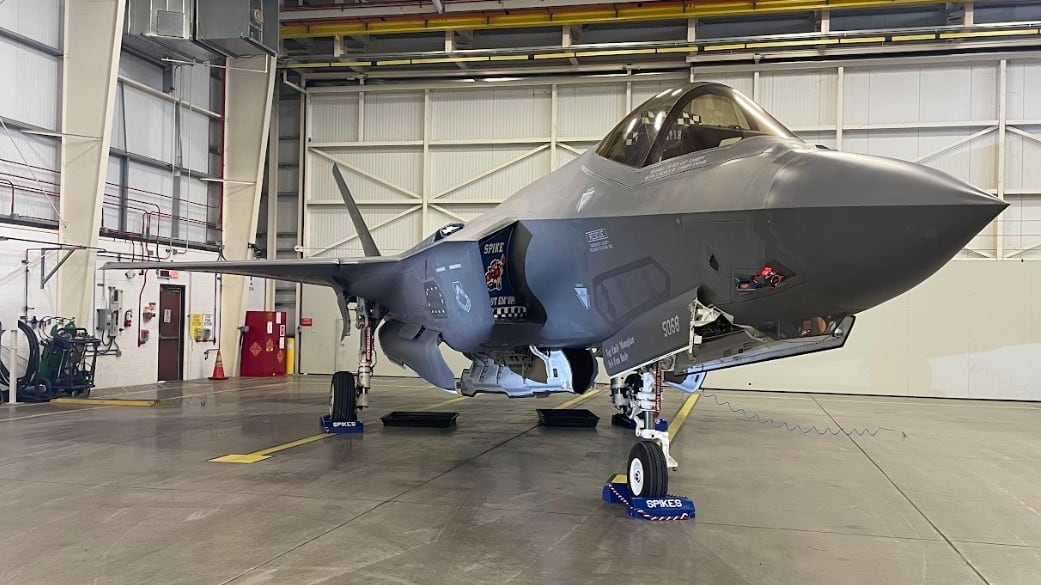 An F-35 fighter jet is seen at Luke Air Force Base in Arizona. © Laura Clementson/CBC
Unlike the F-35, which is integrated into a broader U.S.-NATO combat and communication network, the Gripen platform would require additional systems integration to align with NORAD protocols. Interoperability remains a key concern among defense officials in both countries.
Supporters of the Gripen have emphasized its lower cost per unit and maintenance simplicity. Critics warn that switching platforms may limit access to U.S. logistics, joint mission planning, and shared encryption standards.
Strategic Alignment Tested by Economic and Political Pressures
The emerging disagreement over air defense procurement arrives at a time of renewed scrutiny over U.S.-Canada defense cooperation. Although no formal requests to alter the NORAD agreement have been submitted, Hoekstra’s remarks indicate that defense coordination could be scaled based on Ottawa’s platform choice.
Canada’s internal deliberations also reflect growing domestic interest in securing industrial benefits from large-scale procurement. Saab’s job creation proposal appears to align with Ottawa’s stated priorities for economic development tied to defense spending.
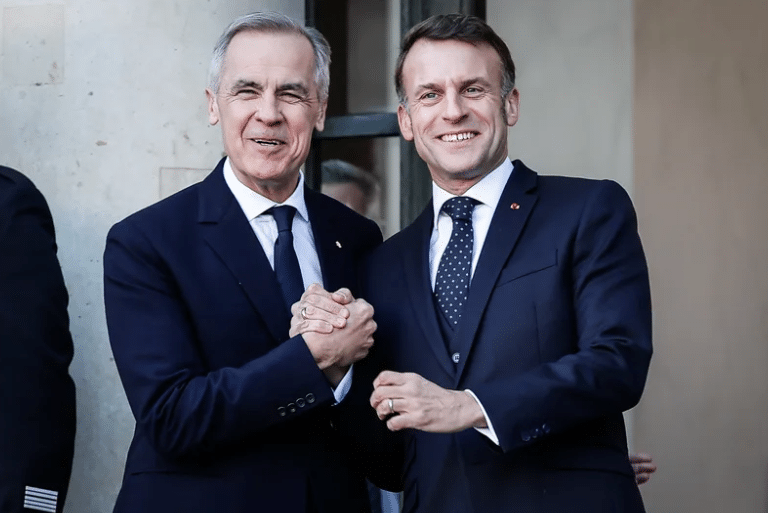 French President Emmanuel Macron welcomes Canadian Prime Minister Mark Carney at the Presidential Elysee Palace on January 06, 2026 in Paris, France. Leaders from around 30 countries gathered in Paris to discuss military support for Ukraine, amid ongoing negotiations on a US-brokered peace plan to end Russia’s war in Ukraine. © Matthieu Mirville/ZUMA Press Wire
Yet, any significant deviation from a U.S.-aligned system could have ripple effects across NORAD’s operational structure. Analysts from the Canadian Global Affairs Institute note that platform divergence could introduce delays or restrictions in mission coordination, particularly in joint surveillance and threat response operations.
The U.S. Department of Defense has not commented publicly on potential tactical adjustments if Canada exits the F-35 program. However, previous U.S. administrations have used trade and defense tools to reinforce allied alignment, and the current posture indicates a willingness to extend that pressure.