
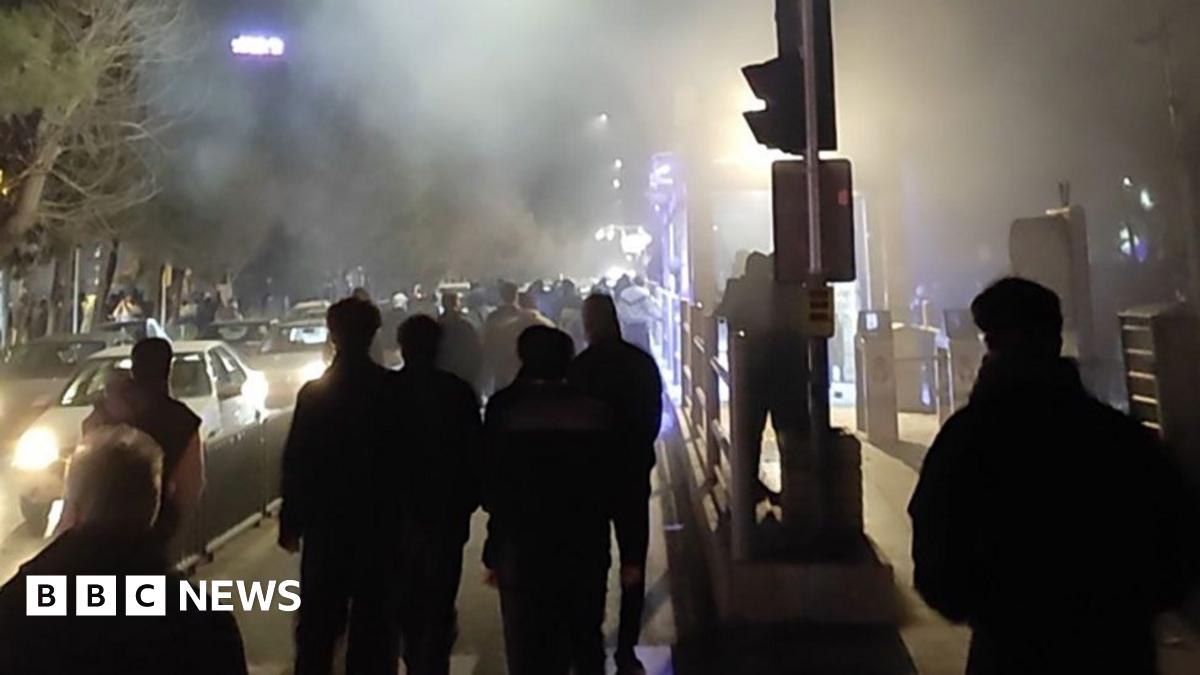
Nima, a surgeon in Tehran, said he witnessed many young people being injured in the streets on his way to work on 8 January, when authorities responded to the escalating protests with lethal force.
“I put one of the wounded in the boot of my car to take him to hospital, as I was worried that we would get in trouble if we were stopped by the police,” he told the BBC.
Nima said armed officers stopped him but allowed him to go after seeing his hospital identification card.
“For almost 96 hours straight – without interruption, without sleep, without even closing our eyes for a moment – we were operating. We were crying and operating. Nobody complained.”
“All our clothes and hospital gowns were covered in blood – our outer clothes, our underwear, everything was soaked in the blood of these young people.”
Nima described operating on one man who had been shot in the leg and face at a protest.
“A bullet had entered through his chin, ripped through his mouth and exited through his upper jaw,” he recalled.
Nima also said many of the young people treated at his hospital suffered gunshot wounds to their vital organs and limbs that required amputation and left them with permanent disabilities.