
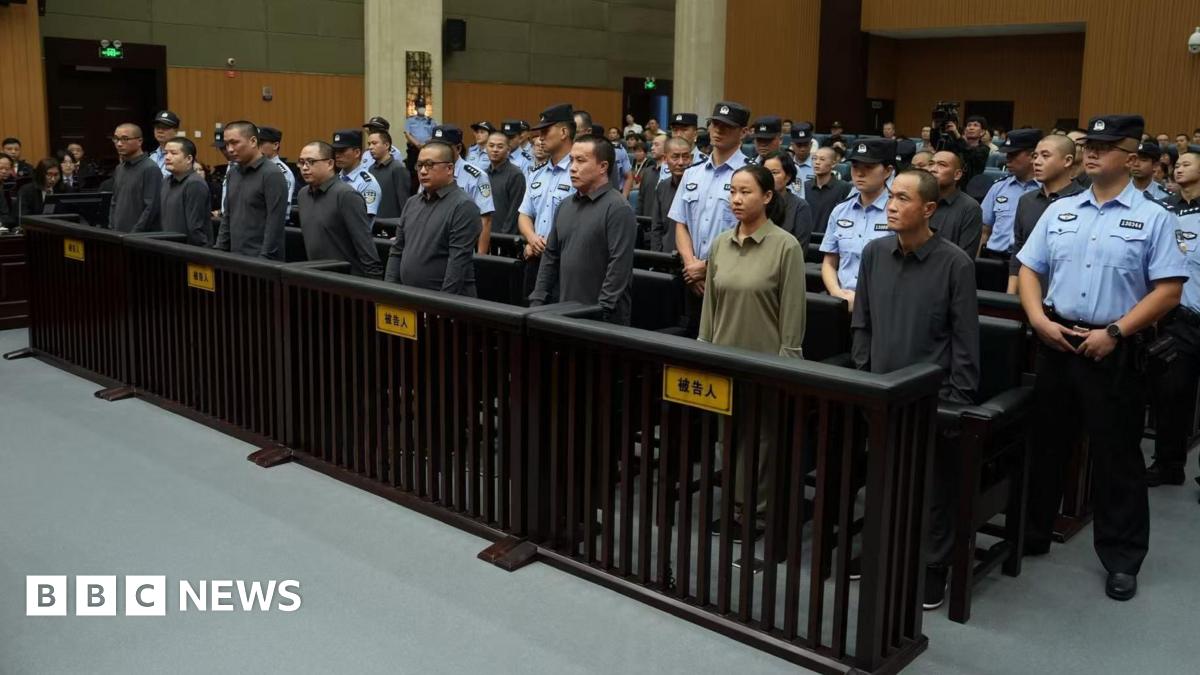
The eleven members of the Ming family are the first of the Myanmar scam bosses to be executed by China.
But they will not be the last. Five members of the Bai family were also sentenced to death in November, and the trials of two other groups of defendants from the Wei and the Liu families have not yet concluded.
The Ming family’s trial was held behind closed doors, although more than 160 people were allowed to attend their sentencing hearing last year, including families of victims.
The Ming mafia’s scam operations and gambling dens brought in more than 10bn yuan ($1.4bn; £1bn) between 2015 and 2023, according to China’s highest court, which rejected their appeals in November. Their crimes resulted in the deaths of 14 Chinese citizens and injuries to many others, the court said.
More than 20 others from the Ming family were given jail sentences in September ranging from five years to life. Ming Xuechang, the clan’s patriarch, killed himself in 2023 while trying to avoid detention, Myanmar’s military had said back then.
The confessions of those who were arrested were aired in state media documentaries, to emphasise Chinese authorities’ resolveto eradicate scam networks.
The Mings were among a handful of Godfather-esque families who rose to power in Laukkaing in the early 2000s. This was after the town’s then warlord was ousted in a military operation led by Min Aung Hlaing, who became the leader of Myanmar’s military government after the 2021 coup.
The head of the family, Ming Xuechang, ran one of the most infamous of Laukkaing’s scam centres, Crouching Tiger Villa.
At first gambling and prostitution were the main sources of income for these families, but they eventually started online fraud, staffed mostly by people who were kidnapped and forced to run these scams.
Within the walls of the sprawling, well-guarded compounds was a culture of violence. Beatings and torture were routine, according to testimonies collected from freed workers.