
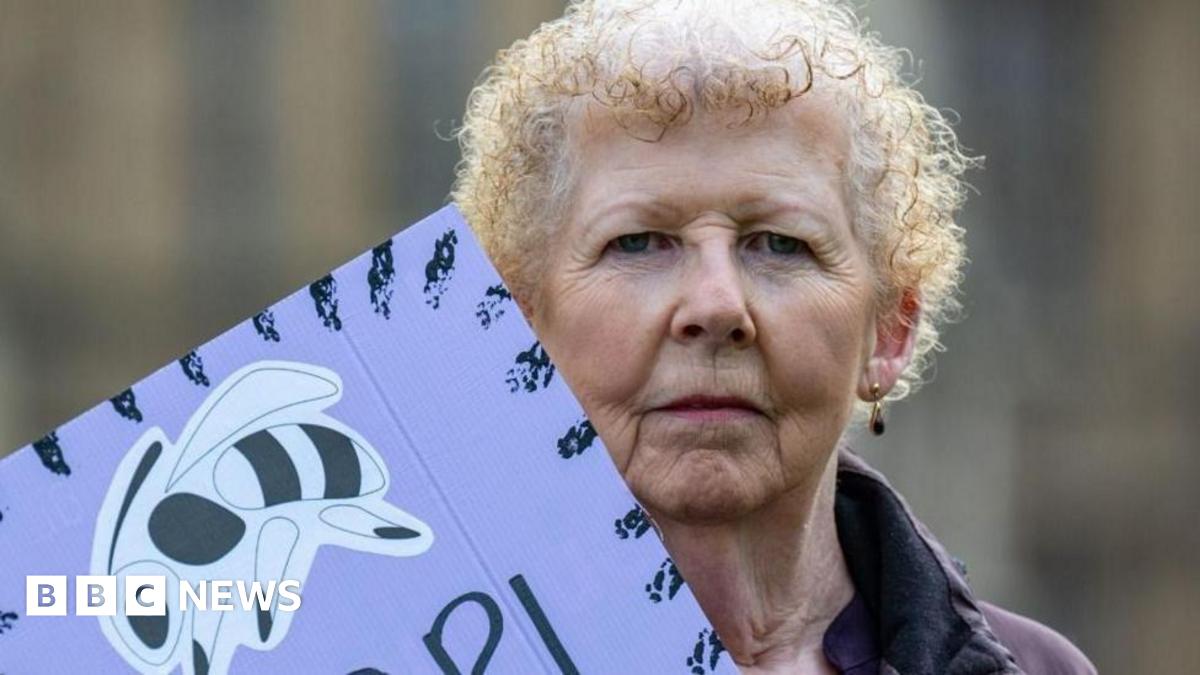
“The government has kicked the can down the road for months, only to arrive at exactly the same conclusion it has always wanted to,” said Angela Madden, who chairs the group.
“This is a disgraceful political choice by a small group of very powerful people who have decided the harm and injustice suffered by millions of ordinary women simply does not matter.”
The government said the vast majority of 1950s-born women already knew the state pension age was increasing, thanks to a wide range of public information, including through leaflets, education campaigns, in GP surgeries, on TV and radio, in cinemas, and online.
Others, however, said they were unaware of the changes.
In 2024, a parliamentary ombudsman recommended compensation of between £1,000 and £2,950 each for those affected.
While the Parliamentary and Health Service Ombudsman (PHSO) could recommend compensation, it could not enforce it and the government rejected it.
Speaking in the House of Commons, Work and Pensions Secretary Pat McFadden said the government accepted that “individual letters about changes to the state pension age could have been sent earlier”.
He repeated the apology given by his predecessor Liz Kendall over when the letters were sent.
But he said the government also agreed with the Ombudsman’s previous finding that “women did not suffer any direct financial loss from the delay”.
The emergence of a 2007 survey, which had not been handed to Kendall, prompted a review of the government’s decision, with McFadden promising to check no other documents had been overlooked.
Now, the government has said a flat-rate compensation scheme for those affected would “cost up to £10.3bn and would simply not be right or fair given it would be paid to the vast majority who were aware of the changes”.
More individual compensation “would not be practical to set up”, it said.
McFadden said on Thursday that overall, the evidence suggests that most of those affected would not have read “an unsolicited pensions letter, even if it had been sent earlier”.
He also said that those who knew the least about pensions — “the very women who most needed to engage with a letter” — were the least likely to read it.
Liberal Democrat work and pensions spokesperson Steve Darling said affected women will feel “utterly betrayed” by the decision.
“False hope was given to them in the autumn, and so that hope has been dashed,” he said.