
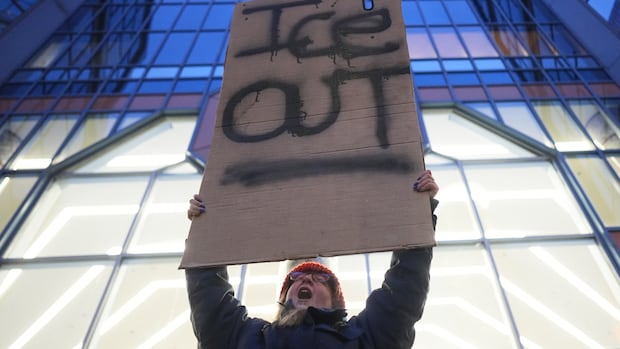
Minneapolis is the latest in a growing list of largely Democrat-led cities being targeted by the Trump administration, with thousands of masked and armed agents on the streets, raiding business and homes, purportedly targeting criminals illegally in the United States.
Since beginning his second term, U.S. President Donald Trump has sent federal and immigration agents into cities he has alleged are overridden with crime, including Los Angeles, Washington, Chicago and Charlotte, N.C.
But Minneapolis has seen a greater number of federal agents, as well as sustained opposition from residents — and fatal violence.
Federal agents were initially sent into Minnesota’s twin cities of Minneapolis and St. Paul in early December.
But on Jan. 6, the U.S. Department of Homeland Security (DHS) announced it would add another 2,000 federal agents to the cities, prompting thousands of people to take to the streets on a near-daily basis, demanding ICE leave their city.
Since then, two U.S. citizens have been shot and killed in Minneapolis at the hands of ICE agents and a five-year-old child detained alongside his father.
Here’s how we got to this point.
Why was ICE sent to Minnesota?
ICE agents were part of a targeted operation at the University of Minnesota last fall that was linked to alleged fraud. During a press conference about the operation, Department of Homeland Security Secretary Kristi Noem suggested more federal agents would be deployed to the Twin Cities, saying, “If you’re here illegally, go home.”
On Dec. 1, DHS launched Operation Metro Surge, targeting the city’s “worst criminal illegal aliens.”
A few days later, Trump went on a tirade against Somali immigrants. He called them “garbage,” adding “we don’t want them in our country.”
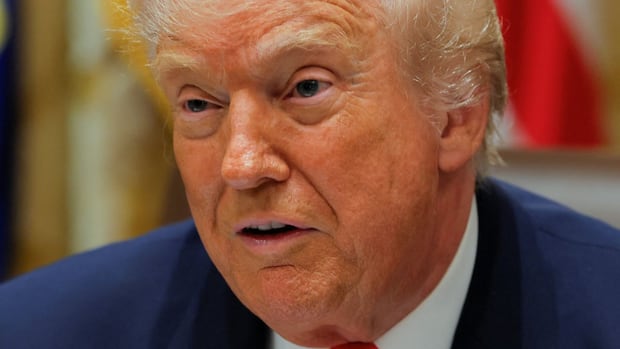
Trump disparages Minnesota’s Somali community in anti-immigrant tirade
U.S. President Donald Trump went on a three-minute tirade against immigrants from Somalia during a cabinet meeting on Tuesday, calling them ‘garbage’ and saying ‘we don’t want them in our country.’ Minneapolis Mayor Jacob Frey said the Somali community has been an economic and cultural boon to the area, where about 80,000 people of Somali origin live.
Days before, his Treasury Secretary had shared a social media post from a conservative activist, known for his fight against critical race theory and DEI, about alleged fraud in the Somali community.
At my direction, @USTreasury is investigating allegations that under the feckless mismanagement of the Biden Administration and Governor Tim Walz, hardworking Minnesotans’ tax dollars may have been diverted to the terrorist organization Al-Shabaab.
Thanks to the leadership of… https://t.co/uillMknuXL
Minnesota has the largest population of Somali immigrants in the country. About 84,000 people of Somali descent live in the Minneapolis-St. Paul area. Most of them are American citizens.
During the month of December, ICE agents carried out several raids and made several arrests in Minneapolis.
Minnesota Democratic Rep. Ilhan Omar, who is of Somali descent, told CBS News her son was pulled over on Dec. 14 and asked to prove his citizenship. She said he did and was not detained, but that agents had also entered the mosque where her son prayed, and accused them of “racially profiling” people in her community.
“They are looking for young men who look Somali that they think are undocumented,” Omar said.
Following hundreds of arrests and detentions in just the first two weeks of the operation, including of Americans who said they were targeted because of race, Somali Americans in Minneapolis told CBC News they were scared to leave their homes.
“There’s people that aren’t leaving their house, because they’re scared of being mistaken for someone else and being captured,” said Farah, a member of the Somali community who is an American citizen.
WATCH | ICE detains a 5-year-old: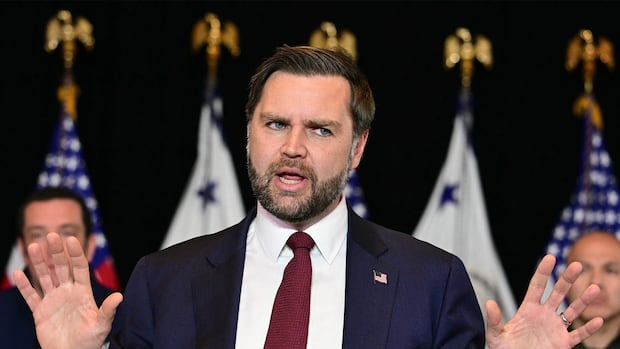
Vance defends ICE after 5-year-old detained in Minneapolis area
U.S. Vice-President JD Vance is standing by the actions of ICE officers after they detained five-year-old Liam Conejo Ramos and his father in a suburb of Minneapolis, triggering fresh backlash against immigration officers’ tactics.January surge
On Jan. 6, the Trump administration ordered a surge of 2,000 more ICE agents into Minneapolis.
Immigration and Customs Enforcement acting director Todd Lyons called the crackdown the agency’s “largest immigration operation ever” in an interview on right-wing cable news network Newsmax.
Minnesota had been at the centre of several recent fraud scandals, including a $300-million US pandemic food fraud scheme revolving around the non-profit group Feeding Our Future, for which 57 defendants in the state have been convicted. Most of the defendants were Somali Americans.
Minnesota Gov. Tim Walz and other Democrats criticized Trump and his allies for statements that appeared to blame the entire diaspora for actions committed by just dozens of people and suggested the surge of ICE agents to the Twin Cities was directly related.
WATCH | Why is the biggest crackdown in Minneapolis?: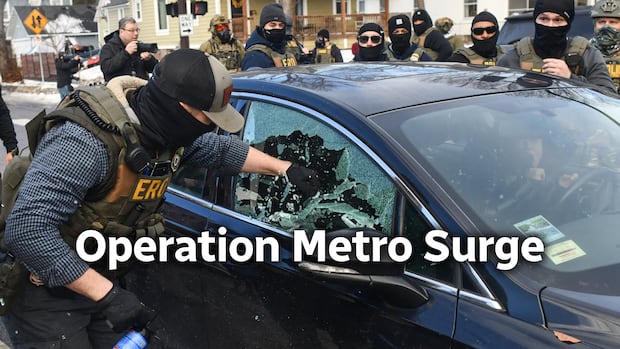
‘Insurrection’?: How Minnesota is being singled out in ‘largest’ crackdown ‘ever’ | About That
A week after an Immigration and Customs Enforcement (ICE) agent fatally shot Renee Good in Minneapolis, another ICE-involved shooting in the city is fuelling growing tension between federal law enforcement and protesters. As President Donald Trump threatens to bring in the National Guard, Andrew Chang explains ICE’s heightened presence in Minnesota’s Twin Cities.
Images provided by The Canadian Press, Reuters and Getty ImagesReaction to the surge
The surge brought protesters to the streets. People called on ICE to leave.
One day later, Renee Nicole Good was shot and killed by an ICE agent. The agency said she was blocking the street.
Protests increased both in the city and across the country after Good’s death.
But Trump administration officials defended the agent’s actions, saying Good had “weaponized her vehicle” and tried to mow down the ICE agents. Video contradicted that account.
Over the next weeks, there were more arrests, and more high-profile incidents, including a woman who told agents she was autistic being pulled from her car and thrown to the ground, the detention of a five-year-old boy and, on Saturday, the fatal shooting of nurse Alex Pretti.
On Saturday, White House deputy chief of staff Stephen Miller on social media described Pretti as an “assassin” who “tried to murder federal agents.” U.S. Vice-President JD Vance reshared the post. Video of the shooting appeared to contradict Miller’s assessment.
WATCH | 2nd man fatally shot by ICE in Minneapolis. What the video shows: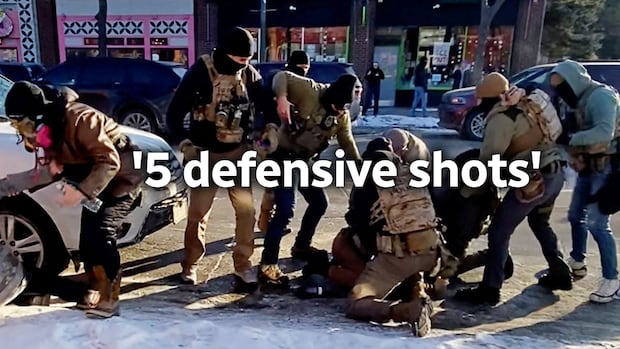
Was Alex Pretti a ‘would-be assassin’? We break down the footage of fatal ICE shooting | About That
U.S. government officials say ICE agents fatally shot Alex Pretti at a protest in Minneapolis because he had a gun on his person and, according to U.S. President Donald Trump’s homeland security adviser Stephen Miller, was a ‘would-be assassin.’ Andrew Chang breaks down several video angles of the shooting, moment by moment, to understand how accurate the government’s initial account is.
Images provided by The Canadian Press, Reuters and Getty ImagesPossible de-escalation
On Monday, Trump held calls with both Gov. Walz and Mayor Frey. Following the calls, which all sides said were productive, Frey said federal agents could start leaving the city as soon as Tuesday.
Immigration agents were still active across the Twin Cities region on Tuesday. It was unclear if officials had changed tactics after the shift in tone from the White House.