
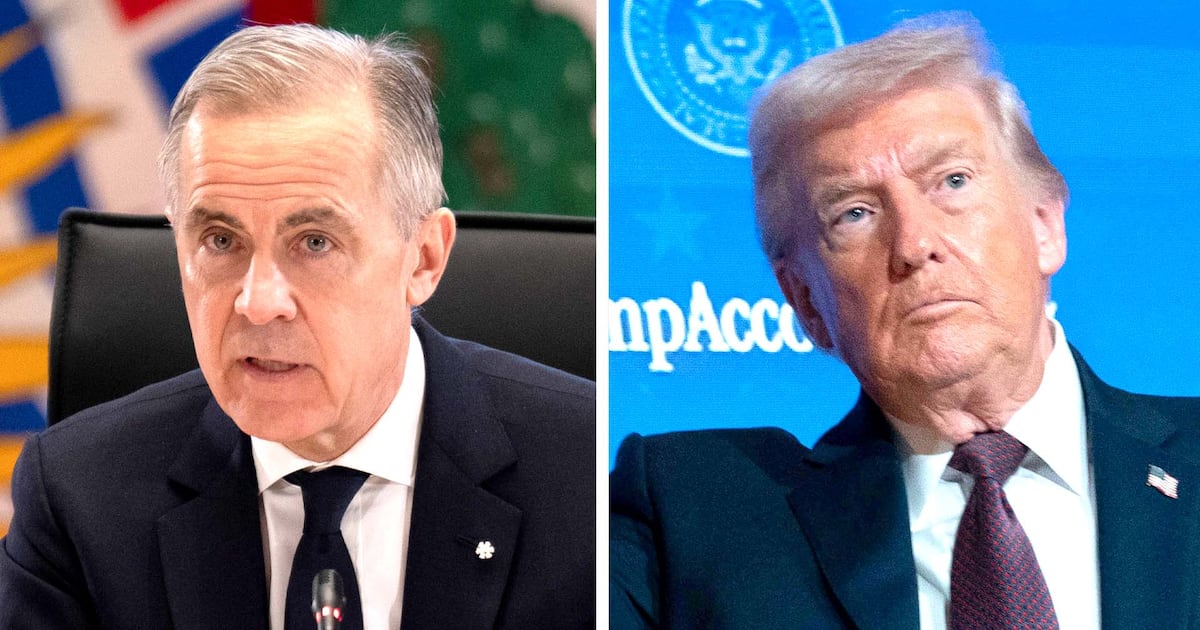
Canada’s relationship with the U.S. looms large over Ottawa today as Prime Minister Mark Carney assembles premiers from across the country for a high-level meeting.
Carney has classified recent rhetoric on Canada from U.S. President Donald Trump as a precursor to trade negotiations. The prime minister is expected to speak to media at 2:15 p.m. ET.
This week:
Here are key events as they happen:
Trump: Tariffs push auto plants to U.S.
Trump, speaking to his cabinet, says tariffs are driving auto manufacturing companies out of Canada, Mexico and elsewhere in favour of the U.S. market.
“They’re all coming back,” said the president.
Trump’s comments come as more than 1,000 workers at the Oshawa, Ont., General Motors plant will be without work Friday morning, according to the employees’ union.
The union wrote in a statement that GM is moving shifts to plants in the U.S.
Luca Caruso-Moro, CTVNews.ca journalist
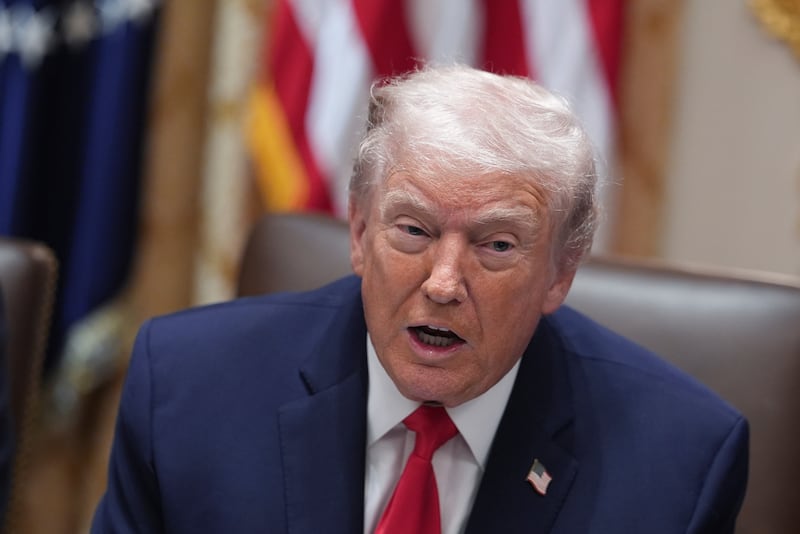 Trump tariffs on Canada U.S. President Donald Trump speaks during a cabinet meeting at the White House, Thursday, Jan. 29, 2026, in Washington. (AP Photo/Evan Vucci) Carney wants more trade with these countries
In an effort to diversify trade away from the United States, Carney said in an address this morning that Canada will pursue new trade relationships with India, the ASEAN countries and the MERCOSUR trade bloc.
ASEAN states include Cambodia, Indonesia, Malaysia, Myanmar, the Philippines, Singapore, Thailand, Vietnam, Timor-Leste, Brunei Darussalam and Lao People’s Democratic Republic.
MERCOSUR’s main parties include Argentina, Bolivia, Brazil, Paraguay and Uruguay. Venezuela is a member, though its rights and obligations are presently suspended as a state party. Associate states include Chile, Colombia, Ecuador, Guyana, Panamá, Perú and Suriname.
Luca Caruso-Moro, CTVNews.ca journalist
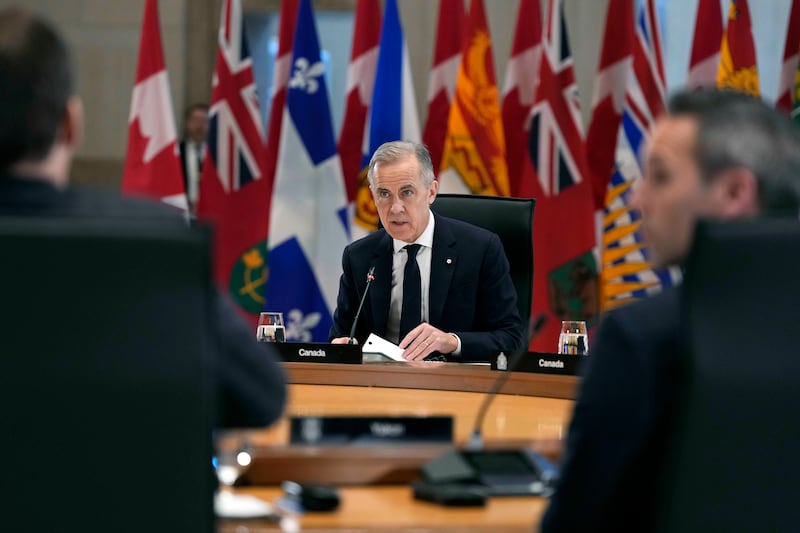 Mark Carney, Trump tariffs Prime Minister Mark Carney speaks at a First Ministers Meeting with premiers in Ottawa on Thursday, Jan. 29, 2026. THE CANADIAN PRESS/Justin Tang Canada’s trade deficit
Canada posted a merchandise trade deficit of $2.2 billion for November as exports of gold as well as motor vehicles and parts fell in the month, Statistics Canada said Thursday.
The agency said the result compared with a revised trade deficit of $395 million in October.
However, RBC senior economist Claire Fan noted that despite the deteriorating trade balance, Canadian exporters continued to show signs of at least some diversification to non-U.S. markets.
“Goods exports to non-U.S. destinations were 29 per cent above year-ago levels in November, while goods imports from non-U.S. markets rose 18 per cent both near or at all-time highs,” Fan wrote in a report.
The Canadian Press
Sheinbaum, Trump talk trade
U.S. President Donald Trump and Mexican President Claudia Sheinbaum spoke on Thursday about trade and security, as both governments geared up for high-stakes negotiations later this year about their trilateral trade deal with Canada.
Both leaders said the call was productive.
The call follows a Wednesday meeting in Washington between Sheinbaum’s economy chief and the U.S. trade representative, who agreed to begin formal discussions on possible reforms to the United States-Mexico-Canada trade agreement.
“There is nothing concrete, but it is coming along very well,” Sheinbaum said about the trade deal in her morning press conference. She noted progress on the Trump administration’s demand that Mexico address what Washington calls “non-tariff barriers” to trade.
Reuters
 Mexico Anniversary Mexican President Claudia Sheinbaum greets supporters gathered in the Zócalo in Mexico City, Saturday, Dec. 6, 2025, to celebrate the seven years of the Fourth Transformation movement, or 4T, initiated by former Mexican President Andrés Manuel López Obrador. (AP Photo/Marco Ugarte) Alberta separatists and U.S. ‘treason’
B.C. Premier David Eby says that a reported meeting between individuals in the Alberta separatist movement and White House officials amounts to “treason.”
Speaking in Ottawa this morning before the premiers’ meeting with Carney, Eby — citing a report in the Financial Times — said it’s completely inappropriate for a group to ask a foreign power for help in breaking up Canada.
Eby said it’s one thing to attempt to hold a referendum on independence, but meeting with a foreign power to discuss it crosses a line.
U.S. Treasury Secretary Scott Bessent said recently Alberta would be a “natural partner” for the U.S., pointing to the province’s resource wealth and desire to build a new pipeline to the West Coast.
The Alberta independence movement is collecting signatures in an attempt to initiate a referendum on whether Alberta should separate from Canada.
The Canadian Press. Read the full story here.
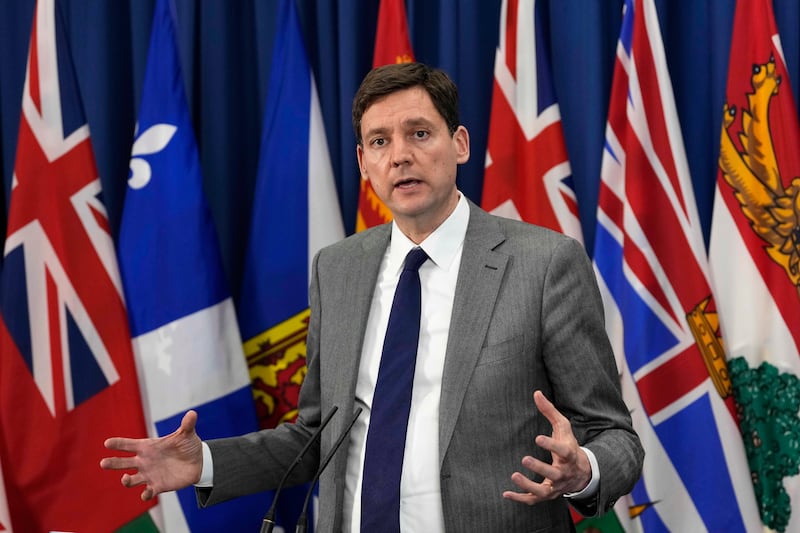 Eby on seperatists’ reported meeting Premier of British Columbia David Eby takes questions from journalists after meeting with Canadian premiers at a Council of the Federation meeting in Ottawa, on Wednesday, Jan. 28, 2026. THE CANADIAN PRESS/Justin Tang Union: GM moving jobs to the U.S.
More than 1,000 workers will be out of a job come Friday morning following an announcement that General Motors will be cutting its third shift at its Oshawa plant, the union representing employees says.
According to Jeff Gray, the president of Unifor Local 222, which represents GM workers in Oshawa, about 500 direct employees will be impacted by the layoffs, along with more than 500 other workers who are employed with companies that are part of the plant’s supply chain.
In a statement posted online on Wednesday, the union said the move comes as GM shifts jobs to the United States.
“Despite the trade war, GM posted $10 billion in profits in North America even after losing billions in tariffs. Autoworkers are in the middle of a deepening trade war,” the statement read.
Codi Wilson, CP24.com journalist. Read the full story here.
‘This is what this trade war with the U.S. has meant’: Volpe on Oshawa GM plant cutting third shift Automotive Parts Manufacturers’ Association President Flavio Volpe on the Oshawa GM plant cutting their third shift and if there are more layoffs coming.
Manufacturing employment, wages weaken
Payroll employment in manufacturing has been slumping since January 2025, according to Statistics Canada. In its November report released Thursday, the department recorded decreases in transportation equipment, primary metals and fabricated metal product sectors, among others.
The department logged an overall decrease of 4,200 employed people within the sector, a drop of 0.3 per cent compared to the month before.
Job vacancies also fell in:
B.C. (-25,200; -26.3 per cent); Ontario (-24,800; -13.5 per cent);and Quebec (-10,900; -8.7 per cent).
In a separate report, the department reported “notably weak” wage earnings in the third quarter of 2025 for workers in goods-producing sectors such as mining and oil and gas extraction as well as manufacturing and others.
Luca Caruso-Moro, CTVNews.ca journalist
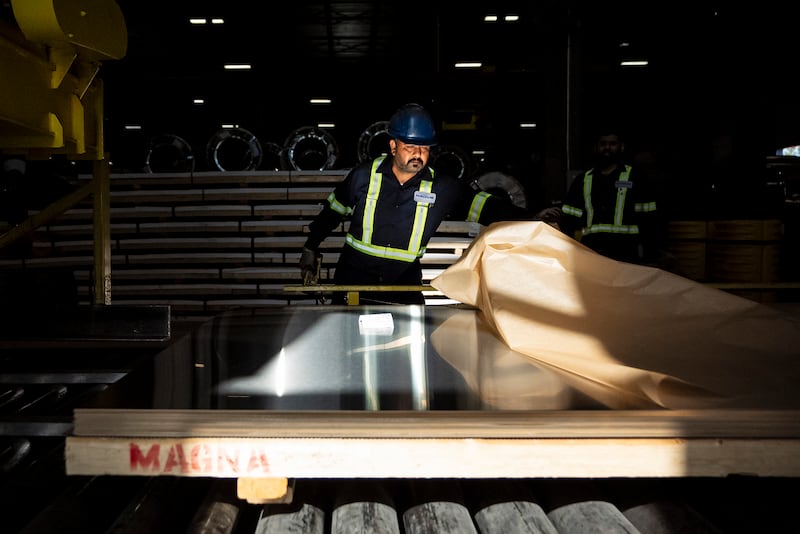 Canada manufacturing jobs Workers inspect sheets of stainless steel after being pressed from coils, at Magna Stainless and Aluminum in Montreal on Thursday, Sept. 18, 2025. THE CANADIAN PRESS/Christopher Katsarov Opinion: Reality check on Trump’s threat
CTV News Political Analyst Eric Ham writes: “Threatening Canada with 100 per cent tariffs, Trump is reverting to an overused policy tool to menace and disrupt one of America’s largest trading partners.
“‘Doubling down on his recent jabs at Canada,’ he said, ‘Canada is systematically destroying itself’ and called ‘the China deal’ a ‘disaster.’ It’s unclear what precipitated this latest round of criticisms. However, it’s unlikely the threat will carry the same sting this time around.
“It’s important to note, 80 per cent of the goods that enter the U.S. through Canada are in fact protected under the Canada-United States-Mexico Agreement (CUSMA). Moreover, many expect a pending U.S. Supreme Court ruling will declare the White House tariff authority unconstitutional.
“Such a transformative decision will only further undermine the president’s trade powers, making this latest attack meaningless and impotent.”
Eric Ham is based in Washington, D.C. and is a political analyst for CTV News. Read the full column here.
Why Trump is responding with attacks against Carney U.S. political analyst Eric Ham says PM Carney’s speech at Davos struck a nerve with Trump.
Tariffs challenge construction sector
Canada’s construction sector generated growth in its most recent quarter but continues to face rising costs, especially due to ongoing tariffs.
The Canadian Construction Association’s winter 2026 economic insights report said the sector’s GDP was $170 billion in the third quarter, up 1.3 per cent compared with the previous three-month period and outpacing the all-industry average of 0.5 per cent growth.
It marked the largest quarter-over-quarter gain in the last 3.5 years and the sixth consecutive quarterly increase, as growth was driven primarily by engineering and other construction activities.
Construction sector GDP also grew by 2.6 per cent year-over year, while the all-industries average grew by 1.1 per cent.
Increased productivity came despite higher construction costs and supply chain disruptions, the report said, saying those represent “a major ongoing risk.”
The Canadian Press. Read the full story here.
Experts wary of tariffs on health industry
As the United States continues to place tariffs on nations around the world, economists have focused on inflation, markets and trade balances. But researchers warn the fallout could also show up in doctors’ offices, grocery aisles and hospital budgets.
In a new analysis published by The British Medical Journal (BMJ), researchers Courtney McNamara of Newcastle University and Benjamin Hawkins of the University of Cambridge argue that trade policy is a powerful, and often overlooked, driver of public health, impacting access to medicines and food, as well as job security and the financial stability of health systems.
“We tend to hear a lot about economics, about markets, but actually trade shapes everyday lives,” McNamara, a co-author of the study, said in a video interview with CTVNews.ca. “It shapes the price and availability of food, the cost of medicines. It shapes how secure people feel in their jobs.”
Tammy Ibrahimpoor, CTVNews.ca national digital producer. Read the full story here.