
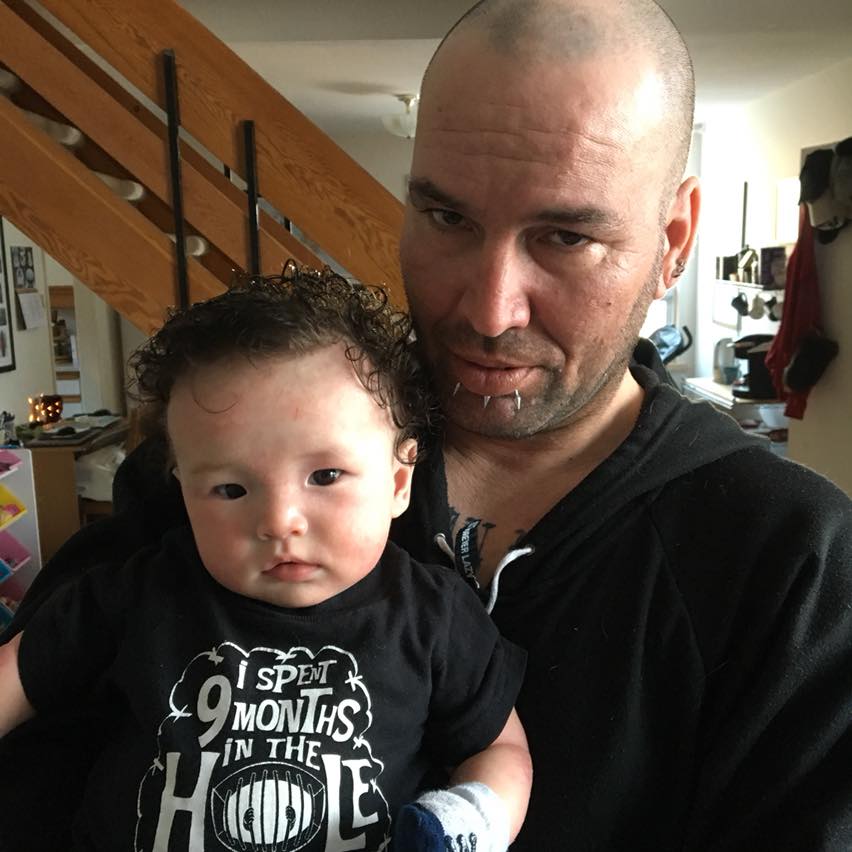
A family from Inuvik, N.W.T., says their journey home from a trip to Costa Rica last Thursday was disrupted when U.S. border agents pulled one of them aside during a layover in Texas.
Harley Minakis, who is Gwich’in, says it happened while going through customs at the George Bush Intercontinental Airport in Houston, where he scanned his passport and immediately after was separated from his family and put in a room for around two hours.
“[They] told me not to answer my phone, and they told my wife to just continue on her journey,” said Minakis.
Minakis said he was detained once before in the U.S., in 2013, because of a previous charge.
“They went back and they looked at a charge that I had in Canada from 2001 or maybe 2002, for possession of marijuana. And they said for this reason, you’re not allowed in the state,” said Minakis.
He said in 2013, he showed his tribal card, was held for six hours, then was released.
This time around he thought having his Canadian passport, status card, and tribal card from the Gwich’in Tribal Council would suffice in case of any trouble.
Minakis said the U.S. border officials told him he wasn’t being charged or going to jail but that he was going to be “processed.”
“But they also told me if I paid DEA, so their Drug Enforcement Agency, if I pay them, they can give me a pardon … I told him flat out, my government doesn’t need me to get a pardon for that charge. And that’s the only charge I have.”
In an emailed statement, Global Affairs Canada wrote that it was “aware of multiple cases of Canadians currently or previously in immigration-related detention in the U.S.”
It also states that it has received requests for information and assistance from individuals and their family members.
“Every country or territory decides who can enter or exit through its borders and the Government of Canada cannot intervene on behalf of Canadians who do not meet entry or exit requirements for the United States,” the response reads.
Jay Treaty protocols require blood quantum proof
Minakis said after about half an hour of being detained his phone kept ringing. He answered and it was his wife, telling him to invoke his Jay Treaty rights.
The treaty was signed by the U.S. and Great Britain in 1794 that allows “American Indians” born in Canada to freely enter the U.S. if they can prove 50 per cent blood quantum — the total percentage of a person’s blood that is “Native” due to bloodline.
Minakis said he told the agents he was invoking his Jay Treaty rights. He said the agents told him to turn off his phone before taking it from him.
He said his wife was able to get a hold of family back in Canada, who then co-ordinated with the Gwich’in Tribal Council and chief to get a blood quantum paper sent over.
Minakis said he was then released, but if he’d been held any longer he would have missed his flight.
Now, Minakis said he won’t go through the U.S. if possible, and he cautioned others who are planning to.
Assembly of First Nations issues travel advisory
The Assembly of First Nations issued a travel advisory on Monday, saying they’ve received reports of some First Nations citizens subjected to increased questioning and detainment.
“Please note that federal law enforcement may not be familiar with Tribal IDs,” states the advisory.
Keenan Miller, a law clerk with Aboriginal Legal Services in Toronto, pointed to a fact sheet for crossing the border using the Jay Treaty.
It says there are multiple documents border officials can ask for, including a declaration of blood quantum, which is the most requested, along with a valid status card, a long form birth certificate, and a photo ID.
Global Affairs Canada said consular officials can provide assistance to Canadians detained abroad.
CBC also reached out to the office of Frederick (Sonny) Blake Jr., grand chief of the Gwich’in Tribal Council, but did not hear back.