
Trump has made repeated claims that the central American canal is under Chinese control.
During his address last January, he said: “China is operating the Panama Canal and we didn’t give it to China. We gave it to Panama and we’re taking it back”.
The following month, US Secretary of State Marco Rubio also demanded that Panama make “immediate changes” to what he called the “influence and control” of China over the canal.
Panama has previously rejected the US government claims and President Jose Raul Mulino has said the canal “is and will remain” in his country’s hands.
There is no public evidence to suggest China exercises control over the canal, although Chinese companies have a significant presence there.
CK Hutchison, founded by Hong Kong billionaire Li Ka-shing, is not owned by the Chinese government.
But Beijing’s tighter political control over Hong Kong in recent years has changed how the company is viewed internationally. Its global assets – which include ports and logistics hubs – are now often seen through the lens of wider concerns about China’s influence.
Against a backdrop of rivalry between the US and China over global trade routes, as well as the Trump administration’s focus on US dominance over the western hemisphere, the ruling on Thursday is likely to be seen as a victory for Washington.
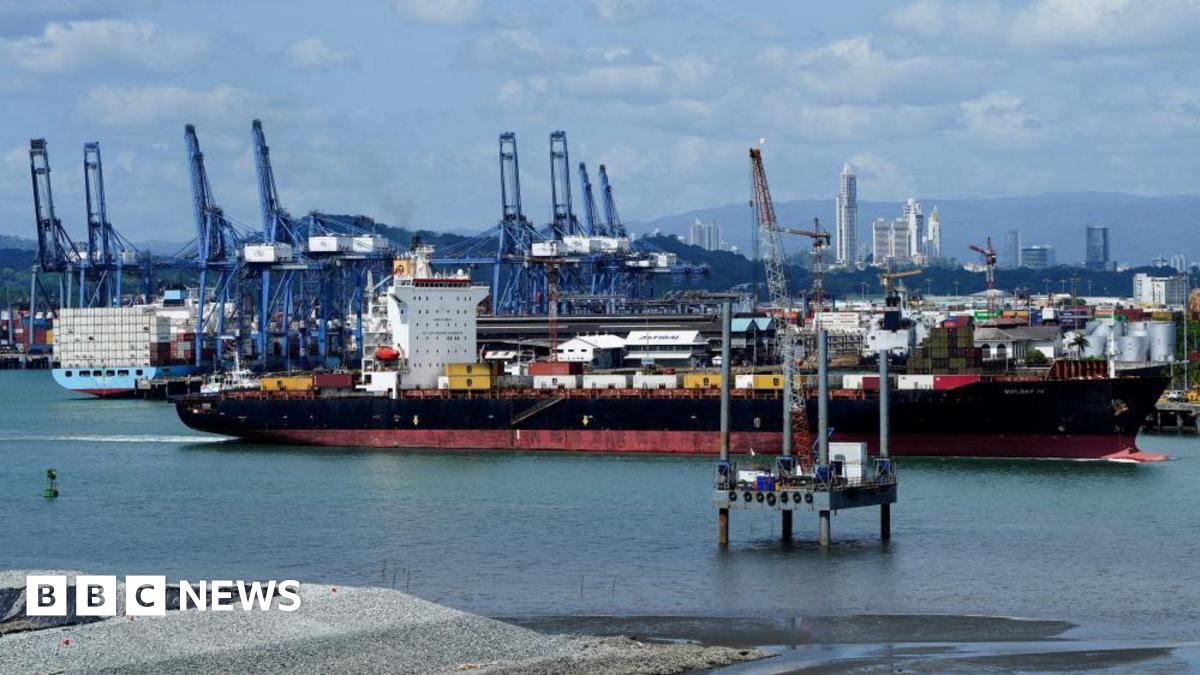
In a statement published on its website, Panama’s Supreme Court said that after “extensive deliberation”, it had found laws which underpin a concession contract between the state and PPC at the ports of Balbao and Cristóbal were unconstitutional.
In response, PPC said the new ruling lacks legal basis, and “jeopardizes not only PPC and its contract, but also the well-being and stability of thousands of Panamanian families who depend directly and indirectly on port activity”.
Its statement added that it had invested more than $1.8bn (£1.3bn) in infrastructure and technology since it began operating the ports in 1997.