
Ministers will introduce a landmark law that will allow them to ban Iran’s Islamic Revolutionary Guard Corps as pressure grows to respond to the group’s bloody suppression of anti-government protests.
On Thursday the European Union added the IRGC to its list of terrorist groups alongside al-Qaeda, Hamas and Islamic State.
The EU’s action sparked a furious response from Iran’s foreign minister, who described it as a “stunt” that would be a “major strategic mistake”.
The Home Office confirmed it was preparing legislation to proscribe hostile state agencies including the IRGC, but said the bill would not be fast-tracked despite the group’s role in Tehran’s deadly crackdown on protesters in recent weeks.
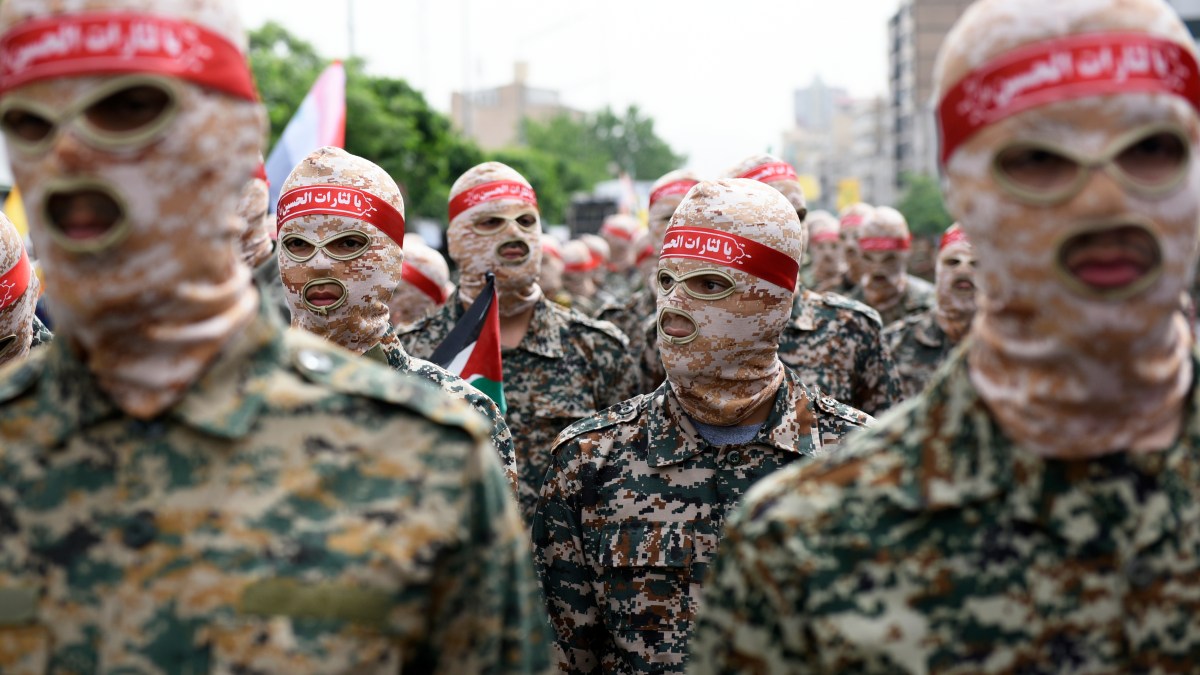
The IRGC act as a “praetorian guard” military force in Iran, swearing loyalty to the Ayatollah personally, acting separately to the army. They have grown in power in recent years and now control large parts of the economy.
Government sources confirmed the legislation was not yet ready but would probably be brought forward later this year.
The Home Office has been drawing up terror-style proscription legislation since May, when Yvette Cooper, then the home secretary, announced she was accepting recommendations from Jonathan Hall, the government’s independent adviser on terrorism legislation, to introduce a law that would enable agencies such as the IRGC to be banned. Cooper said that the legislation would enable “much stronger action on state-backed organisations like the IRGC”.
• Will Trump attack Iran? He’s keeping his options open
Labour pledged to proscribe the group while in opposition but decided against a ban using existing terror laws after receiving advice that they were ill-suited to target organisations that are arms of the state. Critics also warned that current laws risked criminalising association with the state of Iran more generally.
The new legislation would enable more targeted action. It would give the police powers to seize passports from individuals suspected of operating for the IRGC and the power to stop and search individuals without suspicion in “high-threat situations” or locations such as the premises of a known state-threat target.

Demonstrators march for a “free Iran” in London this month
ALISHIA ABODUNDE/GETTY IMAGES
However, the new laws are taking time to draft because of the legal and diplomatic complexity of designating state agencies as terrorists.
Lord Blunkett, a former Labour home secretary, urged Starmer to introduce a ban.
He told The Times: “I think it’s long overdue. We should clarify what is already taken as given, namely that this organisation is unacceptable and should be proscribed. I also think it’s time to take a tough line with the Muslim Brotherhood and to proscribe that organisation as well.”
Priti Patel, the shadow foreign secretary, supported an immediate ban.
“The brutality of the Tehran regime is an affront to humanity,” she said. “Thousands slaughtered, many more injured and tortured, and show trials continuing, all while Iran sponsors terrorism and threatens regional security.
“The Labour government’s silence on the IRGC is appalling. We have said that we would work with them to bring forward the legal and legislative mechanisms for the UK to take action. Britain must stand up for the Iranian people and confront this vile regime with strength and resolve.”
The EU’s decision came after France and Italy made last-minute decisions to back the move.

An IRGC parade in Tehran last January
HOSSEIN BERIS/MIDDLE EAST IMAGES/AFP/GETTY IMAGES
There are still tensions within the government over how to proceed against the IRGC, The Times understands. MI6 and the Foreign Office are understood to be more resistant to proscribing the IRGC over concerns it would sever diplomatic channels that are relied upon by Britain and its allies and trigger the expulsion of British diplomats from Tehran.
The Foreign Office has so far preferred to use sanctions to target and punish IRGC personnel, with more than 500 individuals subject to asset freezes and other sanctions.
The US has historically wanted the British embassy in Tehran to stay open because it is seen as a “good conduit for back-channelling with the regime”, according to one US official.
Although Switzerland is officially the “protecting power” for the US in Iran, its role focuses more on consular issues.
The US relies on the UK to have a dialogue with the Iranians and the British embassy plays an important role in relaying US messages to Iran and vice versa, it is understood.
The US has designated the IRGC as a terrorist organisation and other allies, including Canada and Sweden, have already proscribed the group. However, Hall said there were key differences in Britain, where current terrorism legislation goes further by including membership as a criminal offence.
France had previously adopted a similar approach to Iran as Britain but its change of position on Thursday paved the way for the EU’s designation of the IRGC as a terrorist group.
Kaja Kallas, the EU’s foreign affairs chief said: “If you act like a terrorist, you should also be treated as terrorists.”

Kaja Kallas
SIMON WOHLFAHRT/AFP/GETTY IMAGES
Writing on X, she added: “Repression cannot go unanswered. Any regime that kills thousands of its own people is working toward its own demise.”
A government spokesman said: “We utterly condemn the terrible violence being used by the Iranian regime against those exercising their right to peaceful protest.
“The government has already sanctioned the IRGC in its entirety, as well as more than 550 Iranian individuals and entities, and set out a robust package of measures to tackle threats from the Iranian regime.”
On Thursday a US air force plane dubbed the “nuke sniffer” landed in Britain amid growing tensions with Iran.
The USAF WC-135R Constant Phoenix jet, which is used to detect radioactive particles in the atmosphere, touched down at RAF Mildenhall, an American airbase in Suffolk. It was reported that the aircraft, which is operated by the 45th Reconnaissance Squadron, was deployed from the US to the Middle East days before President Trump bombed Iran’s nuclear facilities last year.
The aircraft previously landed in Britain in January 2022, weeks before Russia launched its full-scale invasion of Ukraine.
While the reason for its latest trip to the UK is unclear, its presence did not necessarily indicate immediate military action, according to defence sources.