
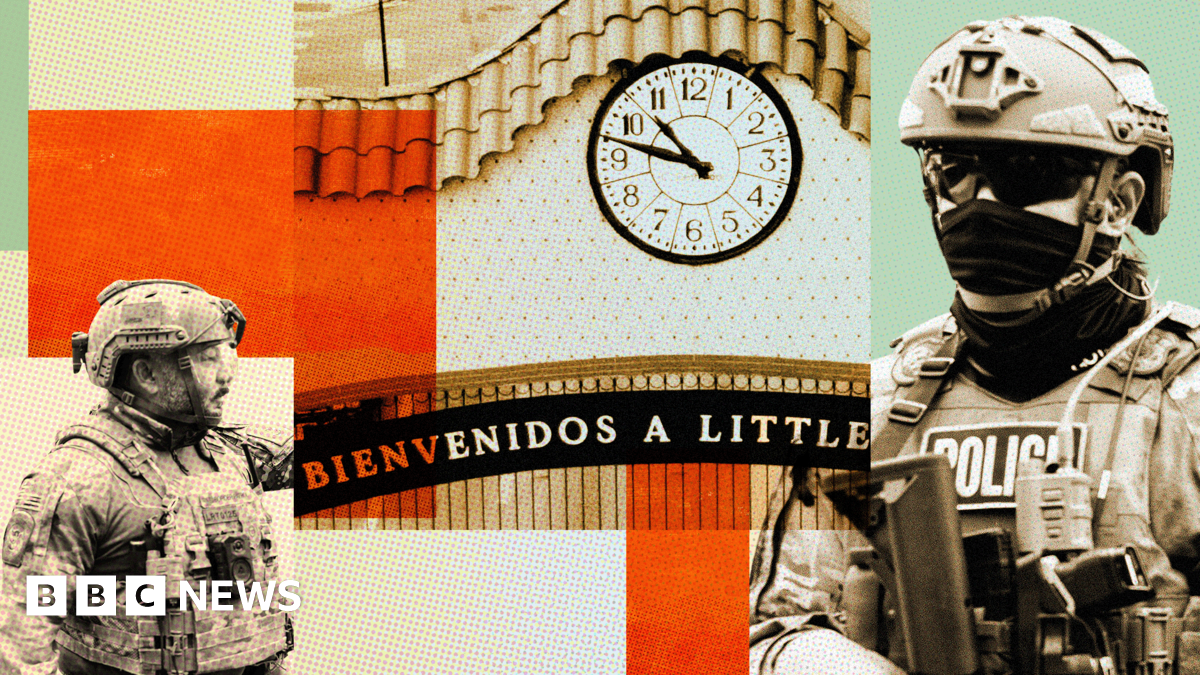
The downturn in Little Village is having ripple effects on the wider economy of the city, officials say.
The two-mile corridor is one of Chicago’s key economic hubs, generating some of the city’s highest tax revenues outside the downtown Magnificent Mile.
And unlike the posh boutiques and flagship international shops that dot that premier North Michigan Avenue address, this street runs through a predominantly Hispanic neighbourhood.
Businesses are locally owned and cater largely to the Latino community – a customer base many say is now staying home out of fear.
Alderman Michael Rodriguez says he has received reports from local restaurants and food vendors indicating sales have dropped by as much as 60%. One local mobile phone shop, he says, reported no sales over a two-week period.
“Since President Trump has been in office, we noticed a major blip in the subsequent days in January and February,” Rodriguez says.
“Any detrimental impact on the business environment on 26th Street negatively impacts the region.”
But some political leaders support Trump’s deportation plan, which was a central plank of his 2024 election campaign.
“I love what he’s doing,” says Lupe Castillo, a Little Village resident and Republican candidate for Illinois’ 4th Congressional District.
“I’m sorry it had to come to this point, but this is the Democrats’ fault. There are rules in this country. You can come in, but do it the right way. Then you can stay here and pursue the life you want.”
Castillo, who has lived in Little Village for more than 40 years, says this is the first time she has seen federal agents in the neighborhood but residents should continue supporting local businesses.
“Just don’t bring any attention to yourself,” she says. “I know these people in the neighbourhood, they’re not bad people, so why would they be afraid? They’re only coming after the bad guys.”