
A sealed tomb hidden beneath the hills of southern Mexico is drawing renewed focus on Zapotec civilization, revealing an unexpected trove of intact art, symbolic carvings, and architectural complexity not seen in recent Mesoamerican finds.
Researchers were not initially searching for a tomb. They were responding to signs of unauthorized digging in a known pre-Hispanic area of Oaxaca. What they found instead, buried beneath centuries of sediment, quickly gained national attention. The site offered signs of elite ritual activity preserved under rare environmental conditions.
Federal authorities delayed public disclosure until structural stabilization could begin. When the announcement came in early 2026, it followed months of internal analysis and conservation planning by Mexico’s national archaeology institute.
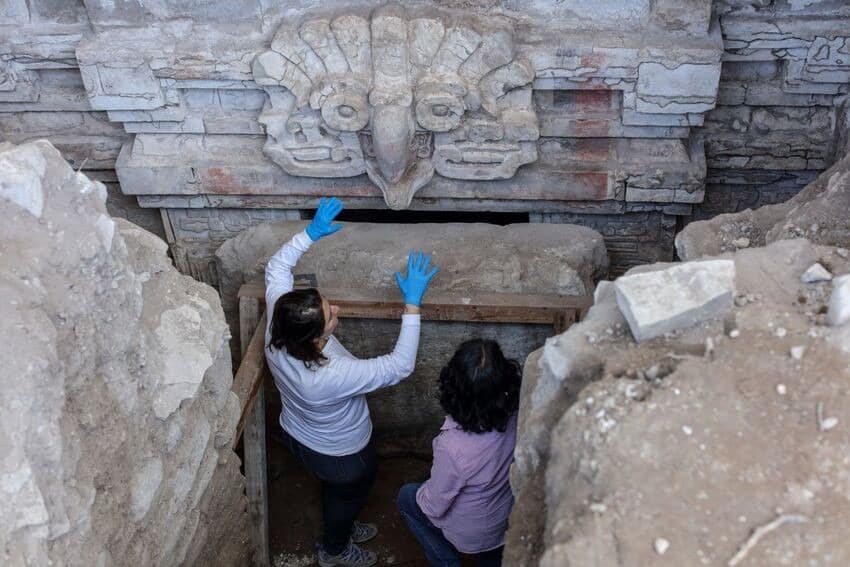 The tomb discovered in southern Mexico is in an excellent state of preservation. © Luis Gerardo Peña Torres, INAH
Though details remain tightly managed, early assessments suggest this discovery may alter current interpretations of Zapotec religious space, funerary design, and social hierarchy during the Classic period.
Architectural Features and Ceremonial Iconography
The tomb is located in San Pablo Huitzo, within Oaxaca’s Valles Centrales region. Experts from Mexico’s Instituto Nacional de Antropología e Historia (INAH) have dated the structure to around 600 CE, placing it within the Classic Zapotec timeline. It includes a two-room layout consisting of an antechamber and a funerary chamber, with both sections exhibiting extensive use of carved stone and painted surfaces.
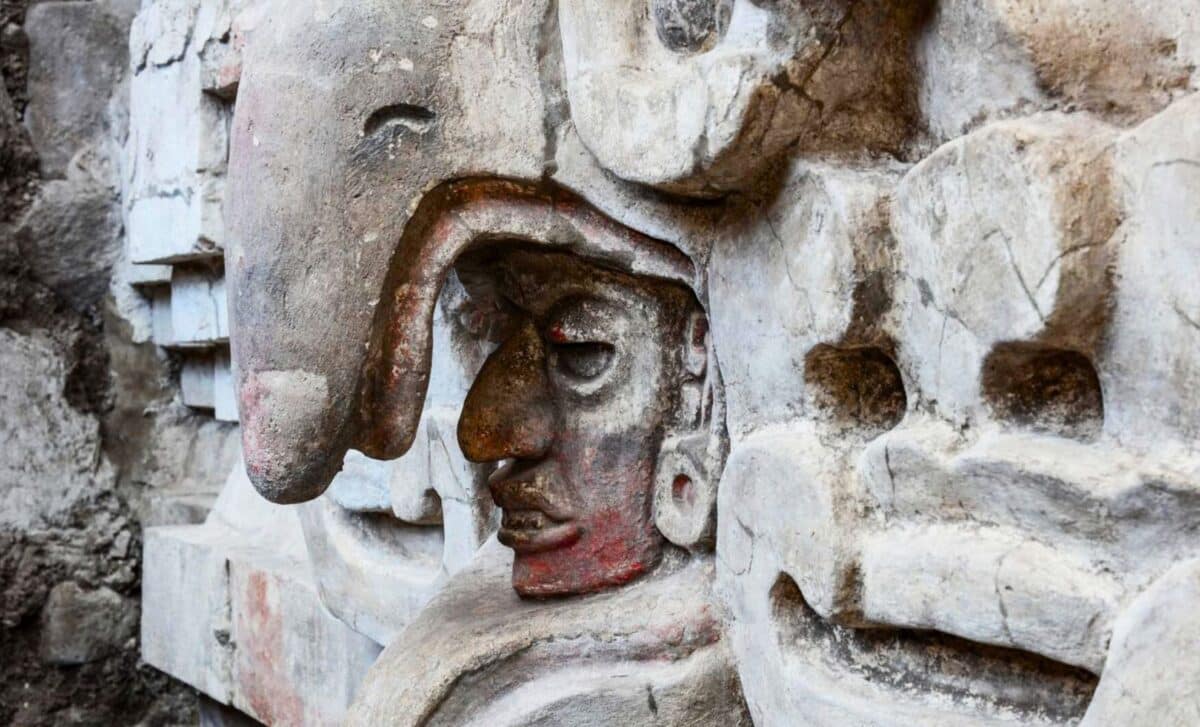
At the main entry, archaeologists identified a sculpted owl motif, its beak descending over the stuccoed and painted face of a human figure. In Zapotec ritual cosmology, the owl held close ties to death, darkness, and ancestral communication. INAH researchers interpret the image as likely representing a revered ancestor, reinforcing the tomb’s use as both a burial and ceremonial space.
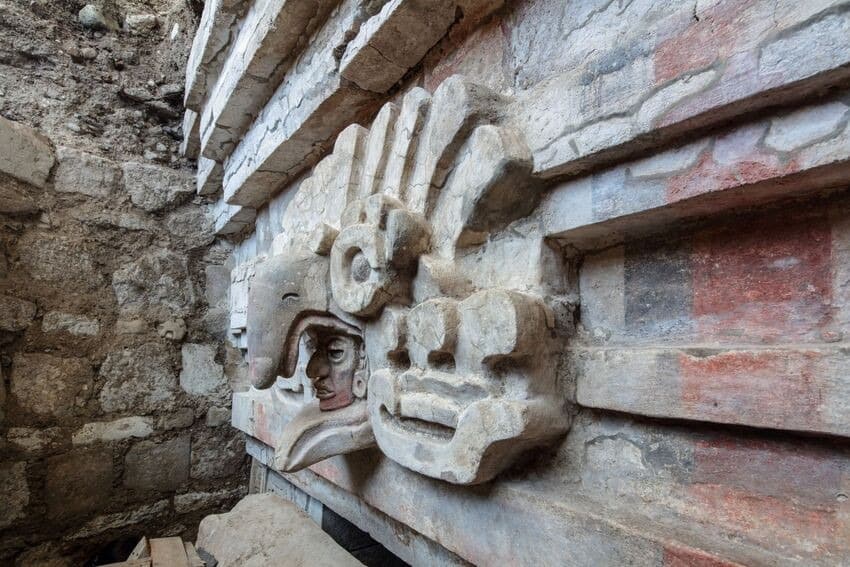 In Zapotec mythology, the owl symbolises night and death. It appears on the door of the tomb. © Luis Gerardo Peña Torres, INAH
Two flanking figures carved into vertical doorway supports appear to serve as guardians. One is male, the other female, both wearing ornate headdresses and holding ritual items. Similar guardian iconography has been observed in elite Zapotec sites including Monte Albán and Mitla, yet the clarity and positioning of these figures in Huitzo stand out, suggesting a deliberate architectural emphasis on ritual passage and protection.
Above the interior threshold, a horizontal frieze features engraved Zapotec calendrical glyphs. These symbols formed part of a naming and ritual system that linked individuals to specific days, divinities, and ceremonial functions. Their presence within the tomb indicates a connection between the deceased’s identity and religious calendar cycles.
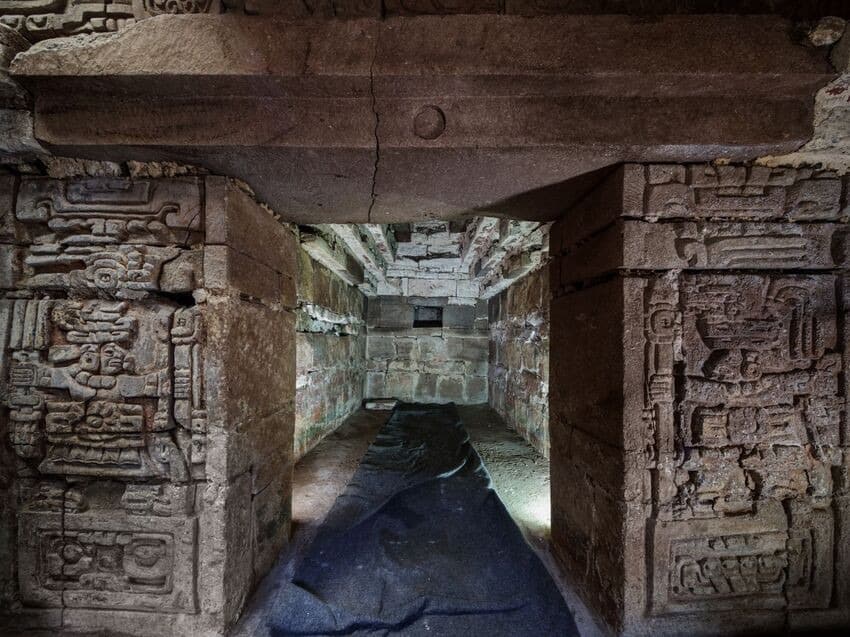 The figures of a man and a woman, adorned with headdresses and holding objects in their hands (perhaps the guardians of the place) are carved on the tomb’s pillars. © Luis Gerardo Peña Torres, INAH
Inside the funerary chamber, wall murals preserved in situ depict a ritual procession. Figures are shown walking in alignment, carrying bundles of copal, a resin traditionally burned as incense in ceremonial contexts. The murals use a palette of ochre, red, green, and white, and remain remarkably intact despite environmental pressures. These visual elements suggest continued ritual use or commemoration beyond the moment of burial.
Conservation and Research Under Federal Oversight
INAH confirmed the find on January 23, 2026, during a national press event. The announcement followed months of analysis and preliminary preservation by interdisciplinary teams based at Centro INAH Oaxaca. The tomb was originally discovered in mid-2025, following a report of illicit activity in the area.
Mexico’s federal cultural laws prohibit private excavation or foreign-led research without direct partnership with INAH. All current work at the site is under government control. Public access is restricted, and no high-resolution visual documentation has yet been released.
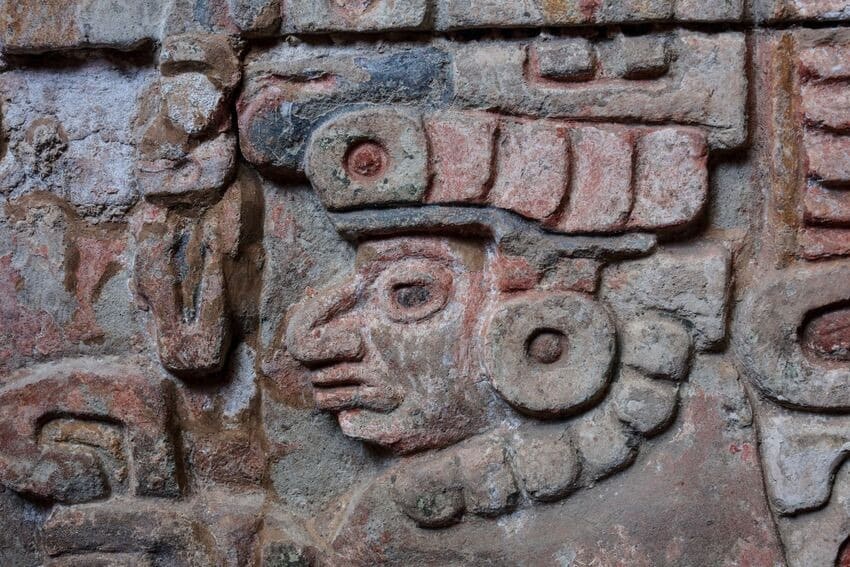 Detail of the tomb’s carved decoration. © Luis Gerardo Peña Torres, INAH
INAH has acknowledged the mural’s delicate state. Conservation staff reported degradation caused by root intrusion, insect activity, and climatic instability. Emergency stabilization measures were implemented to protect painted surfaces and sculptural elements while analysis continues.
Research teams are now examining ceramics, pigments, and engraved symbols recovered near the chamber. Specialists are also conducting iconographic comparisons with known elite tombs from Monte Albán and San José Mogote, focusing on glyph variation and architectural orientation.
Cultural Context Within the Zapotec Tradition
The Zapotec civilization dominated the Valley of Oaxaca for over a thousand years, from at least 500 BCE into the early colonial period. Their cultural centers, including Monte Albán and Mitla, exhibit advanced knowledge of stone masonry, calendrical systems, and ceremonial city planning.
Elite tombs at these sites often contain murals, glyphs, and sculptural programs linked to ancestor worship and divine lineage. The Huitzo tomb fits within this tradition but introduces previously undocumented combinations of symbolic placement and architectural detailing.
The owl motif appears in other high-status Zapotec funerary settings, though its integration with portraiture at Huitzo appears unique. The sculpted guardians also diverge from standard relief positions seen elsewhere, suggesting a possible localized or transitional stylistic approach.
INAH bulletin materials and statements from the Secretaría de Cultura confirm the tomb’s alignment with high-ranking individuals. In the official January release, Claudia Curiel de Icaza, Secretary of Culture, described the site as “a discovery exceptional in both its level of conservation and what it reveals about Zapotec social structure, ritual, and cosmology.” This matches public statements shared through both INAH and government communications since late January.
Next Steps and Ongoing Investigation
The tomb’s dating remains provisional. No direct carbon results have been published. Chronological placement is based on comparative ceramic typology and iconographic elements consistent with known Monte Albán III-phase tombs. If further materials are uncovered, they may enable a more precise dating window.
No confirmed skeletal remains have been disclosed. Whether the tomb housed a single individual or served as a site for ongoing ritual activity is under review. Tomb reentry was common in Zapotec ancestor rites, and the presence of processional imagery may support that interpretation.
INAH has not indicated when public access will be permitted. Officials have stated that exhibition, if pursued, would require full mural stabilization and risk assessment. Virtual modeling and photogrammetry are under consideration for future academic release.