
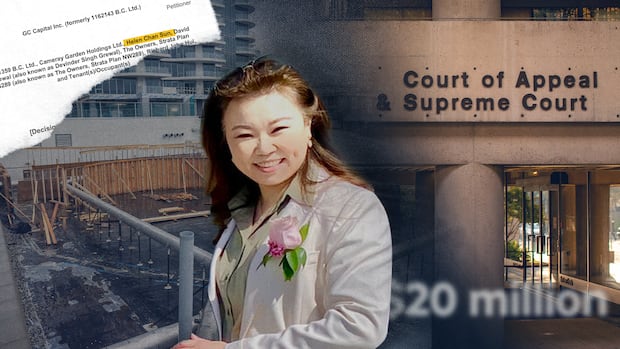
A Vancouver developer with an estimated net worth of at least $20 million faces the possibility of jail later this month unless she comes clean about her personal finances in B.C. Supreme Court.
CBC News has learned Helen Chan Sun was handed a 40-day sentence for contempt of court two months ago after failing to comply with a payment order — a penalty Justice Richard Fowler suspended until Feb. 20 to give Sun time to fully account for her income and expenditures.
The threat comes even as a different set of creditors head to court this week in a bid to obtain a bankruptcy order against the 49-year-old, who is sole shareholder and chief executive officer of a development company involved in multiple residential projects around Greater Vancouver.
CBC News has listened to a recording of the contempt hearing and obtained documents from other court proceedings involving Sun — who is also battling a Canada Revenue Agency tax bill assessed at nearly $6 million.
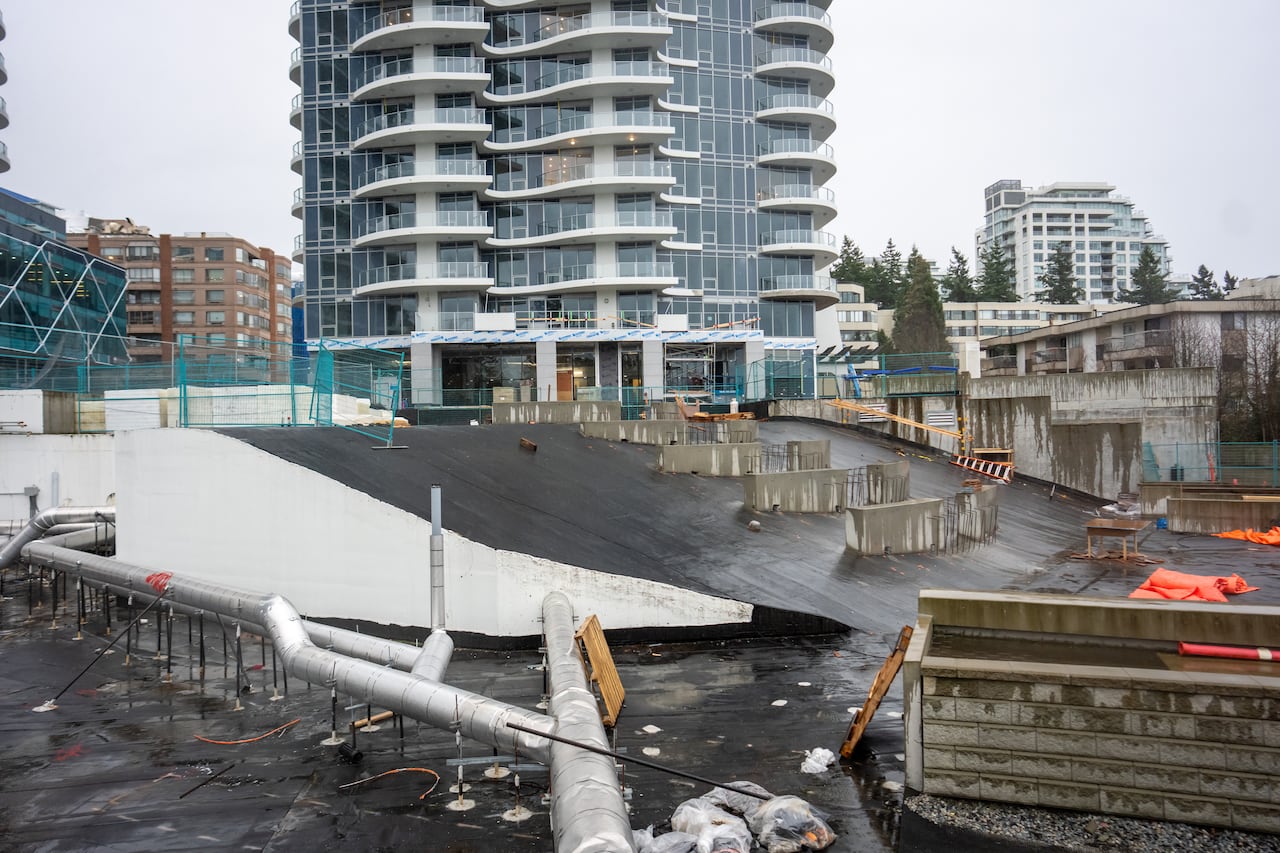 Helen Sun Chan’s company, Landmark Premiere Properties, is the developer behind Foster Martin, a multi-tower, multi-phase White Rock condo project seen here under construction. (Ben Nelms/CBC)
Beyond the mystery of Sun’s personal finances, the records provide a window into the downturn in Vancouver’s once-booming real estate and condo market — which Sun has attempted to blame for her current lack of liquidity.
She also claims an attempt to force her into personal insolvency could have a wider impact, jeopardizing profits from a major White Rock condo project by giving pre-sale purchasers of nearly 100 units a chance to get out of their contracts.
Assets and income
Sun owns Landmark Premiere Properties Ltd. — a company which, in turn, creates other corporations to buy and manage properties identified for future development.
In 2018 she declared her personal net worth at $94 million — a figure that had dropped to $21 million by 2023, according to a statement filed that year.
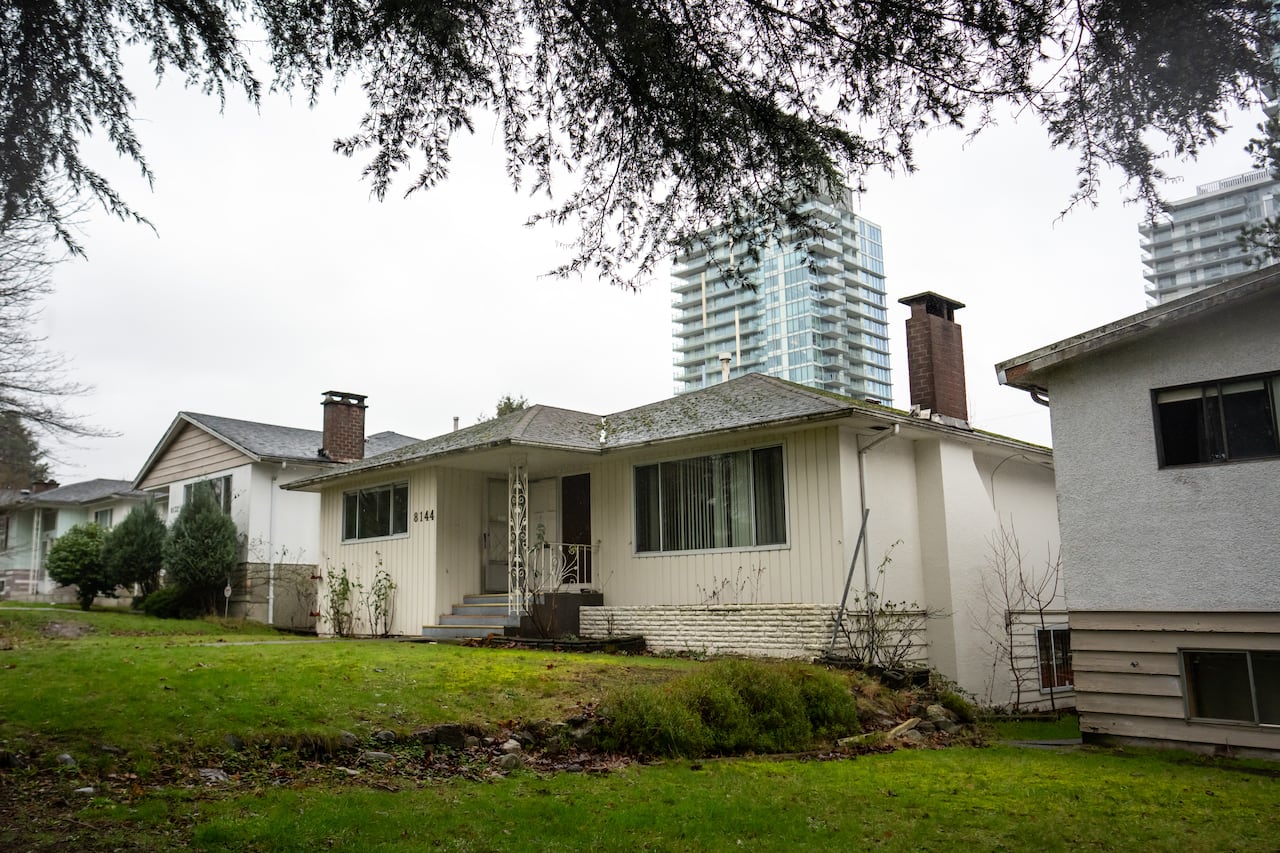
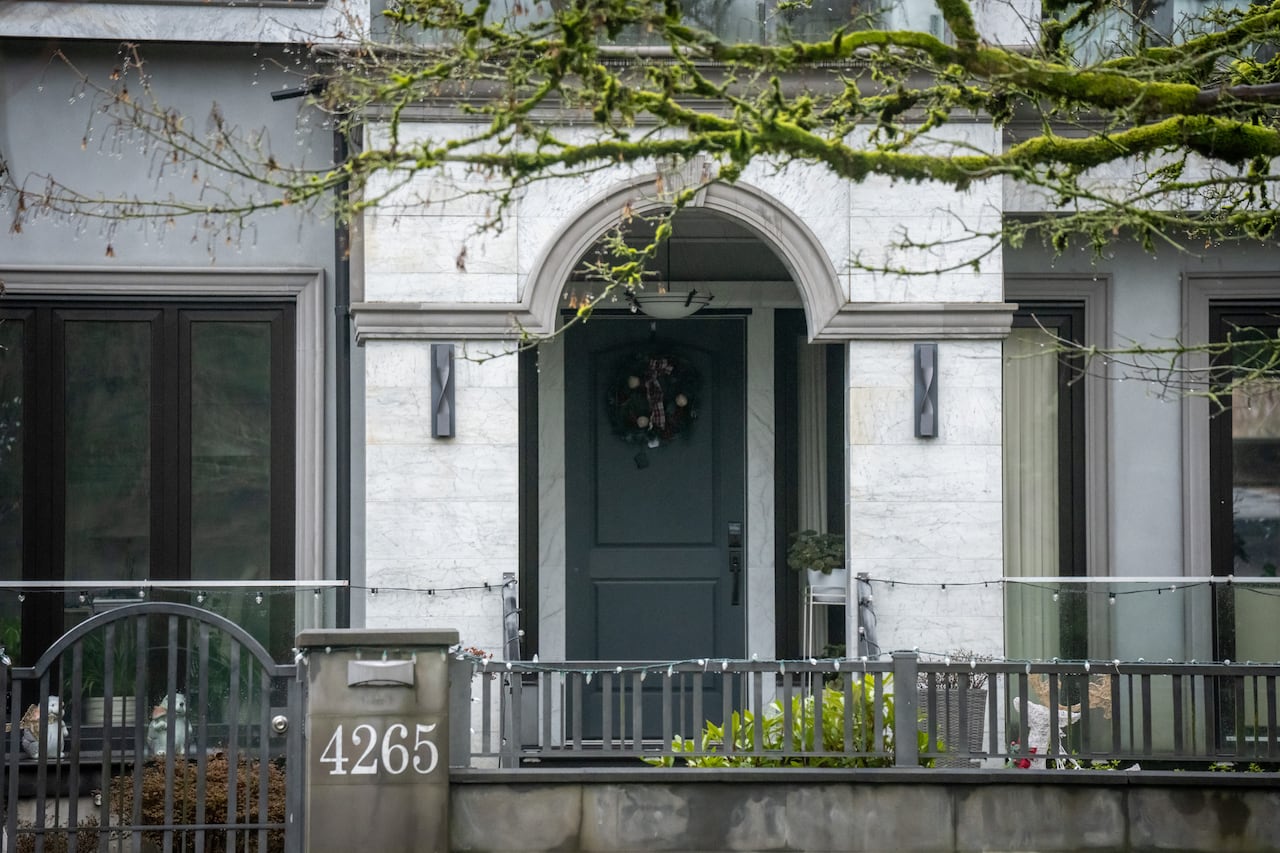 Helen Chan Sun claims she lives in this west side Vancouver home with her mother and earns just $60,000 to $70,000 a year. But a judge said she was obfuscating attempts to get at the truth of her finances. (Ben Nelms/CBC)
In court proceedings Sun has claimed to be “cash poor” — insisting her only assets are the equity she holds in her companies; she says she lives with her mother, earns between $60,000 and $70,000 a year and has just one bank account and one credit card to her name.
But Fowler told Sun it’s clear from a lifestyle rich in designer purchases and luxury vehicles that she has not been forthcoming about her failure to meet monthly payments of $300,000 against a remaining debt of nearly $3.5 million.
“Your client has to understand that she is hanging by a very, very, very fine thread at this point,” Fowler told Sun’s lawyer at the contempt hearing, which happened in November.
“The time to obfuscate and try to be obstructionist — that ship has sailed.”
Luxury spending
The contempt proceedings date back to a $4.5 million mortgage GC Capital Inc. issued to a pair of companies in 2018 in relation to a failed real estate project in Burnaby.
Sun and another man guaranteed the loan, which meant that when the companies defaulted on the mortgage, GC Capital Inc went after the guarantors.
In 2021, Sun reached a deal with GC Capital agreeing to pay $5.6 million in installments. She paid approximately $3 million towards the debt, but stopped paying in the summer of 2022.
Two years later, the company obtained a judgment from a B.C. Supreme Court registrar ordering Sun to make monthly payments of $300,000 until the rest of the debt is paid off.
 Helen Chan Sun has been handed a suspended 40-day sentence for contempt of court. She has until Feb. 20 to comply with an order for financial disclosure or risk jail time. (Maggie MacPherson/CBC)
GC Capital’s lawyer, veteran litigator Ravi Hira, clashed with Sun during a deposition; Sun balked at having to empty her purse of cash and credit cards and accused Hira of having “attitude.”
In his summations, Hira told the registrar Sun’s “lifestyle would suggest a much higher income” than the one she claimed.
“She has access to expensive vehicles. She doesn’t pay rent,” Hira argued.
“She spends thousands of dollars a month on luxuries, including vacations, designer clothers … Hermes, Armani, Dior and jewelry, Cartier.”
The registrar agreed, calling the evidence “unlike any I have heard to date,” finding Sun “evasive” throughout Hira’s examination and issuing the monthly payment order — which was widely reported at the time.
In the year since, Sun has fought the decision — and lost.
She offered payments of just $3,000 a month towards the debt — an amount she argued was commensurate with her alleged $70,000 annual income. One judge pointed out that it would take more than 80 years to pay off the debt at that rate.
Finally, GC Capital applied to commit Sun to jail for contempt of court in November, sparking the extraordinary hearing before Fowler.
Hira told the judge he had pored through the latest cheques Sun had provided with a “magnifiying glass.”
“She’s had a year to think about being candid with the court about her financial circumstances,” Fowler told Sun’s lawyer.
“The issue for me is that I cannot conclude on the basis of the material that I have reviewed that she is being completely forthcoming about her sources of money.”
A collapsed market
At one point during the contempt proceedings, Sun’s financial situation was described as a “house of cards” in the process of falling down — a metaphor some observers have used to describe the Greater Vancouver real estate scene itself.
In documents filed in advance of the contempt hearing, Sun claims she’s a victim of a market that recorded its lowest annual home sales total in two decades last year — nearly 25 per cent below the 10-year annual average.
“Many prominent British Columbia real estate companies have scaled back operations and laid off employees. Several projects have been delayed or abandoned altogether,” Sun wrote.
“Presale launches are significantly down from previous years. Landmark and the Landmark Companies have been similarly affected by this market downturn.”
 Helen Chan Sun’s companies also own development properties on Lord Street in south Vancouver. (Ben Nelms/CBC)
Sun and Landmark invested heavily in properties located in an area once considered Vancouver’s hottest real estate prospect, the so-called Cambie Corridor, supercharged by the $6.5 billion redevelopment of the Oakridge site meant to house nearly 6,000 residents in 14 towers.
But that was before the downturn that saw condo prices slump last year as the Canada Mortgage and Housing Corporation warned that 2,500 new condos were sitting unsold and empty in Metro Vancouver — double the number for 2024.
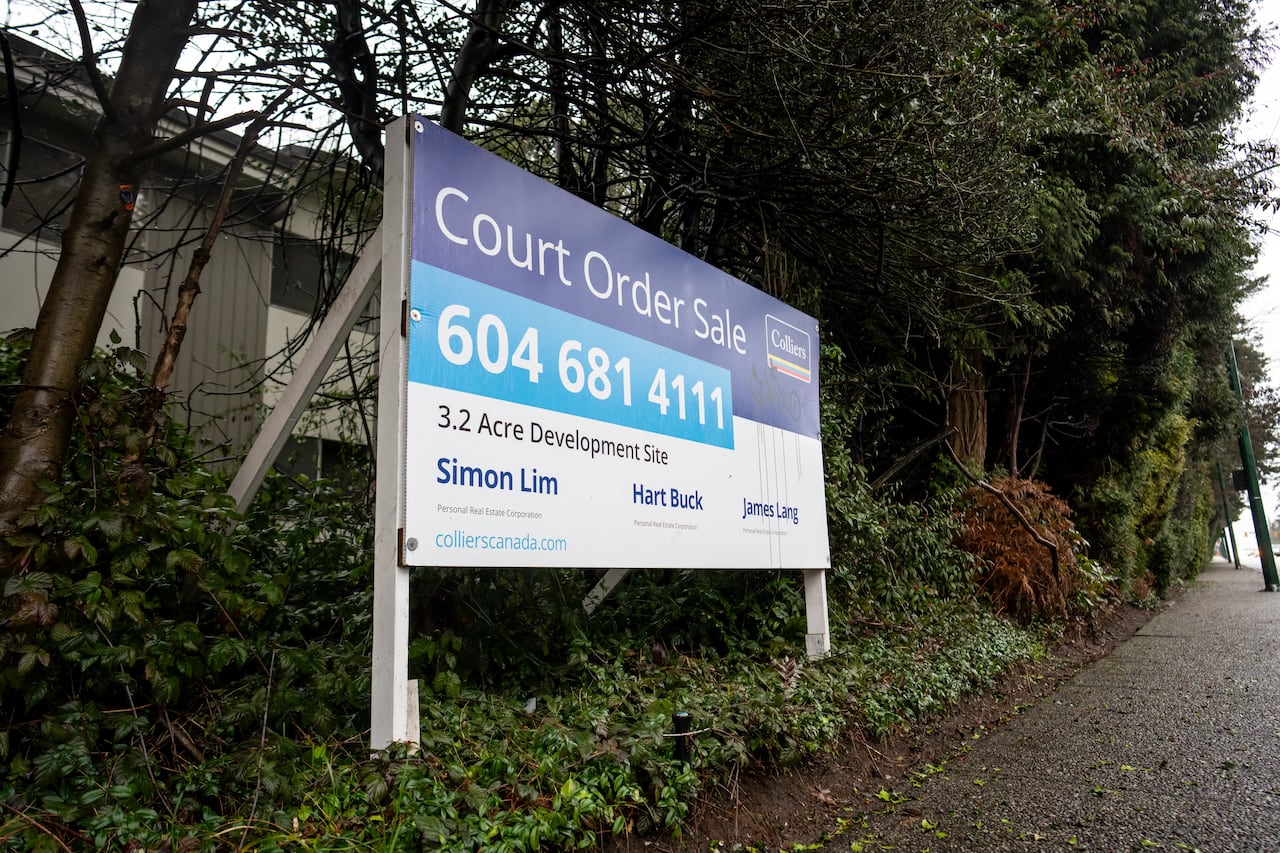
Two of Landmark’s properties in the Cambie Corridor are in receivership, development plans stalled, and any prospective sale likely to result in a shortfall, according to court documents.
Creditors obtained judgments worth more than $115 million against both Sun personally and her companies in relation to a 72-unit townhouse complex and three residential lots all located within blocks of Oakridge Park.
One of the residential lots has since sold, but an affidavit filed in B.C. Supreme Court claims no offers have been accepted for the remaining land — including a 1.3 hectare site proposed for a development containing two 30-storey-plus towers and 180 units of social housing.
Beyond Vancouver, Landmark also owns the remaining inventory of units at Foster Martin, a multi-tower, multi-phase White Rock condo project Sun claims would generate “significant cash proceeds” on completion.
 Landmark’s Shawn Oaks development site was put into receivership in February 2025. Creditors have obtained judgements worth more than $100 million, in relation to the project, against Helen Chan Sun and her companies. (Ben Nelms/CBC)
Creditors, who are owed $45 million, applied for the bankruptcy order against Sun in December. The application is slated for a hearing in B.C. Supreme court Monday.
But in an affidavit, Sun warns the bankruptcy process itself could undermine efforts to collect on the debt, because it would give 93 pre-sale purchasers at Foster Martin an opportunity “to rescind their purchase contract or at least argue that position” on sales worth a combined $131 million.
Sun claims “this would result in a significant reduction of the” value of the project.
None of Sun’s claims about the impact of the bankruptcy on pre-sales have been tested in court.
Sun could not be reached for comment.
Consultant fees raise questions
Sun has until Feb. 20 to comply with a raft of orders that include submitting for cross-examination, giving detailed and specific financial information, providing a list of automobiles to which she has access, and producing an updated net worth statement.
Fowler said he was “well aware of the status” of Sun’s projects.
But the judge said it didn’t take a “forensic accountant” to see gaps in her financial disclosure and that even the descriptions of her corporate expenses — like $780,000 for “consultant’s fees” — raised more questions than they answered.
One of the central mysteries of the case has been why Sun stopped payment after making good on roughly half of the debt she and a business partner had guaranteed.
At one point during the court proceedings, Sun admitted part of the reason was because she felt the other guarantor should pay his half, but said she had “always had a lot of questions.”
“Because in the meanwhile, the debtor, the real borrower, is still living in the mansion in Westside driving the latest Mercedes Benz,” she said.
“I want to know as the lender, how are they going after the borrower? I am the guarantor, not the borrower.”
But as Hira pointed out at the contempt hearing — that’s not how things work when it comes to the law, which says a guarantor is wholly liable if a borrower defaults.
Fowler said Sun needed to appreciate that her battle with GC Capital had reached a crossroads.
“The challenging part is sending a businesswoman to jail,” Fowler said.
“Don’t worry, I have no difficulty doing it if I’m satisfied that is appropriate.”